Customers Expect More Than Generic Experiences

- Real-time intent tracking
- Behaviour flow analysis
- Session value scoring
- Situational context awareness
- Behavioural pattern detection
- Journey signal mapping
- Product interest mapping
- Contextual content matching
- Dynamic bundle creation
- Cross-sell recommendations
- Upsell opportunity prediction
- Preference memory models
- Website experience synchronisation
- Mobile journey continuity
- Triggered email flows
- In-store digital prompts
- Push notification logic
- Channel transition handling
- Location-based targeting
- Time-sensitive messaging
- Device-aware formatting
- Purchase intent context
- Next-action prediction
- Message relevance optimisation
- Controlled experience experiments
- Multivariate scenario modelling
- Outcome performance tracking
- Variant response learning
- Engagement quality metrics
- Conversion behaviour insights
- GDPR rule enforcement
- User consent governance
- Encrypted profile storage
- Role-based permissions
- Activity audit trails
- Privacy preference controls
Observation: Built around real-time human behaviour, not predefined journey templates.
Interpretation: Signals are interpreted contextually, never blindly or rigidly.
Responsiveness: Experiences shift instantly as customer intent continuously evolves.
Speed: Content adapts within milliseconds as behavioural signals change.
Fluidity: Journeys reshape naturally without visible disruption or friction.
Continuity: No experience resets between sessions or channels.

Memory: Systems remember meaningful interactions, not just static attributes.
Evolution: Every engagement actively improves the next experience.
Momentum: Relevance compounds, strengthening personalisation continuously over time.

Integration: Works seamlessly across commerce, CRM, loyalty, and fulfilment systems.
Alignment: Experiences reflect actual business logic, not marketing assumptions.
Scalability: Platform expands smoothly without operational or technical friction.
Real-Time Personalization That Feels Human, Not Automated
Customers expect brands to understand their preferences, intent, and timing. Personalization engines analyze behavior, context, and history to deliver relevant content, offers, and recommendations. This approach improves engagement, increases conversions, and builds emotional loyalty, without overwhelming users with irrelevant noise.
Matching
Personalization
Journeys
Suggestions
Adaptation
Design
Models
Delivery
Personalisation Drives Revenue, Not Just Engagement

Our platforms anticipate customer needs using behavioural signals, situational context, and intent forecasting, shaping journeys proactively to increase engagement, conversions, loyalty, and emotional brand resonance.

Every movement, hesitation, and decision recalibrates the interface instantly, ensuring experiences remain timely, relevant, frictionless, and continuously aligned with evolving customer intent in real time.

Pricing, bundles, and nudges shift automatically using situational context, behavioural probability, and purchase readiness, improving acceptance, reducing fatigue, and increasing transaction confidence for shoppers today.

Each interaction retrains decision models, refining targeting, timing, and content selection automatically, ensuring future experiences grow smarter, more accurate, and consistently meaningful over time continuously.
Azilen Turns Data Into Meaningful Experiences
Unlimited

View

View

Tactics

Sense

with
Problem
Statement

Fast

We build personalization engines that adapt content, offers, and journeys to every user’s real-time preferences with intelligence.
Discover Azilen’s Retail Technology Universe

Power omnichannel commerce platforms with personalization engines, delivering consistent, contextual experiences across every customer touchpoint.

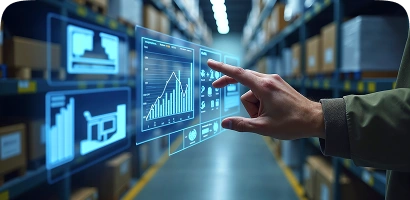
Use optimized inventory and orders to personalize recommendations, availability, and delivery promises in real time for customers globally.

Connect loyalty and engagement platforms enabling personalized rewards, targeted campaigns, and deeper emotional customer relationships.
Frequently Asked Questions (FAQ's)
A customer personalisation engine is an intelligent system that adapts content, offers, journeys, and recommendations based on real-time user behaviour, context, and intent. Instead of static segments, it learns continuously from interactions. For UK retailers, this means delivering relevant experiences that feel natural, increase engagement, improve conversion rates, and build long-term loyalty without manual configuration or guesswork.
Personalisation engines tailor experiences dynamically, showing customers what matters to them at that moment. This relevance reduces friction, increases time spent on platforms, and encourages repeat interactions. Instead of generic journeys, customers receive content, products, and prompts aligned with their preferences, making engagement feel effortless, not forced.
Yes. By predicting intent and adapting experiences in real time, personalisation engines surface the right product, message, or incentive at the right moment. This removes decision friction and shortens the path to purchase. Retailers often see improvements in basket size, conversion rates, and checkout completion because customers feel understood rather than overwhelmed.
Real-time personalisation systems analyse behavioural signals, such as clicks, browsing patterns, pauses, and search behaviour, then adapt the experience instantly. Machine learning models interpret these signals and modify content, recommendations, or offers dynamically. This ensures that experiences stay relevant even as customer intent changes mid-session.
Yes. Enterprise-grade personalisation engines embed privacy controls such as consent management, data minimisation, anonymisation, and access auditing. For UK retailers, GDPR compliance is not optional. These systems ensure transparency, protect customer data, and give users control—while still enabling meaningful personalisation without crossing ethical or regulatory boundaries.
No. Personalisation engines enhance marketing teams by automating decisioning, experimentation, and optimisation. Instead of manually building countless journeys, teams focus on strategy, creativity, and brand direction. The system handles scale, speed, and learning, allowing humans to make higher-impact decisions rather than repetitive adjustments.
Yes. Modern engines support omnichannel experiences across websites, mobile apps, emails, in-store systems, and push notifications. They maintain context as users move between channels, ensuring continuity. This eliminates fragmented experiences and builds a consistent brand relationship across every customer touchpoint.
Recommendation engines focus primarily on suggesting products or content. Personalisation engines go further, shaping the entire journey, including layout, messaging, timing, and interactions. They consider context, behaviour, and history holistically. This creates richer experiences rather than isolated recommendations.
Implementation timelines vary depending on integrations, data readiness, and use cases. Many retailers start with core journeys, then expand capabilities incrementally. A phased approach allows teams to see quick wins while building long-term sophistication without disrupting existing systems.