At a Glance
According to McKinsey’s Insurance 2030 report, the insurance financial services sector is undergoing a structural shift in data modernization, as premium collection operations are fully digitized and transaction volumes scale to hundreds of thousands per month.
Our client, an InsurTech leader, has an insurance premium orchestration platform that processes over a million transactions monthly, manages millions of USD in annualized premium collections, and supports financing across hundreds of broker and insurer relationships.
This scale demands a fundamental shift away from legacy data infrastructure toward an analytics-first data ecosystem. A governed data architecture is essential for managing high-volume transactional workloads and enabling operational intelligence.
Key Highlights
Automated Payment Orchestration Engine
High-Volume Transaction Processing & DataOps
Unified Azure SQL Data Warehouse & Marts
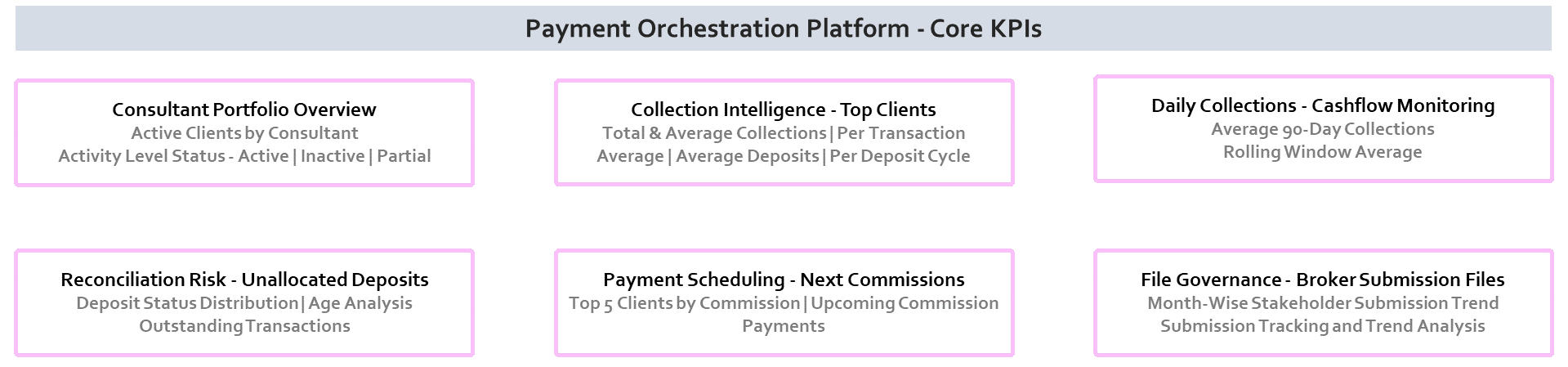
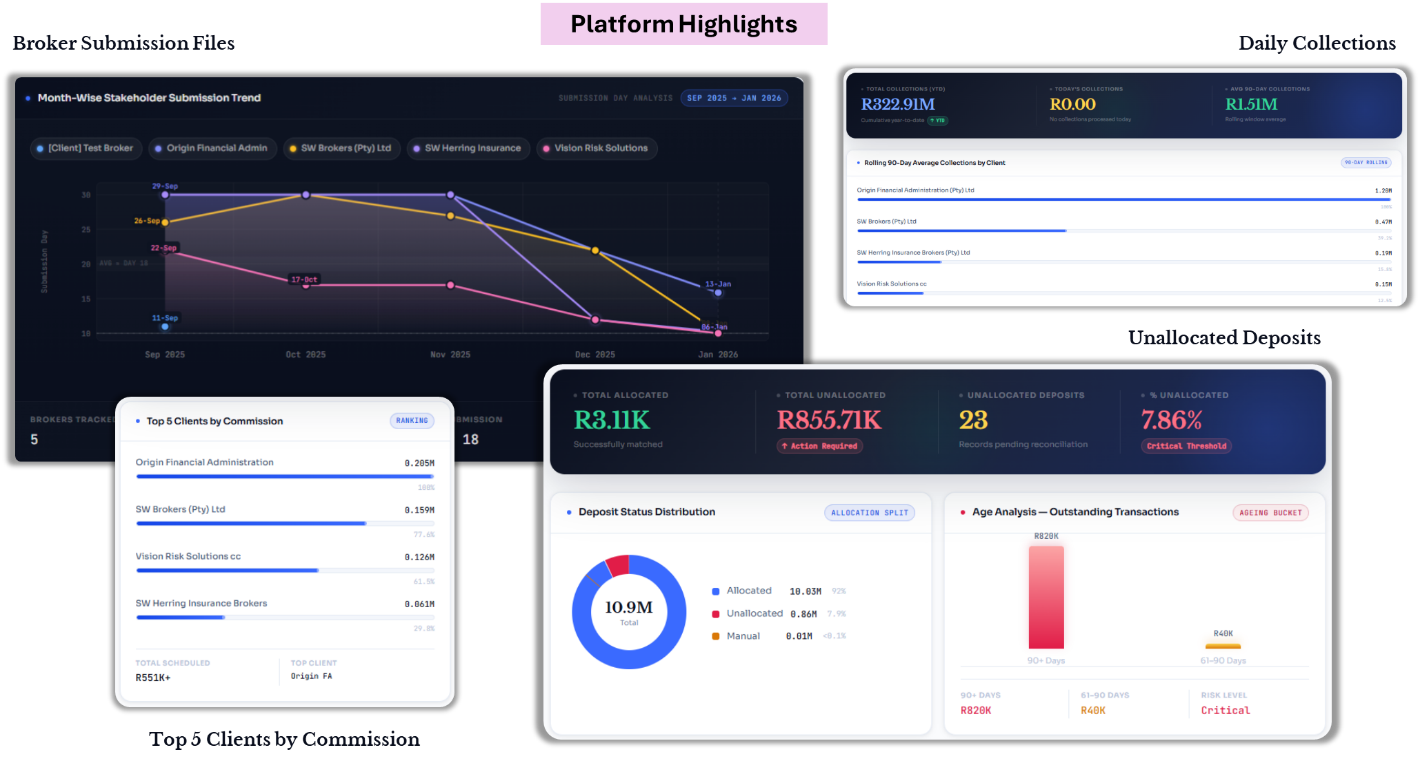
Premium Cashflow Visibility Dashboards
ML Ready Foundation with AI First Approach
Data Governance with Quality Metrics Monitoring
Challenges
- Limited enterprise-wide visibility into premium cashflows.
- Legacy data architecture not aligned with operational needs.
- Growing data volumes within the operational system.
- Inability to derive a centralized financial view across collections.
- Dependency on the IT team for generating business reports.
About Client
The client is an InsurTech platform enabling premium orchestration, reconciliations, and distribution across a multi-stakeholder ecosystem.
InsurTech
Industry
Insurance
Domain
SSA
Location
How we helped?
We implemented a structured Data Transformation Strategy to modernize the client’s legacy data foundation into an enterprise-grade data intelligence solution. This transformation streamlined complex premium collection flows by enabling unified operational visibility, empowering leadership and brokers to monitor cashflows, detect reconciliation gaps, and drive data-backed decisions at scale.
Full Cashflow
Transparency Across Billion+ Premium Volume
15,000+
Daily Insurance Transactions
ISO | GDPR | SOC 2
Compliance Standards
The Solution
We led a structured Data Engineering Consulting & Discovery engagement to define a modernization blueprint to implement a scalable enterprise data architecture using the Medallion (Lakehouse) pattern, structured across Raw, Curated, Transformed, and Metadata layers.
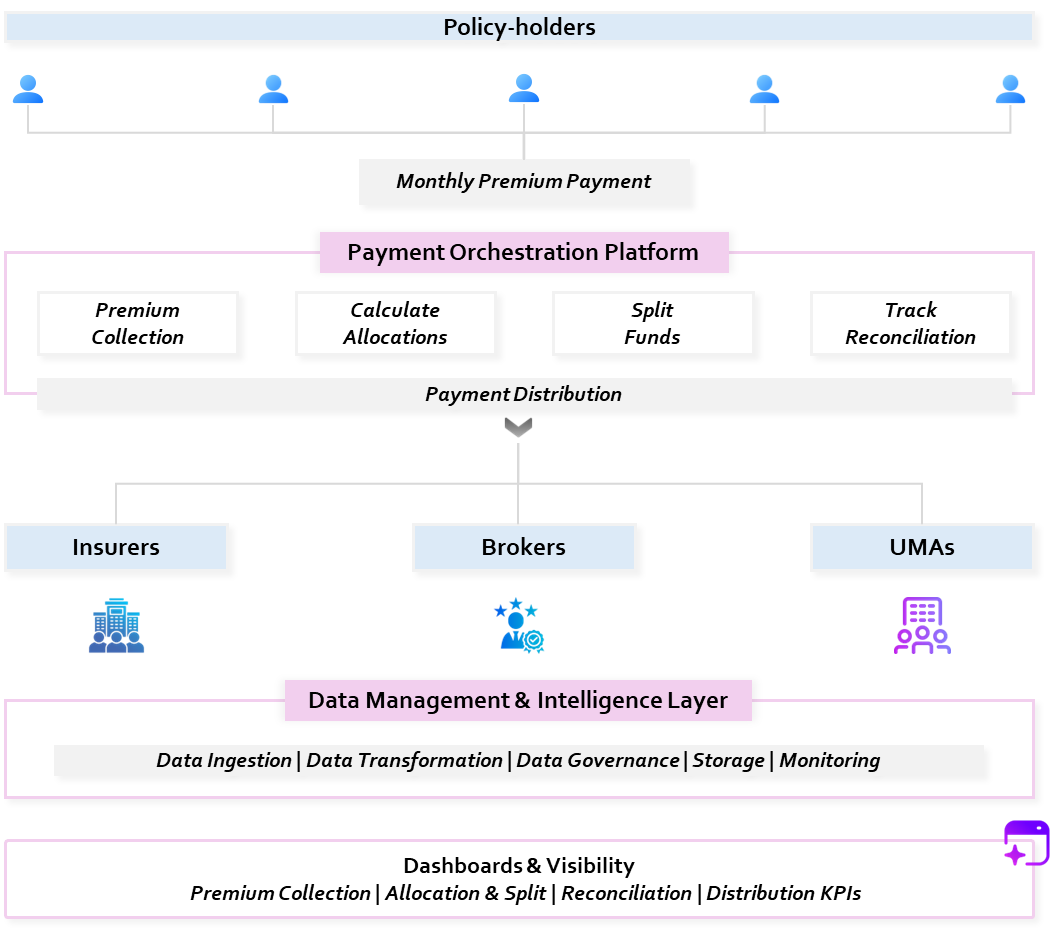
At the core of the platform, it has a centralized Premium Payment Orchestration Engine that manages the end-to-end insurance premium collection lifecycle.
Premium Collection Payment Orchestration Ecosystem:
• Premium Capture: Executes scheduled monthly premium collections from policyholders.
• Allocation Logic: Applies predefined percentage rules for brokers, insurers, agents, and UMAs.
• Commission Calculation: Computes broker and intermediary earnings based on configured structures.
• Fund Splitting: Distributes collected premiums into respective stakeholder accounts.
• Operational Visibility: Provides real-time status of collections, allocations, and disbursements.
Key User Personas:
• Policyholders: Make scheduled premium payments.
• Brokers: Acquire customers, manage relationships, and monitor commission earnings.
• Insurers: Receive net premiums and require accurate operational reporting.
• UMAs: Receive underwriting or administrative fee allocations.
Data Management & Intelligence Layer: Core Components
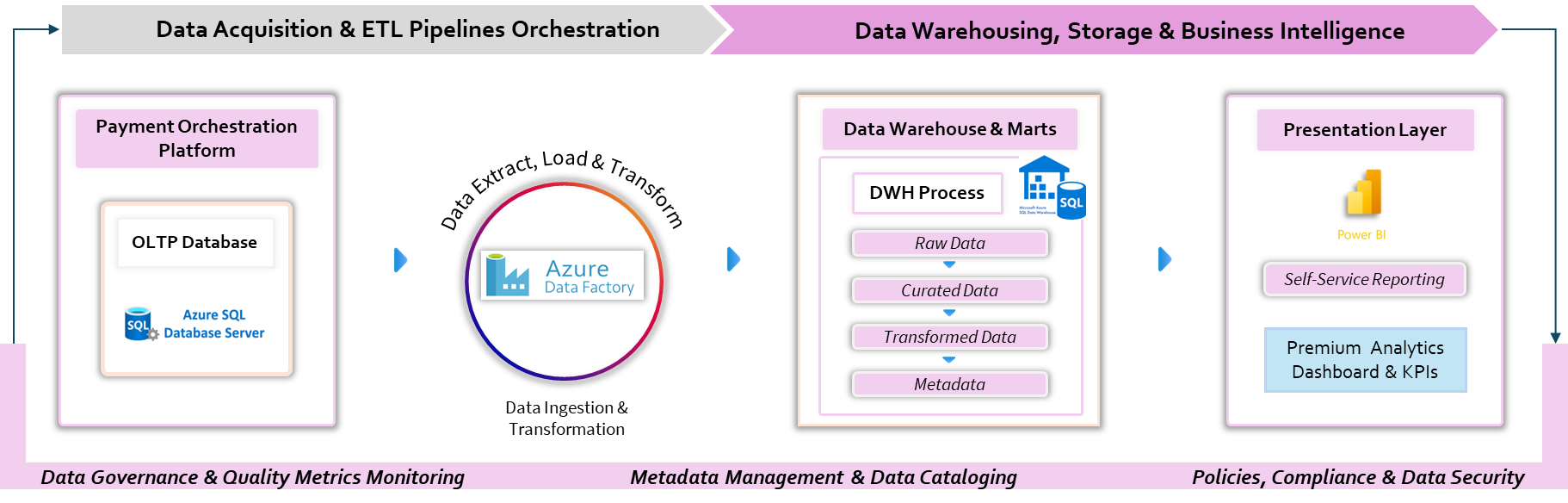
• Azure SQL Server (OLTP Layer): Serves as the primary source of data for Azure Data Factory, ensuring data availability for further ETL workflows.
• Azure Data Factory (ETL Layer): Orchestrates automated pipelines to transform data into RAW, CURATED, and TRANSFORMED layers.
• Azure SQL Database (Data Warehouse): Centralizes structured data into domain-specific marts for targeted analytics.
• Power BI (Analytics Layer): Delivers role-based dashboards with real-time insights and KPIs.
• Microsoft Purview & Azure AD (Governance): Tracks end-to-end data lineage for audit compliance, catalogues critical datasets.
• Azure Monitor (Operations): Monitors system health, triggering alerts for ETL failures or performance anomalies.