Digital Product Passport
Azilen Technologies helps UK manufacturers design, build, and manage Digital Product Passport (DPP) systems that meet EU requirements. From structuring fragmented data to ERP integration and supplier onboarding, we deliver end-to-end DPP implementation with GS1-aligned architecture, ensuring compliance, traceability, and readiness for evolving ESPR regulations.
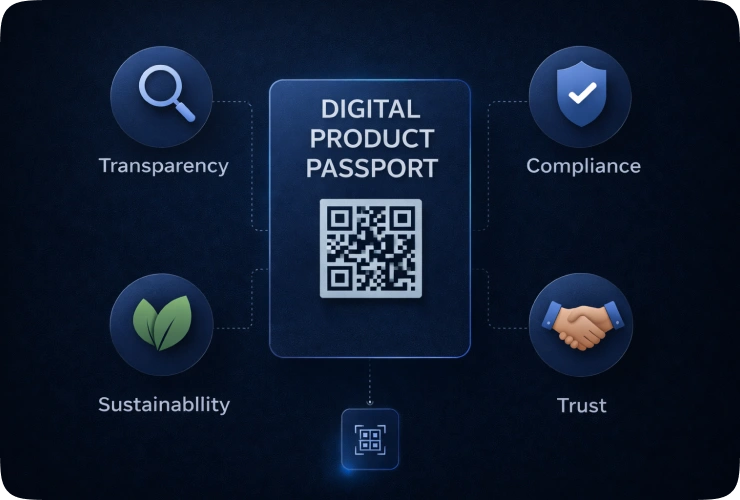

We assess your product data against ESPR requirements, mapping attributes, missing fields, and supplier data dependencies. The output is a sequenced remediation plan aligned to product categories, regulatory timelines, and system-level constraints.
- ESPR mapping
- Attribute gaps
- Supplier dependencies
- Timeline alignment

We define canonical data models aligned to GS1 and Asset Administration Shell, establish ownership at attribute level, and implement validation rules so product, material, and lifecycle data remains consistent across systems and exchanges.
- Canonical models
- AAS schemas
- Attribute ownership
- Validation rules

We deploy structured data capture workflows for suppliers, including schema-aligned templates, document ingestion, and validation pipelines. Evidence is linked to attributes, ensuring traceable & verifiable inputs.
- Structured templates
- Document ingestion
- Validation pipelines
- Evidence linking

We implement the DPP architecture using GTIN-based identifiers, GS1 Digital Link carriers, EPCIS event streams, and API integrations with ERP, PLM, and MES systems to automate lifecycle data capture and synchronisation.
- GTIN identifiers
- Digital Link
- EPCIS events
- API integrations

We build access-controlled passport services with role-based data exposure and restricted attributes. Audit logs, versioning, and data lineage tracking ensure every data point is traceable and securely governed.
- Role access
- Data lineage
- Audit logs
- Version control

We apply AI for document parsing, attribute extraction, anomaly detection, and rule-based validation. Outputs are human-reviewed and logged, ensuring every automated decision remains explainable, traceable, and compliant with audit and regulatory expectations.
- Document parsing
- Attribute extraction
- Anomaly detection
- Rule validation

We maintain DPP compliance by tracking delegated acts, updating schemas, and revalidating data against evolving rules. Scheduled audits, version updates, and impact assessments ensure passports remain aligned with changing EU regulatory requirements.
- Regulatory change monitoring
- Passport lifecycle updates
- Quarterly compliance audits
- Long-term managed service
Our Digital Product Passport Services for EU Enterprises
Not sure where you stand on Digital Product Passport readiness?
Run our free DPP Assessment Calculator and get a clear, personalised readiness score in under five minutes.
How Does DPP Power the Circular Economy?
A Digital Product Passport powers the circular economy by structuring and connecting lifecycle data that already exists but sits fragmented across systems.
Once standardised and governed, each product becomes traceable and information-rich, enabling repair, reuse, and recycling. Stakeholders access accurate data when needed, while businesses gain visibility to optimise decisions across the entire product lifecycle.
Your products are already excellent, the EU just needs proof. Let's build that proof before the deadline.
Industries Leading Digital Product Passport Adoption
From batteries to textiles, here's which sectors face the earliest Digital Product Passport mandates under EU ESPR — and why compliance can't wait.
Batteries & EV
Batteries were the EU's first mandatory Digital Product Passport category. Manufacturers now need traceable data on materials, capacity, and safe recycling.
Textiles & Apparel
Textiles are among the first sectors required to adopt Digital Product Passports under EU ESPR. Fibre origin, dyes, and recyclability data must now travel with every garment.
Electronics & ICT
Electronics and ICT products face growing demand for passports covering repairability and materials. A Digital Product Passport turns compliance data into circular-economy value.
Furniture
Furniture makers are being asked to prove material sourcing and end-of-life recovery. Digital Product Passports make sustainability claims verifiable across every market.
Construction Products
Construction materials need passports covering composition, safety, and lifecycle performance. DPP-ready data speeds up certification across EU building projects.
Automotive & Tyres
Vehicle parts and tyres are next on the EU's Digital Product Passport roadmap. Early compliance gives automotive suppliers a head start on material traceability.
Meet Azeon — Agentic AI for Customer Service
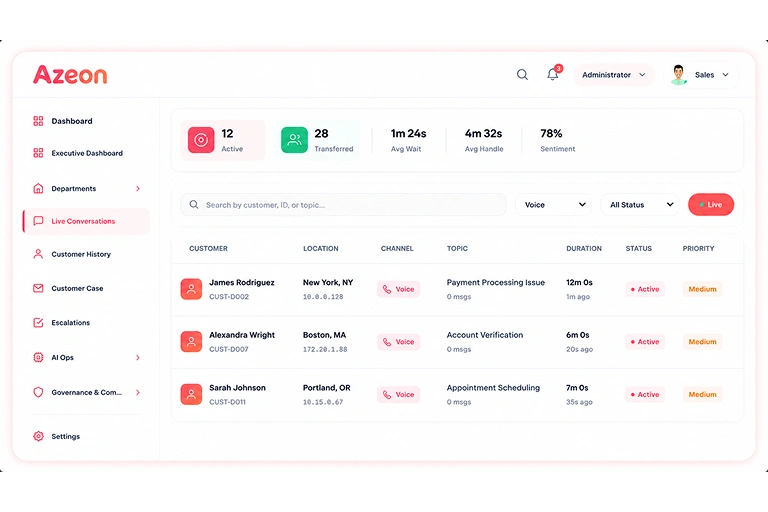
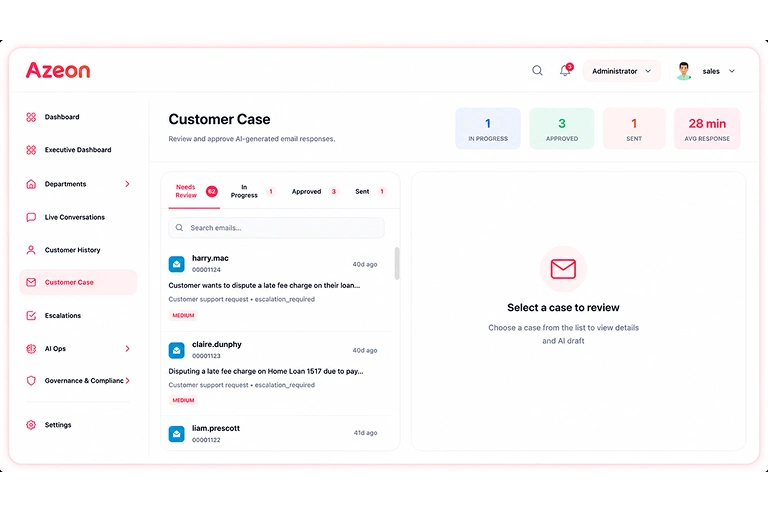
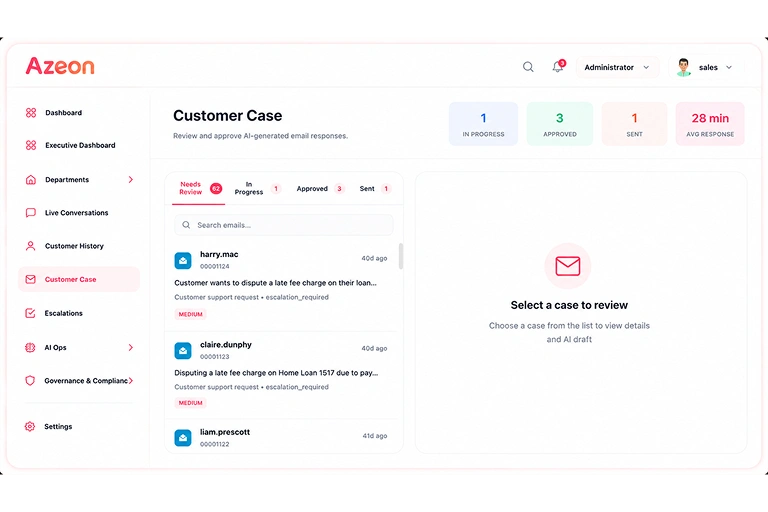
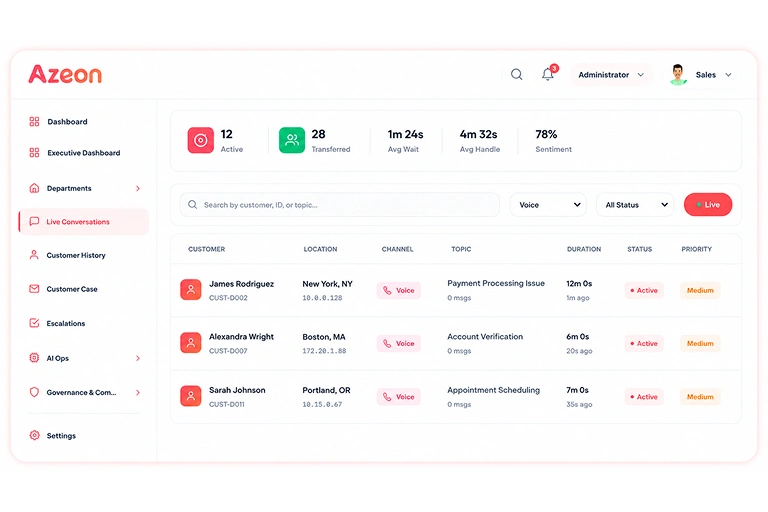
Azeon connects to your existing support tools without any migration. From retail order and returns questions to Digital Product Passport (DPP) data requests, it understands each customer's request, decides what action to take, and resolves it instantly. Complex cases are passed to your team with full context attached.
Retail brands using Azeon have seen CSAT climb and repeat contact rates drop, without replacing a single system.
Everything Azilen Engineers, Built to Move Enterprises Forward
Talk to Our DPP Specialists - Review Your Digital Product Passport Requirements in 30 Min
Preparing for ESPR and Digital Product Passport (DPP) mandates, or figuring out how DPP fits into your product data and supply chain? Azilen Technologies' consultants will help you assess readiness, map the right data architecture, and plan a compliance roadmap that keeps pace with evolving regulations without disrupting your existing systems.
No commitment · No cost · Just a conversation







What Makes Azilen a Trusted DPP Partner

Turning "We're Not Ready" Into "We're Fully Compliant"
| The Azilen Promise | Upheld |
| End-to-End DPP Delivery |  |
| EU ESPR-Aligned Systems | |
| Future-Proof Data Architecture | |
| Enterprise ERP Integration | |
| AI-Powered Automation | |
| Scalable Cloud Infrastructure | |
| Long-Term Compliance Partnership | |

Frequently Asked Questions (FAQ's)
A Digital Product Passport (DPP) is a structured digital record that stores and shares product information throughout its lifecycle. Depending on the product category, it may include details about materials, components, environmental performance, repairability, recycled content, compliance documentation, and end-of-life handling. The European Union is introducing DPP requirements under the Ecodesign for Sustainable Products Regulation (ESPR).
The timing depends on the product category. The first mandatory Digital Product Passport requirement currently applies to industrial and electric vehicle batteries from 18 February 2027 under the EU Battery Regulation. Other product categories, including textiles, iron and steel, furniture, and electronics, will follow through product-specific delegated acts under ESPR. The European Commission has not yet finalized all implementation dates.
The EU has identified several priority product groups for Digital Product Passport implementation, including batteries, textiles, iron and steel, furniture, electronics, and construction-related products. The exact requirements and timelines will vary by sector and product category.
No. Any organisation placing regulated products on the EU market may be affected, including manufacturers, importers, distributors, brand owners, and suppliers. Companies based outside the EU must also comply if their products fall within the scope of applicable DPP regulations.
The information varies by product category but may include product identifiers, material composition, recycled content, carbon footprint data, repair instructions, technical documentation, compliance certificates, supply chain information, and end-of-life recovery guidance. The final data requirements are defined through product-specific regulations.
GS1 standards provide a common framework for identifying products and sharing data across supply chains. Standards such as GTIN, GS1 Digital Link, and EPCIS help organisations create interoperable Digital Product Passport solutions that can exchange information consistently between manufacturers, suppliers, regulators, and downstream partners.