Disconnected Systems Quietly Slow Enterprise Operations

- Multiple isolated platforms
- Legacy system dependencies
- Cloud SaaS sprawl
- Cloud SaaS sprawl
- Manual workarounds persist
- Operational inefficiencies grow
- Finance data isolation
- Sales system disconnects
- Sales system disconnects
- Customer data duplication
- Reporting inconsistencies emerge
- Decision delays increase
- Spreadsheet-driven transfers
- Re-keying data repeatedly
- Human error risks
- Approval delays
- Process inconsistency
- Productivity loss
- Batch-based updates
- Delayed synchronisation
- Stale dashboards
- Event lag issuesn
- Event lag issues
- Missed opportunities
- Point-to-point dependencies
- Brittle connections
- Change ripple effects
- Maintenance overhead
- Maintenance overhead
- Upgrade risks
- Integration ownership unclear
- Security inconsistencies
- Limited observability
- Audit difficulties
- Policy enforcement gaps
- Compliance exposure
Reality: Integration starts by mapping real operational workflows, not theoretical system diagrams.
Flow: Systems connect based on business execution paths, not org charts.
Impact: Integrations support outcomes teams are accountable for delivering.

Foundation: Middleware patterns are selected to support scale, resilience, and change.
Compatibility: Legacy, cloud, and SaaS systems coexist without brittle dependencies.
Continuity: Failures are isolated without disrupting end-to-end operations.

Connectivity: Enterprise platforms exchange data reliably across transactional and event-driven flows.
Automation: Cross-system workflows eliminate manual handoffs and duplication.
Consistency: Information remains synchronised across systems in near real time.

Visibility: Integration performance, failures, and dependencies remain observable.
Assurance: Security and compliance rules apply consistently across connections.
Evolution: Integration layers adapt as systems, volumes, and business needs change.
Creating Hyperconnected Enterprise Systems That Think, Learn, Adapt Continuously
By 2030, enterprise systems evolve into living, breathing digital organisms. Integration no longer means connection alone, it enables intelligence, responsiveness, and continuous learning. Businesses gain seamless orchestration of data, processes, and platforms, ensuring agility, speed, and resilience in a rapidly transforming global ecosystem.
Flow
Sync
Logic
Harmony
Layers
Bridges
Fabric
Stack
Integration Issues Surface Exactly During Business Peaks

Enterprise system integration enables seamless processes across departments, eliminating manual handoffs and ensuring operations flow reliably from initiation to completion.

Integrated systems provide timely, accurate data across platforms, enabling faster decisions and proactive management instead of reactive troubleshooting.

Middleware-based integration scales as systems grow, avoiding fragile point-to-point connections and reducing long-term maintenance effort.

Centralised integration governance improves security, observability, and compliance across enterprise platforms.
Azilen Turns Disconnected Systems Into Cohesion

Unlimited

View

View

Tactics


Sense

with
Problem
Statement

Fast

Helping enterprises connect disparate systems, streamline data flows, and enable seamless interoperability across platforms, teams, and processes at scale securely.
Our Complete Integration And Middleware Offering
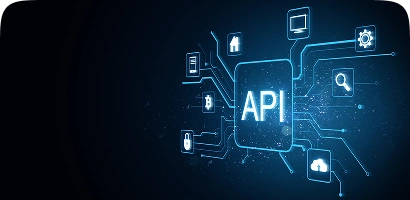
Governed APIs plug into enterprise ecosystems, enabling controlled access, security, and consistent cross-platform communication globally.

Modern middleware unifies legacy and cloud systems, simplifying integrations and accelerating enterprise transformation journeys globally.

Event-driven architectures synchronize enterprise workflows, enabling instant reactions, scalability, and continuous operational intelligence for businesses.
Frequently Asked Questions (FAQ's)
Enterprise system integration is the process of connecting multiple business applications, platforms, and data sources so they operate as a unified ecosystem. It enables seamless data flow and process automation across ERP, CRM, legacy systems, cloud platforms, and SaaS tools. Proper integration eliminates silos, reduces manual effort, and ensures systems work together reliably to support end-to-end business operations at enterprise scale.
As organisations adopt more digital platforms, systems naturally become fragmented. Enterprise system integration ensures consistent data, uninterrupted workflows, and real-time visibility across departments. Without integration, businesses face inefficiencies, delayed decisions, and operational risk. Integration supports scalability, improves productivity, and enables organisations to fully realise the value of digital transformation initiatives.
Enterprise integration typically involves ERP systems, CRM platforms, HR systems, finance applications, data warehouses, cloud services, SaaS applications, and legacy platforms. Integration ensures these systems exchange data reliably and support cross-functional processes. Modern integration approaches also include event-driven architectures and middleware platforms to handle complexity and scale effectively.
Middleware acts as an intermediary layer that manages communication, data transformation, orchestration, and security between systems. It decouples applications, making integrations more resilient and scalable. Middleware platforms simplify complex integration landscapes by centralising logic, reducing point-to-point dependencies, and enabling monitoring, governance, and change management across enterprise systems.
Without proper integration, organisations experience data silos, duplicated effort, manual workarounds, inconsistent reporting, and increased error rates. Over time, these issues lead to slower operations, higher costs, and reduced agility. Poor integration also increases security and compliance risks due to inconsistent controls and limited visibility across connected systems.
Yes, when designed correctly. Secure enterprise integration includes authentication, authorisation, encryption, monitoring, and access controls across systems. Middleware platforms enforce security policies consistently, reducing the risk of data leakage or unauthorised access. Integration security also supports compliance requirements by maintaining audit trails and controlled data movement across platforms.
The timeline depends on system complexity, number of integrations, and business requirements. Many integrations can be delivered incrementally within weeks, while larger programmes evolve over months. A phased approach reduces risk, delivers value early, and allows integration capabilities to scale as enterprise needs grow.
Yes. Modern integration platforms are designed to connect legacy systems with cloud and SaaS applications without requiring full system replacement. Integration layers expose legacy capabilities through APIs or connectors, allowing organisations to modernise gradually while preserving existing investments and operational stability.
By automating data exchange and workflows, enterprise integration enables faster responses to change. Teams gain real-time access to information, processes become more efficient, and systems adapt more easily to new requirements. This agility allows organisations to scale operations, launch new services, and respond quickly to market demands.