
Traditional Architectures Struggle With Real-Time Change
- Asynchronous Communication Patterns
- Loose Coupling Architecture
- Event Schema Standardisation
- Event Routing Logic
- Decoupled Service Interactions
- Failure Isolation Handling
- Event Stream Processing
- Message Broker Integration
- High Throughput Pipelines
- Low Latency Delivery/li>
- Event Ordering Guarantees
- Scalable Event Consumption
- Distributed Event Handling
- Stateful Stream Processing
- Event Correlation Logic
- Temporal Event Analysis
- Complex Event Detection
- Real-Time Decision Enablement
- Service Autonomy Design
- Event Based Coordination
- Stateless Processing Models
- Independent Service Scaling
- Deployment Decoupling
- Resilient Service Interactions
- Event Version Management
- Schema Evolution Strategy
- Access Control Policies
- Event Auditability
- Compliance Traceability
- Lifecycle Governance
- Event Flow Visibility
- Processing Lag Monitoring
- Failure Detection Alerts
- Distributed Tracing
- Operational Metrics Tracking
- SLA Monitoring

Clarity: Business events identified clearly before designing systems or selecting messaging technologies.
Responsiveness: Architecture designed around real-time reactions rather than synchronous request patterns.
Priority: Events treated as first-class citizens across platforms and integrations.

Independence: Producers and consumers remain independent, reducing cascading system failures significantly.
Decoupling: Event-driven flows eliminate hard dependencies between enterprise services.
Stability: Changes introduced without breaking downstream consumers.

Resilience: Event pipelines designed to handle unpredictable volumes without performance degradation.
Elasticity: Horizontal scalability supported across brokers, consumers, and processing layers.
Longevity: Architecture supports growth without architectural rewrites.
Visibility: Observability ensures event flows remain transparent and traceable.
Prevention: Failures detected early before impacting business operations.
Governance: Controls applied consistently across event lifecycles.
Engineering Real-Time Systems That React, Decide, and Evolve Autonomously
By 2030, systems no longer wait, they respond, adapt, and self-correct instantly. Event-driven architecture becomes the foundation of intelligent automation, enabling continuous awareness, real-time decisions, and scalable responsiveness. Every digital action becomes a trigger for smarter workflows, faster outcomes, and always-on operational intelligence.
Streams
Reactions
Processing
Engines
Triggers
Layers
Pipelines
Awareness
Today’s Users Don’t Wait For Systems Anymore

Event-driven architecture eliminates constant polling by reacting immediately when something changes. This reduces unnecessary system load, improves responsiveness, and enables efficient real-time data processing across enterprise platforms.

Delays in processing events directly impact customer experience and operational decisions. Event-driven integration reduces latency, enabling faster responses and timely actions across business workflows.

As transaction volumes grow unpredictably, synchronous systems struggle. Event-driven architectures absorb spikes smoothly, supporting scalability without service degradation.

From notifications to fraud detection and analytics, modern digital products rely on event streams. Event-driven architecture enables innovation without tightly coupling systems.
Azilen Makes Real-Time Architecture Behave Predictably

Unlimited

View

View

Tactics


Sense

with
Problem
Statement

Fast

Helping enterprises adopt event-driven architectures for real-time responsiveness, scalable workflows, and intelligent system communication across distributed environments at scale seamlessly.
Explore Our Integration And Middleware Expertise
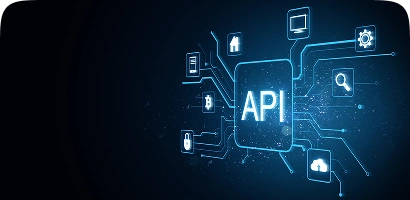
Strong API governance secures open banking ecosystems, ensuring compliance, trust, and controlled data sharing globally.

Enterprise platforms become responsive through event-driven models, syncing data, decisions, and workflows in real-time operations.

Middleware processes events instantly, powering open banking transactions and intelligent financial automation at scale globally.
Frequently Asked Questions (FAQ's)
Event-Driven Architecture is a design approach where systems respond to events in real time rather than waiting for direct requests. Events represent meaningful state changes and trigger actions across systems asynchronously. This architecture improves scalability, responsiveness, and resilience by decoupling services, making it ideal for modern enterprises handling high volumes of real-time data and complex integration requirements across distributed platforms.
Enterprises adopt Event-Driven Architecture to handle real-time business needs efficiently. It reduces latency, improves system scalability, and allows independent services to react instantly to changes. This approach supports modern use cases such as real-time analytics, notifications, fraud detection, and customer interactions, while reducing tight dependencies that often cause failures in traditional synchronous architectures.
Traditional architectures rely on synchronous request-response models where systems wait for instructions. Event-Driven Architecture uses asynchronous events, allowing systems to react independently. This reduces coupling, improves fault tolerance, and enables better scalability. Unlike traditional designs, event-driven systems handle spikes gracefully and support continuous, real-time processing without blocking dependent services.
Yes, Event-Driven Architecture works extremely well with microservices. It allows services to communicate through events rather than direct calls, enabling independence and scalability. Each service reacts to events it cares about, reducing dependencies and improving resilience. This approach supports faster deployments, independent scaling, and better fault isolation across complex microservices ecosystems.
Event-Driven Architecture typically uses message brokers, event streaming platforms, and stream processing tools. These technologies manage event publishing, routing, and consumption reliably at scale. Combined with monitoring and governance tools, they enable real-time processing, observability, and control across distributed systems handling continuous event flows.
Event-Driven Architecture improves scalability by decoupling producers from consumers. Systems scale independently based on event volume rather than synchronous demand. Event streams absorb traffic spikes, allowing downstream services to process events at their own pace. This design prevents bottlenecks and supports elastic growth without redesigning the entire architecture.
It introduces architectural discipline but reduces long-term complexity. While event-driven systems require proper governance, schema management, and observability, they eliminate fragile dependencies common in synchronous systems. With the right design practices, Event-Driven Architecture becomes easier to maintain, more resilient, and better suited for evolving enterprise needs.
Yes. Legacy systems can publish and consume events through middleware and integration layers. This allows organisations to modernise gradually without replacing existing platforms. Event-Driven Architecture enables legacy systems to participate in real-time workflows while preserving stability and protecting prior technology investments.
By processing events immediately as they occur, Event-Driven Architecture enables real-time insights and actions. Systems react instantly to changes, supporting use cases such as alerts, automated responses, analytics, and operational decisions. This reduces delays between data generation and business action, improving responsiveness across enterprise operations.