Experience Engineering Services
We deliver digital transformation experience engineering that feels simple, intuitive, and consistent across every channel, strengthening engagement, trust, and lasting customer loyalty.

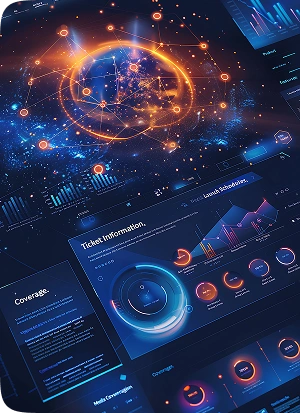
We help UK organisations understand how users think and behave. Using experience engineering research and behavioural insight, we shape UX strategies that reduce friction and guide improvements.
- User Insights
- Journey Mapping
- UX Roadmaps
- Usability Testing

We transform customer experience across channels, workflows, and support paths. Our CX services remove friction, improve clarity, and align brand interactions, creating stronger trust, measurable satisfaction gains, and seamless continuity.
- Experience Blueprinting
- NPS / CSAT Growth
- Workflow Efficiency
- Support Journey Optimisation

We design omnichannel experiences that let users move smoothly between web, app, and in-person touchpoints. Messaging, navigation, and context stay aligned, producing one continuous journey that feels predictable, connected, and easy to follow across channels.
- Unified Journeys
- Consistent Messaging
- Connected Data Flows
- Channel Alignment

We run design thinking workshops that build clarity, prioritisation, and shared alignment. These sessions accelerate decisions, unlock strategic direction, and turn complex challenges into practical, testable prototypes.
- Collaborative Discovery
- Rapid Ideation
- Prototype Sprints
- Alignment Sessions

We ensure digital experiences are inclusive, usable, and WCAG-compliant. Through usability testing, accessibility improvements, and behaviour-led design enhancements, teams create interfaces that feel fair, comfortable, and respectful.
- WCAG Compliance
- Inclusive UI
- Usability Audits
- Behaviour Testing
The Only Experience Engineering You Won’t Snooze Through
When your engineering needs therapy, we’re the ones who listen. Let’s connect for better Experience Engineering.
We build experiences that outsmart the ordinary.
Where experiences feel intentional, seamless, supportive, and built around real human behaviour.
- User journeys simplified to minimize confusion, hesitation, errors, and friction.
- Interfaces built for clarity, accessibility, familiarity, comfort, and confidence.
- Omnichannel interactions unified across digital, service, and physical environments.
- Experience evolution continuous, research-driven, measurable, and user-validated.
Experience Lifecycle Support - Beyond Launch
We support evolving journeys and platforms, keeping every digital experience intuitive, accessible, and reliable.
- Unified experience frameworks ensuring quality across touch points.
- Proactive journey diagnostics detecting friction before users notice.
- Modular experience systems scaling with audiences and channels.
- Performance calibration driven by real behavioral usage insights.
Customer Experience in the UK: Brutally Honest Edition.
Our Digital Powerhouse Stack
We design and refine customer and user experiences using research platforms, prototyping tools, accessibility testing suites, and collaboration environments that help teams move faster with clarity.















Why Azilen Is the Plot Twist Your Engineering Needed

The Spirit Behind Digital Experience Engineering Excellence


Turning “What is this?” into “Wait, that’s brilliant.”
| The Azilen Promise | Upheld |
| Experience Engineering Alignment |  |
| Digital Transformation Readiness | |
| Human-Centred Decision Frameworks | |
| Scalable Experience Architecture | |
| Scalable Architecture Design | |
| Continuous Experience ImprovementShape | |
| Long-Term Strategic Partnerships | |

Frequently Asked Questions (FAQ's)
Improving a digital user journey means understanding where people hesitate, get confused, or need extra help. We simplify steps, clarify choices, and ensure information appears at the right time, so navigation feels natural and completion becomes easier and more confident.
Designing individual screens focuses on visual layout, while journey design considers the full path a user takes. It ensures actions connect smoothly, language feels consistent, and transitions make sense, reducing confusion and improving overall comfort across the product.
Users interact with many polished apps every day, so expectations have naturally risen. People want clarity, familiarity, and minimal effort. When brands deliver smooth, predictable interactions, users stay longer, trust grows, and customer satisfaction improves across digital channels.
When instructions are clear and steps are easier to follow, people don’t need to contact support for basic guidance. By removing friction and confusion, teams spend less time answering repeat questions and more time focusing on meaningful improvements.
Accessibility ensures everyone, including users with diverse abilities or contexts – can use digital products comfortably. When accessibility is considered early, the product becomes more inclusive, fair, and future-ready, and organisations meet modern standards and compliance requirements responsibly.
Behaviour insights reveal how people actually use products, not how we assume they will. This helps us understand real decision patterns, emotional triggers, and navigation habits, allowing us to design interactions that feel more intuitive and reduce effort for users.
Yes. Enhancements can be introduced in small, manageable phases. This allows teams to learn, adapt, and refine continuously. Gradual improvement reduces risk, maintains system stability, and ensures users adjust comfortably to better experiences over time.
We bring teams together through structured collaboration sessions, shared terminology, visual journey maps, and clear prioritisation frameworks. This reduces confusion, builds alignment, and creates a shared understanding of what matters most to users and the organisation.