Skip to content

The Complete UK Enterprise Guide to Digital Transformation Cost, ROI, and Execution

Featured Image

Executive Summary

Digital transformation has become a core operational requirement for UK enterprises seeking sustenance and market leadership. Yet, calculating the cost of modernizing enterprise software remains complex. Quotes across the UK technology sector vary dramatically because “digital transformation” spans everything from cloud migration and custom API integration to enterprise AI deployment and complete legacy decoupling.

What this authoritative guide delivers:

• Exact UK Financial Estimates: Realistic financial benchmarks across project scopes ranging from £10,000 to £500,000+.

• Percentage Budget Allocations: Proven frameworks breaking down capital across software engineering, legacy data integration, change management, and compliance.

• Structural Cost Drivers: Deep dive into how legacy technical debt, custom vs. SaaS decisions, and UK GDPR/regulatory compliance impact invoices.

• Azilen Engineering Methodology: How our London-based team modernizes legacy architectures through decoupled integration middleware without operational downtime.

The Industry Landscape: Why Digital Transformation Budgeting Matters

The advent of digital technology has brought about changes in how UK firms compete. In a report by McKinsey & Company, 90 percent of businesses are now engaged in some kind of digital transformation process.

Despite near-universal adoption, industry research highlights a major risk: up to 70% of digital transformation initiatives fail to achieve their intended commercial or operational targets. These failures rarely stem from poor coding. Instead, they occur due to undisciplined budgeting, unmapped legacy technical debt, and a failure to decouple core software systems before launching new features.

Digital Transformation Cost Breakdown by Project Scope

To build an actionable budget, UK executives must evaluate transformation projects based on technical scope, business impact, and user complexity.

UK DIGITAL TRANSFORMATION COST SPECTRUM (2026)
Project Scope
Typical Cost Range
Targeted Process Automation £10,000 – £30,000
Business Unit/CRM Modernisation £30,000 – £80,000
Mid-Market Core System Overhaul £80,000 – £250,000
Enterprise-Wide Transformation & AI £250,000 - £500,000

1. Targeted Process Automation & MVPs: £10,000 – £30,000

For companies venturing into the world of custom digital solutions for the very first time, this level is centered on removing manual administration procedures, developing single-function portals or automating workflow processes.

• Typical Features: Basic user authentication, automated data entry, simple dashboard reporting, single API integration.

• Delivery Timeline: 4 to 10 weeks.

2. Business Unit & Platform Modernisation: £30,000 – £80,000

For mid-size organizations or certain enterprise divisions, it may be necessary to integrate disparate systems. This category consists of customized CRM implementations, customer self-service portals, cross-platform mobile applications, and inter-system API integrations.

• Typical Features: Role-Based Access Control (RBAC), multi-tenant data pipelines, third-party software sync (e.g., Salesforce, Sage, Xero), custom customer portals.

• Delivery Timeline: 3 to 6 months.

3. Mid-Market System Modernisation: £80,000 – £250,000

On this scale, companies need to upgrade or rebuild their operational platforms, which span several departments and manage big transactional databases while maintaining high data security standards.

• Typical Features: Cloud-native microservices architecture, automated document processing (IDP), business intelligence dashboards, real-time supply chain or inventory tracking.

• Delivery Timeline: 6 to 12 months.

4. Enterprise-Wide Transformation & AI Deployment: £250,000 – £500,000+

Enterprise transformation initiatives include the modernization of key monolithic ERP/PLM systems, cloud-based data lakes, and autonomous AI systems for the entire organization.

• Typical Features: Decoupled API middleware, enterprise AI/ML models, high-availability multi-cloud deployment, automated regulatory compliance engines.

• Delivery Timeline: 9 to 18+ months.

How Enterprise Capital Is Allocated Across Workstreams

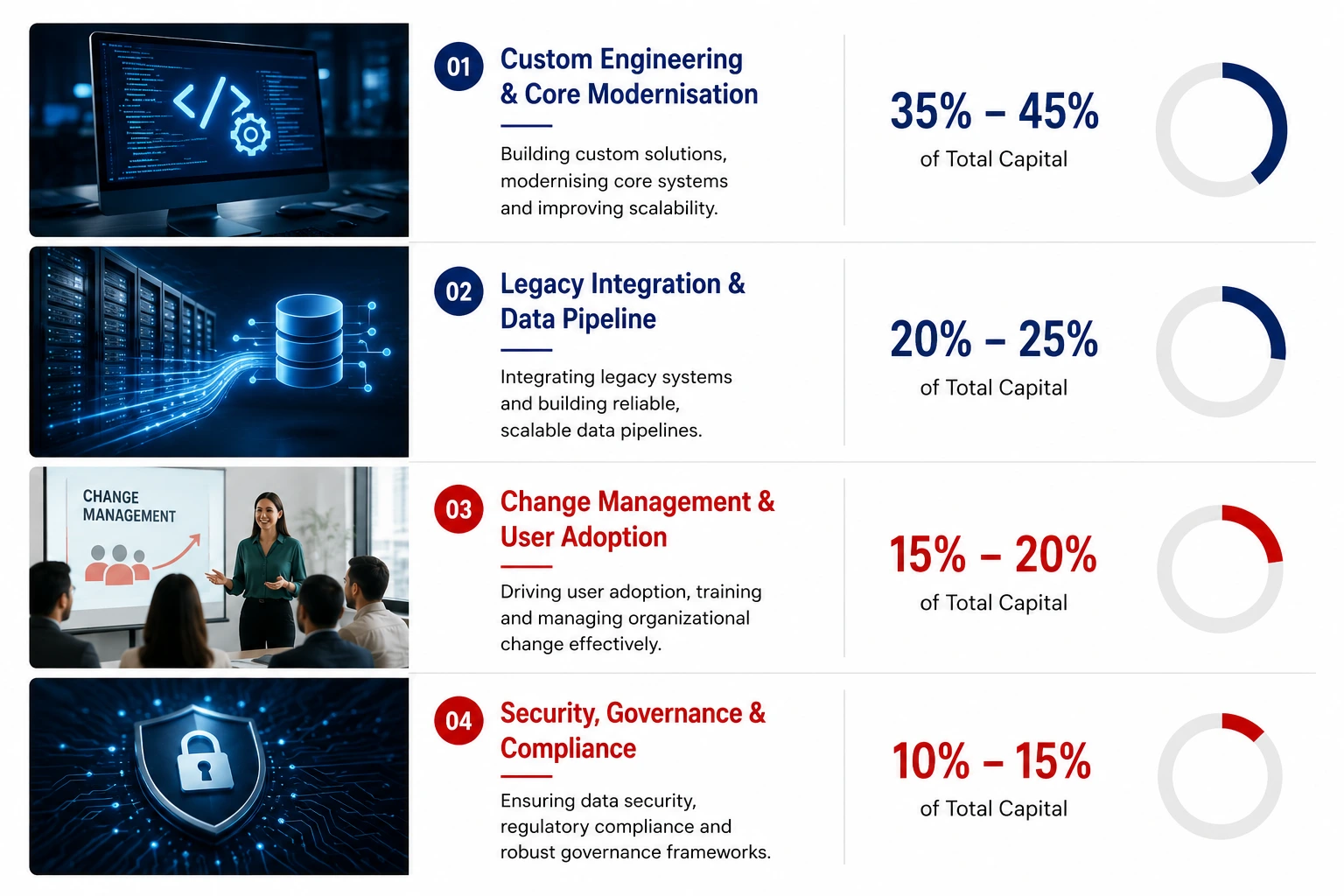
Looking at budgets purely through total cash figures can obscure where value is actually created. Proportional budget analysis demonstrates how leading UK enterprise teams allocate capital across a digital transformation program:

How Enterprise Capital Is Allocated Across Workstreams◦ Software Engineering & Cloud Architecture (35% – 45%): Front-end UI/UX design, back-end microservices, cloud infrastructure setup (AWS, Azure, GCP), and automated testing suites.
◦ Legacy Data Ingestion & System Integration (20% – 25%): Unwinding monolithic code, extracting unstructured supplier/factory data, and building secure RESTful APIs.

◦ Organizational Change Management & Enablement (15% – 20%): User training, workflow documentation, and driving team adoption so software is actually used effectively.

◦ Security, UK GDPR & Regulatory Compliance (10% – 15%): ISO security audits, role-based access encryption, and sector-specific compliance verification.

Key Structural Factors That Drive Transformation Costs

Understanding what drives software engineering quotes upward keeps your leadership team in control of project budgets from day one.

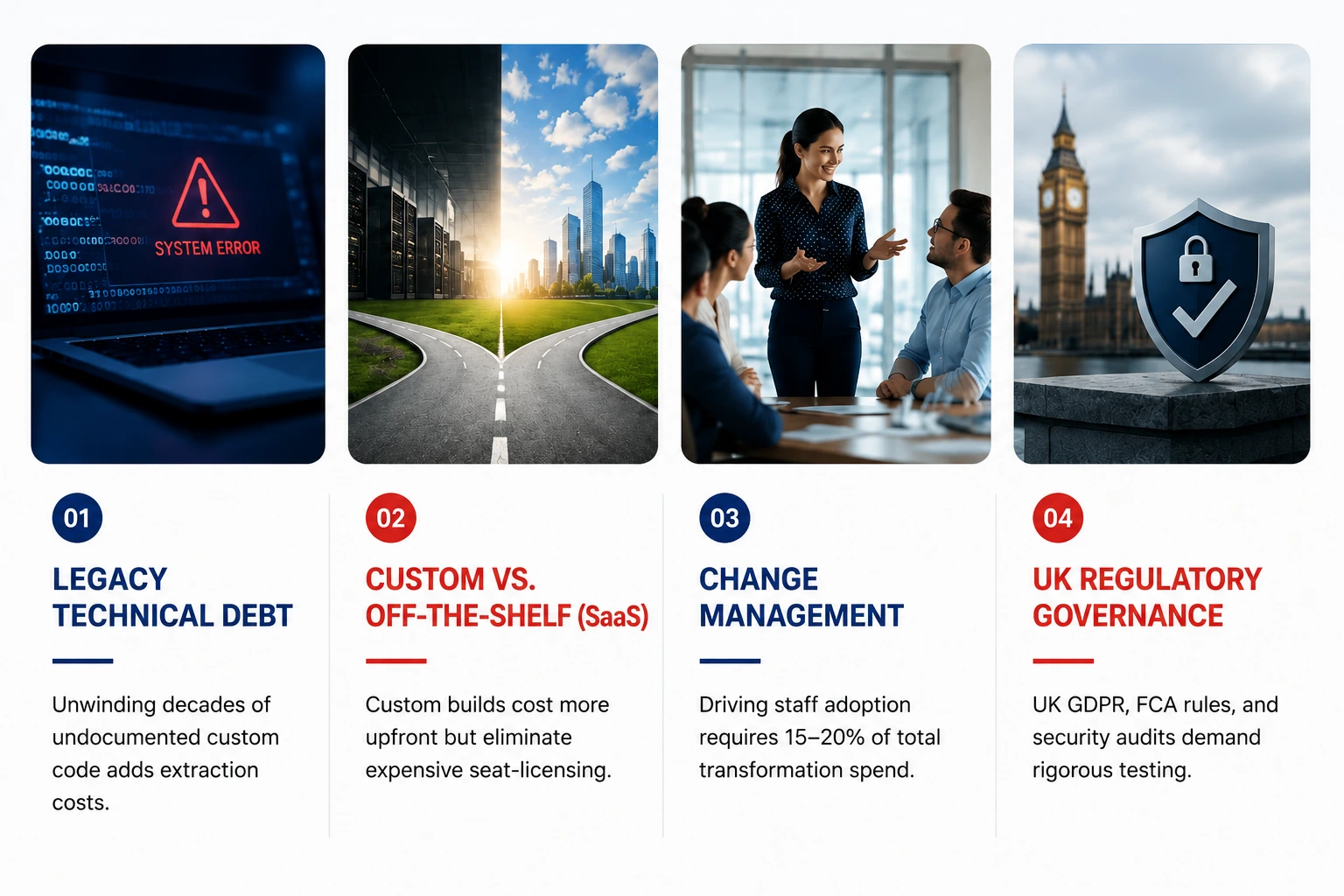
Key Structural Factors That Drive Transformation Costs1. Unresolved Legacy Technical Debt: Tearing out old databases or attempting to connect modern cloud apps directly to legacy monolithic platforms introduces friction. Extracting, cleansing, and re-formatting unstructured legacy data requires specialized engineering hours.
2. Custom Software vs. SaaS Seat Licensing: Commercial off-the-shelf software offers low initial setup costs. However, as your workforce scales, monthly per-user licensing fees balloon rapidly. Custom product engineering requires higher upfront capital but creates proprietary intellectual property with zero recurring seat costs.

3. Complex System Integrations: Connecting a new digital platform to 5+ internal systems (such as legacy SAP ERPs, factory MES logs, and third-party accounting software) increases quality assurance testing and security scope.

4. UK Compliance & Security Mandates: Operating in the UK requires strict adherence to legal standards. Incorporating UK GDPR controls, sector guidelines (like FCA or NHS digital standards), and end-to-end encryption adds necessary validation layers.

How Azilen Accelerates Digital Transformation

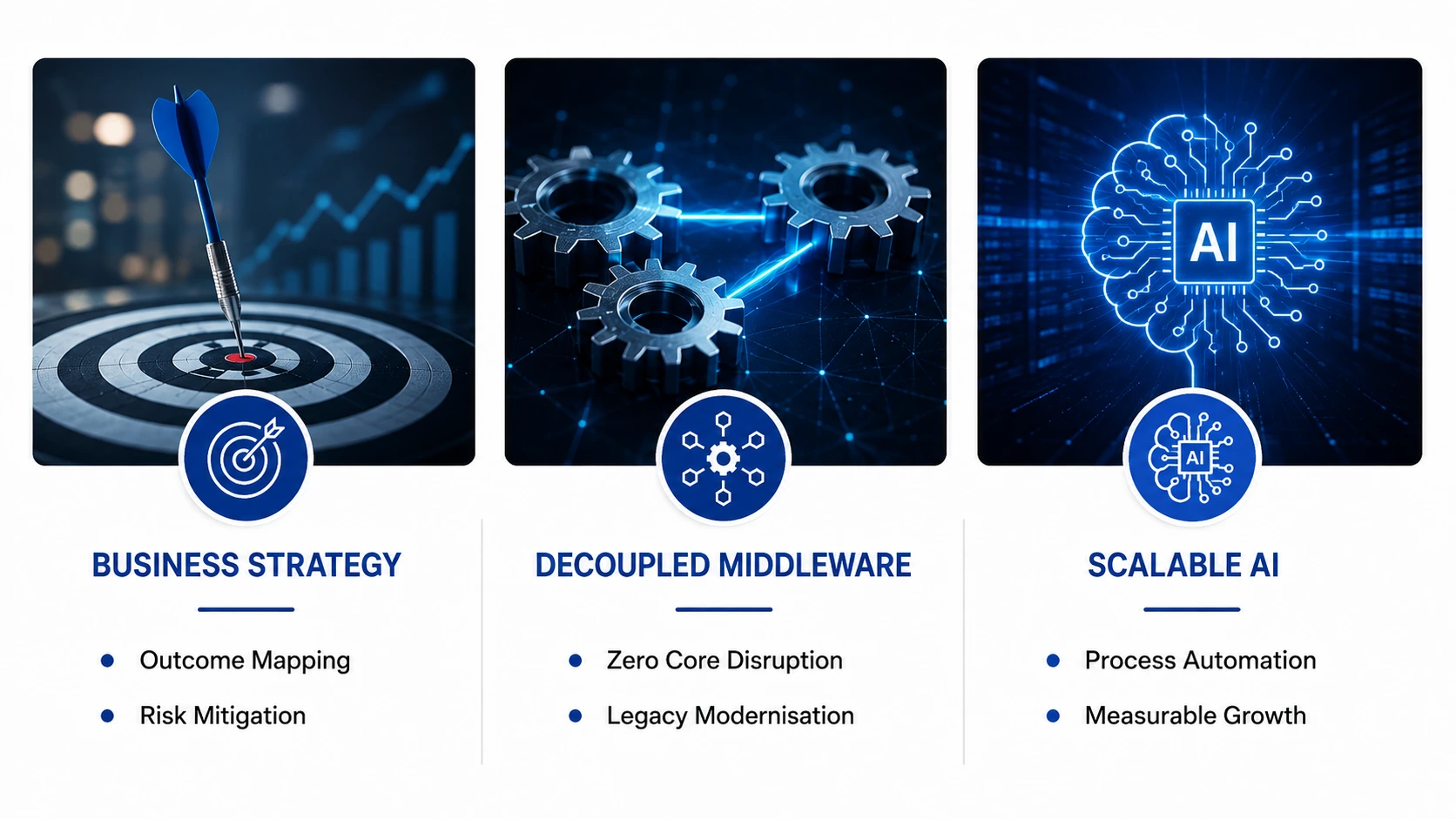
Azilen acts as an enterprise product engineering and digital transformation partner. Operating out of Covent Garden, London, Azilen bridges the gap between high-level business vision and complex technical execution, helping organizations modernize legacy systems without operational downtime.

How Azilen Accelerates Digital Transformation

The ROI Framework: Measuring Business Value

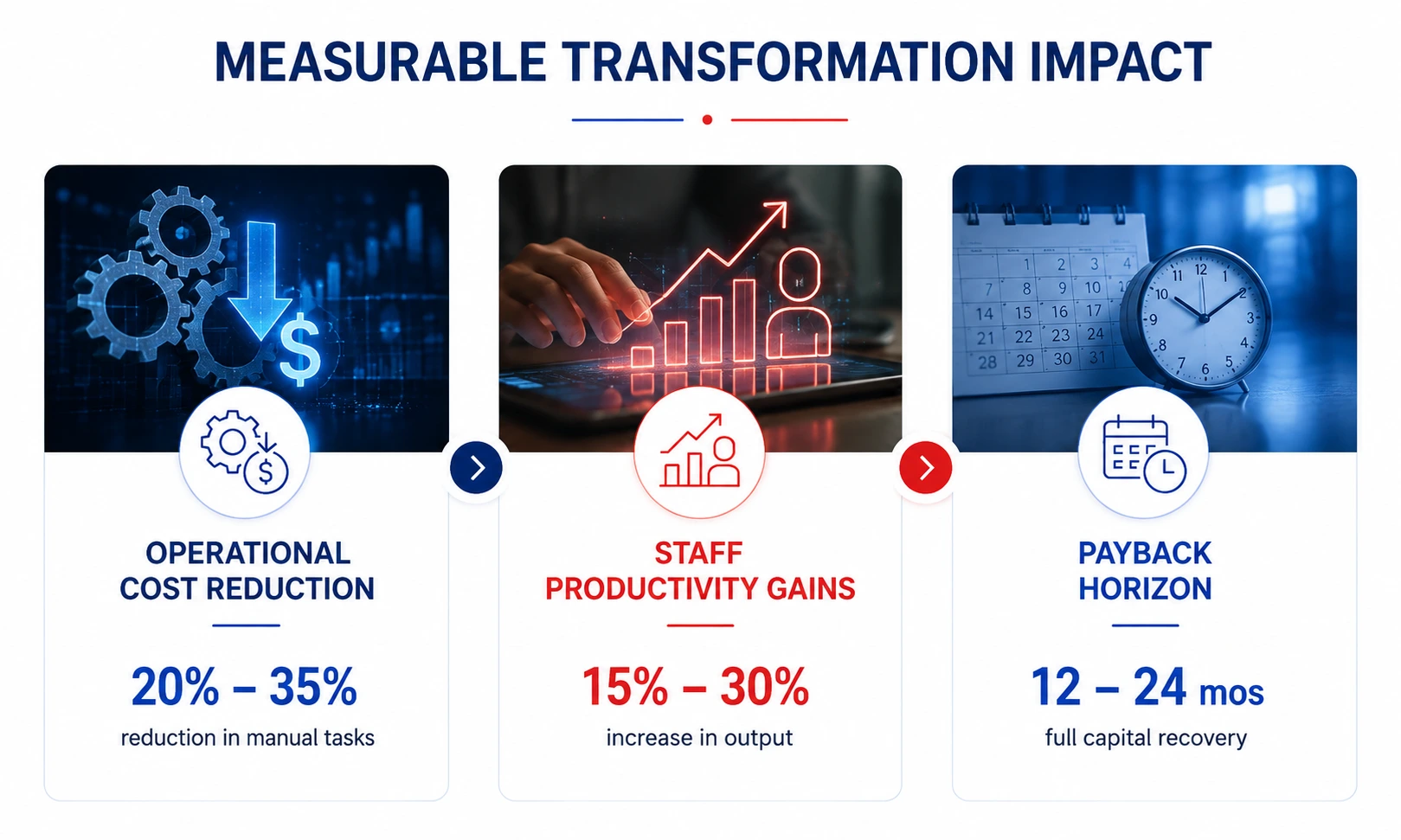
Evaluating digital transformation spend purely as an expense overlooks the substantial returns modern software platforms deliver. Well-planned transformations generate measurable financial returns by lowering operational costs and creating new revenue streams.

Offsetting Costs via UK Tax Relief

UK enterprise teams can leverage government tax incentives to reduce net transformation costs:

Measurable impact• R&D Tax Relief: UK companies engaging in custom software engineering or solving complex technical challenges can claim valuable tax relief on qualified engineering expenditure.

• Regional Growth Grants: Initiatives like the Made Smarter program provide matched grant funding for adopting advanced digital technology across UK manufacturing hubs.

A 3-Step Strategy to Prevent Cost Overruns

• Invest in a Paid Discovery Phase: Allocate 5% to 8% of your estimated budget to a dedicated technical discovery phase. This uncovers hidden technical debt, validates user requirements, and defines an accurate technical specification before full engineering begins.

• Adopt Decoupled Integration Middleware: Rather than attempting high-risk, full-scale system replacements, use lightweight API middleware to connect legacy databases with modern cloud frontends.

• Execute in 90-Day Sprints: Structure your project into 90-day execution cycles. Ensure every cycle delivers production-ready software features that generate immediate business value before moving to the next phase.

Choose Azilen Technologies for Your Digital Transformation Journey

With 17+ years of experience delivering enterprise digital transformation solutions, Azilen Technologies helps organizations build the data, integration, and traceability capabilities needed for sustainable growth and emerging regulatory demands, such as Digital Product Passport (DPP) implementations.

Digital Strategy & Architecture Consulting: Aligning technology choices with long-term business goals. Azilen conducts comprehensive architecture audits and risk-driven roadmap planning to ensure every project deliverable ties directly to measurable business outcomes.

→ Process Digitisation & Intelligent Automation: Transforming manual, paper-heavy workflows into automated, AI-driven processes. Azilen builds custom software capabilities that optimize operations, eliminate error rates, and streamline team efficiency.

→ Legacy System Modernisation: Upgrading brittle monolithic platforms into agile, cloud-native microservices architectures. Using a decoupled, API-first approach, Azilen modernizes legacy systems without disrupting live operations.

→ Customer Experience Transformation: Engineering intuitive, omnichannel digital portals backed by unified data architecture, enabling real-time personalization and higher customer retention.

→ Innovation As A Service: Providing ongoing engineering capability to prototype, test, and deploy emerging technologies, including enterprise AI tools and automated data pipelines.

FAQs: Digital Transformation

1. What is the typical timeframe for a digital transformation project in the UK?

Timelines vary based on scope. A focused process automation project takes 4 to 10 weeks. A mid-market platform modernization typically spans 3 to 6 months, while enterprise-wide legacy transformations take 6 to 18 months, delivered through phased release cycles.

2. Should we build custom software or buy an off-the-shelf (SaaS) tool?

Off-the-shelf tools work well for standard, non-differentiating business functions (e.g., general accounting). However, if a process drives your core competitive advantage or involves complex workflows, custom software provides an exact fit, complete data ownership, and zero ongoing per-seat licensing fees.

3. What are the typical hidden costs in digital transformation?

Common overlooked expenses include cloud hosting infrastructure, third-party API subscription fees, ongoing software maintenance (typically budgeted at 15% to 20% of initial development costs annually), data migration from legacy databases, and staff training.

4. How do we calculate the ROI of our software investment?

Track baseline operational metrics before launch, such as average order processing time, manual error rates, customer onboarding friction, and system downtime costs. Divide your annual operational savings by the initial software development cost to calculate your exact payback period.

5. How does Azilen UK ensure software projects stay on budget?

Azilen UK uses a risk-mitigated, outcome-led delivery approach. By conducting technical discovery, using decoupled integration architectures, and executing in transparent agile sprints, Azilen delivers continuous software releases that keep budgets predictable and aligned with business objectives.

Kulmohan Makhija
Kulmohan Makhija
Vice President – Growth & Enterprise Strategy

Kulmohan Makhija is an enterprise technology and business strategy writer with over 12 years of experience analyzing digital transformation across global and European markets. His work focuses on applied artificial intelligence, product engineering, enterprise architecture, and large-scale legacy modernization. He explores how complex organizations modernize core systems, adopt AI responsibly, and align innovation with regulatory, cultural, and operational realities — particularly within the UK and broader European technology landscape. With a pragmatic enterprise perspective, Kulmohan emphasizes transformation that delivers measurable impact without disrupting mission-critical operations. His writing bridges executive strategy with technical depth, providing clarity for technology leaders, product teams, and decision-makers navigating modernization journeys.

Related Insights