



Skip to content

GS1 Excellence Day 2026 Recap: Key Digital Product Passport Insights

Featured Image

GS1 Excellence Day 2026 brought together leaders from retail, manufacturing, logistics, sustainability, technology, and supply chain ecosystems to explore how businesses can build more transparent, resilient, and data-driven value chains.

Centered around the themes of Data. Demand. Supply.

The event highlighted the growing importance of trusted product information in shaping the future of global commerce.

Representing Azilen and Azeon, our AI Agents for Customer Service, Kulmohan Makhija and Frank Miska attended the event to engage with industry experts, explore emerging Digital Product Passport (DPP) initiatives, and gain insights into how organizations are preparing for a future where transparency, sustainability, and customer trust are becoming business essentials.

One message stood out throughout the day: Digital Product Passports are rapidly moving from concept to reality, and organizations that prepare early will be best positioned to benefit.

What GS1 Excellence Day 2026 Was Really About

GS1 event

At first glance, GS1 Excellence Day appears to be a conference about standards, supply chains, and digital transformation.

But underneath every keynote, discussion, and networking conversation was a larger question:

How can businesses create trusted, accessible, and interoperable product information across the entire product lifecycle?

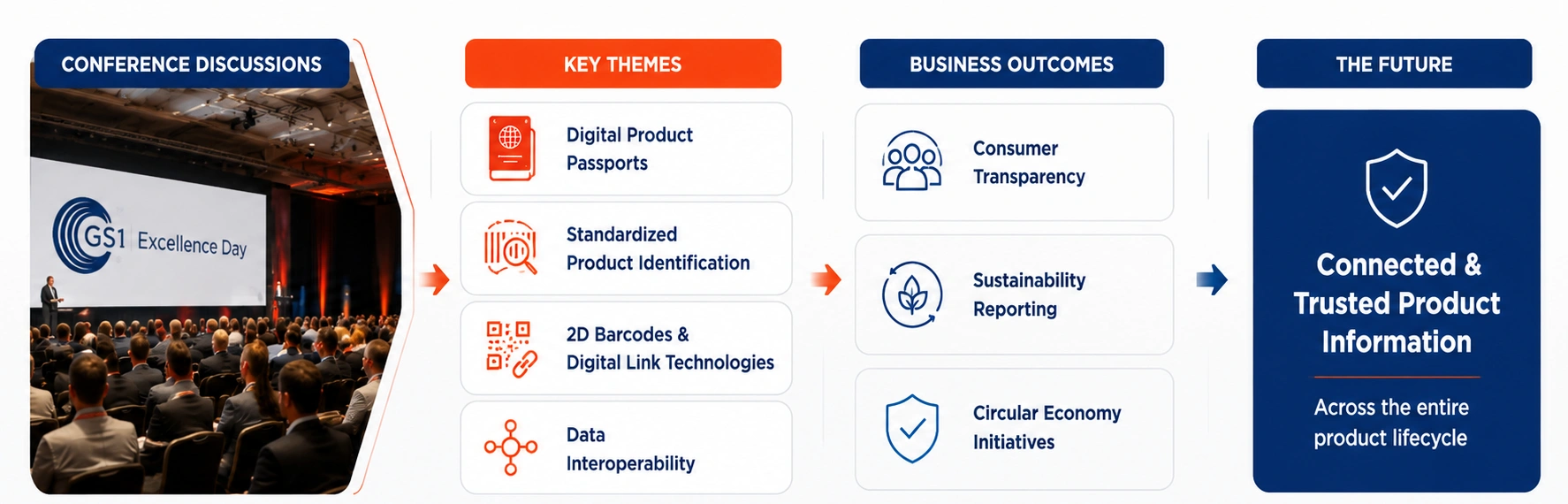
The answer repeatedly pointed toward:

→ Digital Product Passports
→ Standardized Product Identification
→ 2D Barcodes and Digital Link Technologies
→ Data Interoperability
→ Circular Economy Initiatives
→ Sustainability Reporting
→ Consumer Transparency

As new regulations emerge across Europe and global markets, organizations are realizing that product data can no longer remain fragmented across disconnected systems.

The future belongs to companies that can provide accurate information about a product’s origin, composition, sustainability impact, repairability, recycling information, certifications, and lifecycle journey – all through a single digital experience.

That future is exactly what Digital Product Passports are designed to enable.

6 Key Takeaways from GS1 Excellence Day 2026

Our GS1 event key takeaways

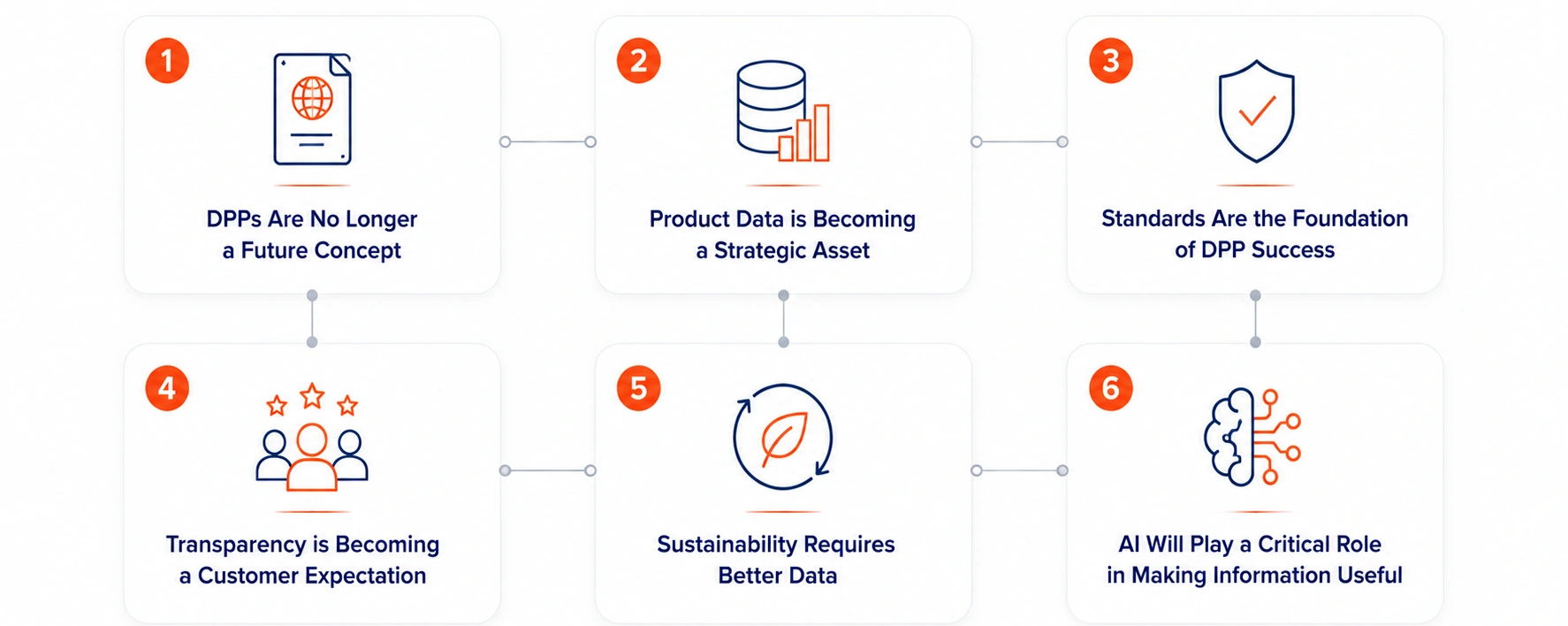
1. Digital Product Passports Are no Longer a Future Concept

A few years ago, DPPs were viewed as an emerging idea.

Today, they are becoming a business priority.

Many discussions at the event focused on how organizations are preparing for upcoming requirements while simultaneously using DPP initiatives to improve customer experiences, operational visibility, and sustainability reporting.

The message was clear:

The question is no longer whether Digital Product Passports will become mainstream.

The question is how quickly businesses can prepare for them.

2. Product Data is Becoming a Strategic Asset

One theme appeared repeatedly throughout the day.

Companies often invest heavily in products but underestimate the value of the data associated with those products.

As businesses move toward greater transparency and traceability, product information becomes just as important as the physical product itself.

Organizations that can effectively manage and distribute trusted product data will gain advantages in:

→ Regulatory Compliance
→ Customer Trust
→ Supply Chain Visibility
→ Sustainability Reporting
→ Operational Efficiency

The businesses that treat product data as a strategic asset today will be better positioned for tomorrow’s market demands.

3. Standards Will Be the Foundation of DPP Success

Digital Product Passports only work when every stakeholder speaks the same language.

Manufacturers, suppliers, distributors, retailers, regulators, and consumers all need access to consistent information.

This is where GS1 standards become critical.

Standardized identification, structured data models, and interoperable systems ensure that product information remains accurate and accessible across the entire value chain.

Without standards, DPP initiatives become fragmented.

With standards, they become scalable.

DPP assesmnet free test
Ready for Digital Product Passports?
Assess your DPP readiness and identify compliance gaps.

4. Transparency is Becoming a Customer Expectation

Consumers increasingly want to know more about the products they purchase.

Where was it made?

What materials were used?

Is it recyclable?

How can it be repaired?

What certifications does it hold?

The organizations that can answer these questions instantly and accurately will build stronger customer trust than those that cannot.

Transparency is no longer simply a compliance requirement.

It is becoming a competitive differentiator.

5. Sustainability Requires Better Data

Sustainability conversations at the event consistently returned to one challenge:

Organizations cannot improve what they cannot measure.

Reliable sustainability reporting depends on accurate product and supply-chain information.

Digital Product Passports create a structured framework for collecting, maintaining, and sharing that information throughout a product’s lifecycle.

This enables businesses to move beyond sustainability claims and toward measurable sustainability outcomes.

6. AI Will Play a Critical Role in Making Product Information Useful

One of the most interesting observations from the event was that collecting product data is only half the challenge.

The bigger challenge is making that information accessible and actionable.

As Digital Product Passports grow in scale, organizations will need intelligent systems that can:

→ Retrieve Relevant Product Information Instantly
→ Answer Customer Questions in Natural Language
→ Surface Compliance-Related Insights
→ Assist Support Teams
→ Simplify Complex Product Information

This is where AI and Digital Product Passports begin to converge.

The Future of Product Transparency Has Already Started

Future with GS1

Walking through the discussions at GS1 Excellence Day 2026, one thing became very clear.

The future of commerce does not belong to organizations that simply manufacture products. It belongs to organizations that can tell the complete story behind those products.

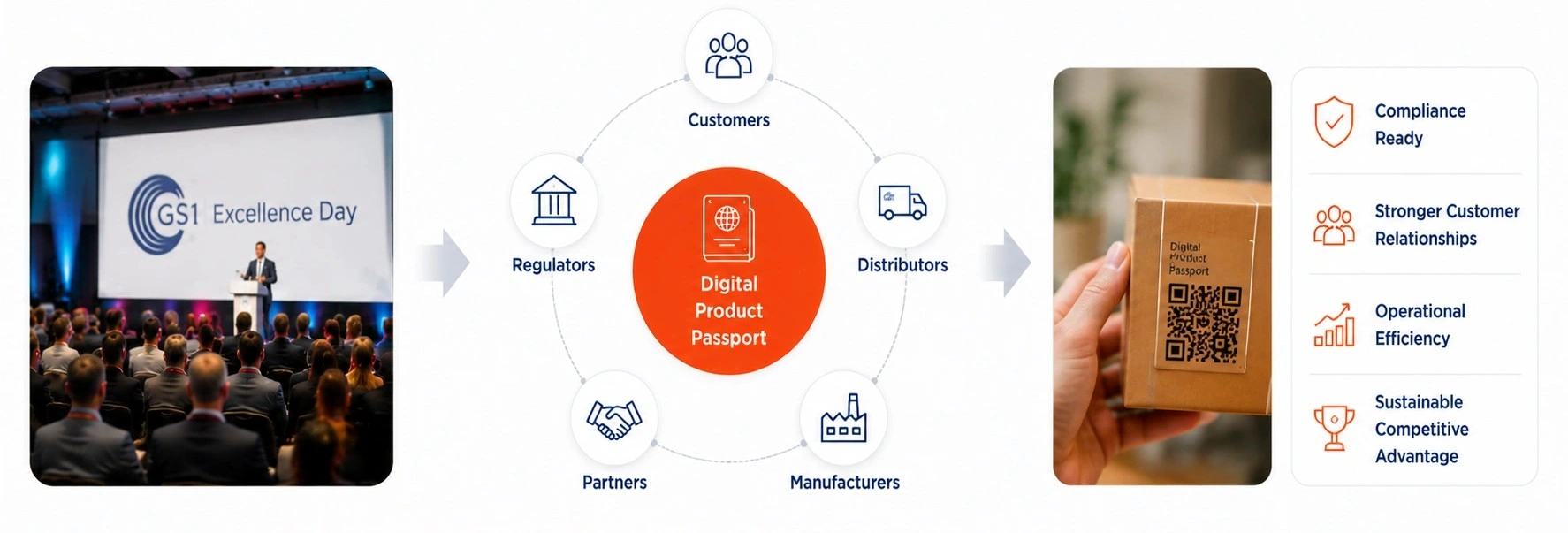
Customers, regulators, distributors, and partners increasingly expect access to trusted information whenever and wherever they need it.

They want transparency.

They want traceability.

They want proof.

Digital Product Passports are becoming the bridge that connects physical products with digital intelligence.

The businesses that embrace this shift early will not only achieve compliance faster, but they will also create stronger customer relationships, unlock operational efficiencies, and build lasting competitive advantages.

The future is no longer about selling products.

It is about delivering trusted product experiences.

Why Azeon Matters in a DPP-Driven World

GS 1 event Azeon pitch

The future of customer engagement will not be built around disconnected support experiences.

It will be built around context.

Azeon, AI Agents for Customer Service helps organizations transform product information, customer history, business knowledge, and support workflows into intelligent conversations that drive faster resolutions and better experiences.

Whether customers are looking for sustainability details, warranty information, compliance documentation, repair guidance, or product lifecycle information, Azeon helps make those interactions seamless.

Because the future is not just about collecting data.

It is about making that data useful.

GS1 and DPP digital trasformation
Build for the future with confidence.
Explore digital transformation solutions tailored to your business goals.
Team Azilen

Related Insights