

10 Best Customer Support Platforms in the UK

What used to be a fairly straightforward choice between helpdesk tools has become a much broader market, with platforms covering everything from shared inboxes and ticket management to AI-driven automation, customer data, ecommerce support and product-led conversations.
That makes the usual “top 10” comparison a little less useful. Two platforms can offer many of the same features while being built for completely different types of businesses.
This list looks at 10 customer support platforms in the UK market, with a closer look at what each platform is built around, who it suits, and where it may not be the right fit.
➡️ AI-Powered Automation: We looked at how effectively each platform automates ticket handling, customer replies, routing, and repetitive support tasks.
➡️ Omnichannel Customer Support: Platforms were evaluated on their ability to manage email, live chat, social media, voice, SMS, and helpdesk conversations from one dashboard.
➡️ Ease of Setup & User Experience: The best customer support platforms should be simple to implement, easy for agents to use, and fast for teams to adopt.
➡️ CRM, eCommerce & Business Integrations: We considered how well each platform integrates with tools like Shopify, Slack, Salesforce, HubSpot, CRMs, and billing systems.
➡️ Scalability for Growing Businesses: We prioritised platforms that work well for startups, mid-sized businesses, and enterprises handling large customer volumes.
➡️ AI Platform Innovation: Special attention was given to platforms building advanced AI capabilities such as agentic AI, conversation memory, predictive support, and intelligent workflows.
➡️ Pricing & Long-Term Value: We compared pricing models, hidden costs, automation value, and overall return on investment for businesses.
➡️ Security & Compliance Standards: Enterprise-grade security, GDPR compliance, SOC 2 certification, and data protection capabilities were also considered during evaluation.
The 10 Best Customer Support Platforms in the UK
The UK market is full of customer support tools, but not every platform fits every business. Here are the best customer support platforms in the UK that stand out in 2026 for AI, automation, ease of use, and customer experience.
1. Azeon – Best AI-Powered Customer Support Platform
Website: azeon.ai
Best for: Businesses that want serious AI automation without replacing their existing tools.
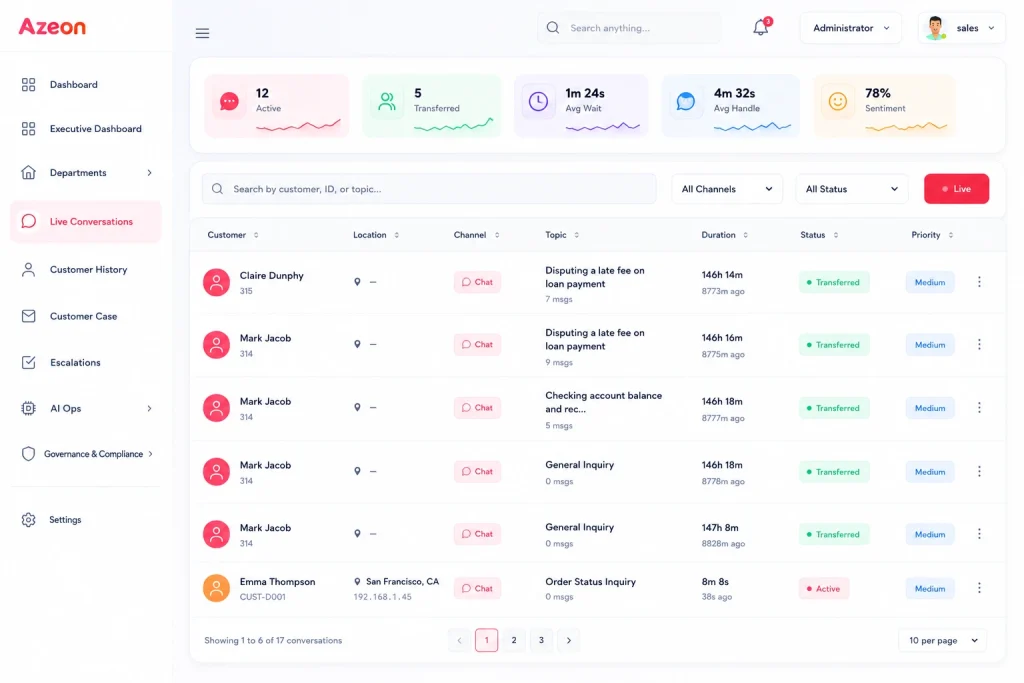
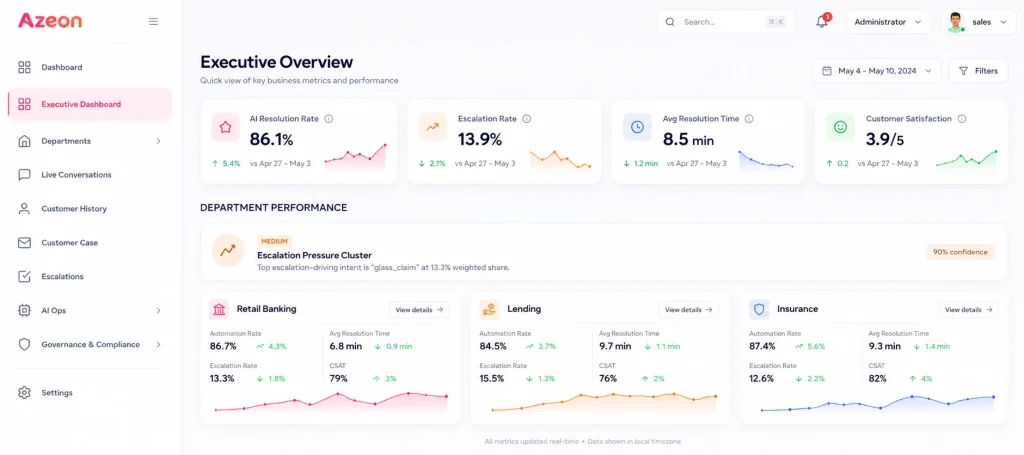
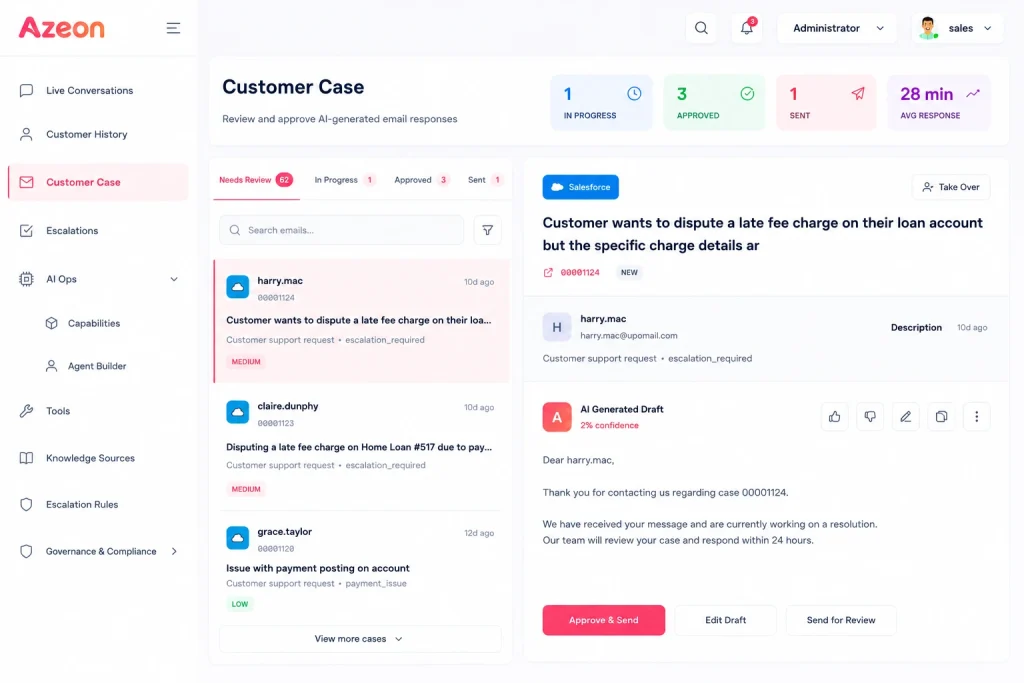
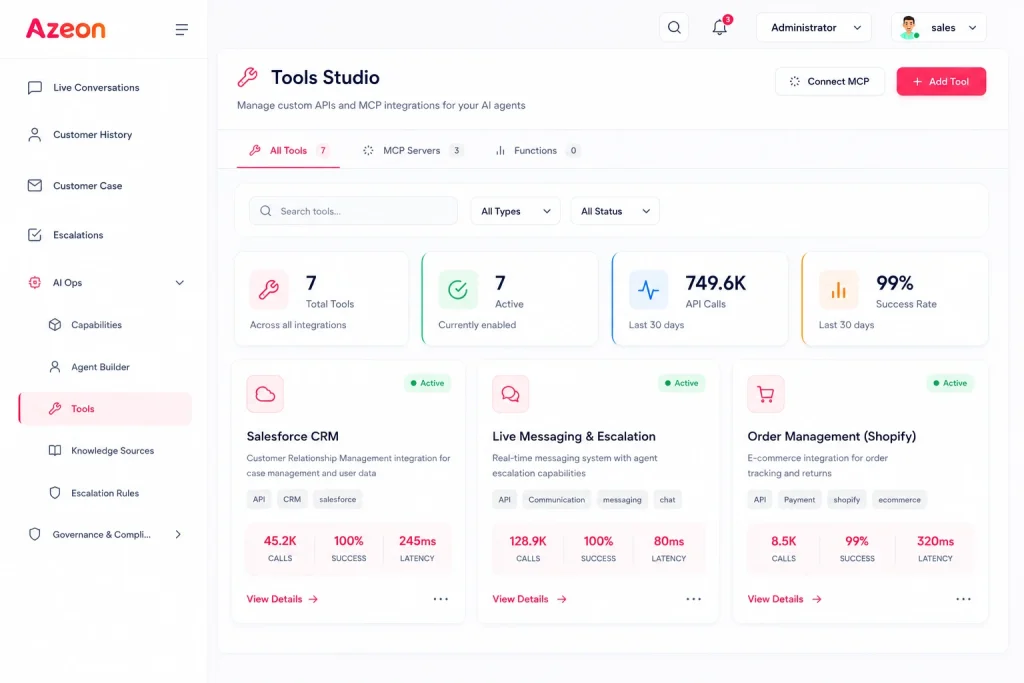
Azeon is a full agentic AI built for high-volume customer support across chat, email, and voice. Think of it as a smart layer on top of your current support stack. No ripping out your existing tools, no long migrations.
What makes Azeon different is its CX Brain. It understands customer intent, reads sentiment, and reasons before it responds. It does not just follow rules. It actually thinks.
Then there is CX Memory, a shared intelligence layer that remembers every past conversation. So customers never have to repeat themselves. Ever.
Key highlights:
Azeon also integrates with your CRM, ERP, billing tools, and eCommerce platforms right out of the box.
It works across finance, retail, FMCG, and SaaS, making it one of the most flexible and best customer support platform choices on this list.
For UK businesses ready to scale support without scaling headcount, Azeon is the clear number one.
2. Freshdesk – Best for Small Teams Getting Started
Website: freshdesk.com
Best for: Small businesses that need a reliable, affordable, all-in-one helpdesk.
Freshdesk brings customer enquiries into a central ticketing system, with features for ticket management, SLAs, automation, knowledge bases, reporting, and internal collaboration. Its Freddy AI capabilities can assist agents with ticket summaries, suggested responses, solution articles, and other repetitive support tasks.
For businesses that need broader channel coverage, Freshdesk Omni extends support across channels such as email, web chat, WhatsApp, Facebook, and Instagram. The distinction is worth checking when comparing Freshdesk plans and capabilities.
Freshdesk also offers a Free Program for up to two agents for six months, while paid plans add more advanced automation, analytics, routing, and AI capabilities.
For small UK businesses moving beyond shared inboxes, Freshdesk provides a straightforward starting point without limiting them to basic ticket management as their support operation grows.
3. Help Scout – Best for Email-First Support Teams
Website: helpscout.com
Best for: Small teams that live in the inbox and want personal, human-feeling support.
Help Scout keeps things beautifully simple. You get a shared inbox, a built-in knowledge base, and a handy Beacon widget for live chat. The whole experience feels like email, which is why customers love it.
Over 12,000 businesses worldwide use Help Scout. Pricing starts at $50/month with unlimited users, a brilliant deal for growing teams.
Businesses looking to improve customer support often also invest in digital transformation to scale operations, improve efficiency, and deliver better customer experiences.
You can also explore our blog on the top digital transformation companies in the UK to discover leading technology partners driving innovation in 2026.
4. Tidio – Best for eCommerce Brands on a Budget
Website: tidio.com
Best for: Small eCommerce shops that want live chat and AI chatbots without a big price tag.
Tidio is a strong fit for small eCommerce businesses looking for live chat and affordable automation. Its Lyro AI Agent handles repetitive questions such as order tracking, returns, shipping, and product information, while human agents can step in when needed.
The platform is designed for quick deployment, so teams can get automated support running in hours rather than weeks.
Tidio currently scores 4.7/5 on major review platforms, and it offers a free plan alongside paid options for businesses that need greater usage.
Its no-code chatbot builder also lets non-technical teams create automated customer flows without relying on developers.
Why it fits small eCommerce teams:
→ Lyro AI: Automates routine customer questions.
→ Quick deployment: Designed to get live chat and automation running quickly.
→ No-code builder: Teams can create chatbot and automated flows themselves.
→ Flexible pricing: Free and paid plans for different support requirements.
5. Zoho Desk — Best for Teams Already Using Zoho
Website: zoho.com/desk
Best for: Businesses already in the Zoho ecosystem looking for a connected helpdesk.
Zoho Desk brings customer enquiries from email, chat, phone, and social channels into a central helpdesk, with ticket management, automation, SLAs, reporting, and knowledge-base tools.
Its Zia AI can summarise tickets, analyse sentiment and tone, suggest replies, and surface relevant knowledge-base content for agents. Zoho Corporation.
The bigger advantage is its connection with other Zoho products. If your business already uses Zoho CRM, Zoho Books, or other Zoho applications, Desk can fit into those existing workflows instead of introducing another standalone support system.
Why it fits Zoho users:
→ Connected ecosystem: Works alongside other Zoho business applications.
→ Zia AI: Supports ticket summaries, reply suggestions, sentiment analysis, and automated assistance.
→ Multichannel support: Email, chat, phone, and social channels.
→ Competitive pricing: Multiple editions let businesses choose features based on their support requirements.
6. Gorgias – Best for Shopify Store Owners
Website: gorgias.com
Best for: UK eCommerce businesses running on Shopify.
Gorgias is built specifically around eCommerce support, with deep integrations for Shopify, WooCommerce, and Magento.
Agents can view customer and order details, process refunds, update information, and manage other common store-related requests without switching between multiple systems.
Its automation tools can also handle repetitive questions around order status, returns, shipping, and product information, while keeping the conversation available to a human agent when needed.
This makes Gorgias particularly relevant for online stores where customer support is closely tied to order management.
Plans start at $10/month for 50 tickets, although costs increase as ticket volume grows. For smaller Shopify stores that want their support operation closely connected to their storefront, Gorgias offers a focused eCommerce support setup.
7. LiveAgent – Best Budget All-in-One Platform
Website: liveagent.com
Best for: Small businesses that want live chat, email, and call center tools in one affordable system.
LiveAgent packs a broad set of customer support tools into a single platform, including email ticketing, live chat, knowledge base, automation, customer portals, and AI support.
Its universal inbox brings customer conversations from different channels into one dashboard, while its ticketing system keeps the interaction history in one place.
It also supports Facebook, Instagram, WhatsApp, Viber, and other social channels, with conversations handled through the helpdesk. Businesses that need phone support can add LiveAgent’s built-in call center and IVR, available from the Medium plan.
Pricing starts at $15 per agent/month when billed annually, with monthly pricing starting at $19. A 30-day free trial is also available, so smaller teams can test the platform before committing.
For a UK startup or small business working with a tight support budget, LiveAgent is worth considering when having several support channels in one system matters more than choosing a specialized platform for a single channel.
Why it fits budget-conscious teams:
→ Multichannel support: Email, live chat, social media, and phone.
→ Built-in call center: IVR, call handling, transfers, and call management.
→ AI and automation: AI chatbot, answer assistance, autoresponders, and workflow automation.
→ Flexible pricing: Multiple plans based on team size and required features.
Want to see how AI is transforming the financial sector? Explore our blog on how AI automation is reducing costs in UK banks.
8. Front – Best for Teams That Prefer Collaborative Inboxes
Website: front.com
Best for: Teams that want to manage customer emails collaboratively without losing the personal touch.
Front gives teams a shared inbox with the familiarity of an email client and the coordination tools of a customer support platform.
Agents can assign conversations, leave internal comments, share drafts, and collaborate in real time, while keeping internal discussions separate from customer-facing replies.
The platform also supports shared inboxes across channels such as email, live chat, SMS, and social messaging, depending on the setup and plan.
Integrations with CRM systems, Slack, and other business tools let teams access customer context and coordinate work without constantly switching applications.
Front also includes workflow rules, analytics, and AI features for categorizing conversations, summarizing threads, and drafting replies.
These capabilities make it useful for remote and hybrid teams that need visibility into who is handling each request and where a conversation stands.
Its main appeal is collaborative communication, particularly for teams managing ongoing customer relationships through email and shared inboxes.
Why it fits collaborative teams:
→ Shared inbox ownership: Assign conversations and track who is responsible.
→ Internal collaboration: Comments, mentions, and shared drafts keep team discussions private.
→ Workflow automation: Rules, templates, and routing help manage incoming messages.
→ Business integrations: Connects with CRM platforms, Slack, and other work tools.
9. HubSpot Service Hub – Best for Teams Tied to HubSpot CRM
Website: hubspot.com
Best for: Businesses already using HubSpot for sales and marketing.
HubSpot Service Hub connects customer support with CRM records, giving agents access to customer details, previous interactions, deals, and other relevant account information while handling a request.
This gives support teams more context without requiring them to switch between separate systems. The platform includes ticket management, automated routing, shared inboxes, knowledge bases, reporting, live chat, and AI-powered support features.
Teams can also use customer data from HubSpot’s wider CRM platform to personalise support and track service activity alongside sales and marketing interactions.
HubSpot offers a free tier with basic service tools, while more advanced automation, reporting, and AI capabilities are available on paid plans.
For businesses already invested in HubSpot, Service Hub provides a straightforward way to bring sales, marketing, and customer support data into one platform.
Why it fits HubSpot users:
→ CRM-connected support: Agents can access customer and deal history.
→ Automated ticket routing: Route requests based on rules, teams, or customer information.
→ Reporting: Track ticket volume, response times, team performance, and customer service metrics.
→ Connected customer journey: Sales, marketing, and service activity can be managed within the wider HubSpot platform.
10. Intercom – Best for SaaS and Product-Led Companies
Website: intercom.com
Best for: SaaS businesses that want in-app messaging and product-led support.
Intercom brings customer support into the product experience. Its Messenger lets users get help without leaving the application, while teams can manage conversations through shared inboxes, ticketing, help centres, and automation.
Its Fin AI Agent can answer questions using existing support content, handle conversations across chat and email, and pass more complex issues to human agents. Teams can also use in-app messages, product tours, and surveys to support onboarding and encourage product adoption.
Intercom is more expensive than several traditional helpdesk platforms on this list, but its focus on support, onboarding, and product engagement makes it particularly relevant to UK SaaS businesses.
Why it fits SaaS teams:
→ In-app support: Customers can get help without leaving the product.
→ Fin AI Agent: Automates customer conversations and support requests.
→ Product engagement: Supports onboarding through messages, tours, and surveys.
→ Connected support: Inbox, ticketing, help center, and automation in one platform.
How to Pick the Best Customer Support Platform for Your UK Business
There is no single “best” platform. However, there is a best platform for you. Here is how to think about it:
Think about your ticket volume first: If you handle fewer than 100 tickets a month, Freshdesk, Tidio, or Help Scout will do the job well.
Once you cross into hundreds or thousands of tickets, you need something smarter, like Azeon.
Think about your main channel: Mostly email? Go with Help Scout or Front. Live chat is a priority? Try Tidio or Intercom.
Need it all, email, chat, and voice? Azeon and Freshdesk both cover everything.
Think about your budget: Free options exist and some of them are genuinely good. Tidio and Freshdesk both offer solid free tiers.
However, as your business grows, investing in a smarter platform pays off quickly. Azeon’s outcome-based pricing means you only pay when tickets are actually resolved, no waste.
Think about AI readiness: AI is no longer optional. Customers expect fast, accurate answers 24/7. Platforms like Azeon go furthest here, resolving 96% of tickets automatically.
Others like Tidio and Freshdesk offer lighter AI that still saves significant time.
FAQs: Top Best Customer Support Platforms
1. What is the best customer support platform in the UK for 2026?
The best customer support platform in the UK depends on your business size, support volume, and automation needs. Some platforms focus on AI-powered ticket resolution, while others offer shared inboxes, live chat, or omnichannel support.
Businesses looking for automation, scalability, and faster response times often prefer modern AI-driven best customer support platforms.
2. Why are AI-powered customer support platforms becoming popular?
AI-powered customer support platforms help businesses automate repetitive tasks, reduce response times, and improve customer satisfaction. They can automatically answer common questions, route tickets, and support customers 24/7. This reduces manual workload for support teams and creates faster, more consistent customer experiences across multiple communication channels.
3. What features should a top customer support platform include?
A top customer support platform should include ticket management, AI automation, live chat, omnichannel support, analytics, workflow automation, and CRM integration. Businesses should also look for scalability, security compliance, and easy team collaboration. The right platform should improve both customer experience and internal support efficiency without increasing operational complexity.
4. Are customer support platforms suitable for small businesses?
Yes, many customer support platforms are designed specifically for startups and small businesses. They help manage customer conversations from one place, improve response times, and automate basic support tasks.
Small businesses can start with simple tools and later upgrade to advanced AI-driven platforms as customer queries and support operations grow.
5. How does a customer support platform improve customer satisfaction?
A customer support platform improves customer satisfaction by helping businesses respond faster, solve issues efficiently, and maintain consistent communication across channels.
Features like AI chat support, automated ticket routing, and shared inboxes reduce delays and confusion. Better support experiences increase customer trust, retention, and long-term business growth.

 19 mins