
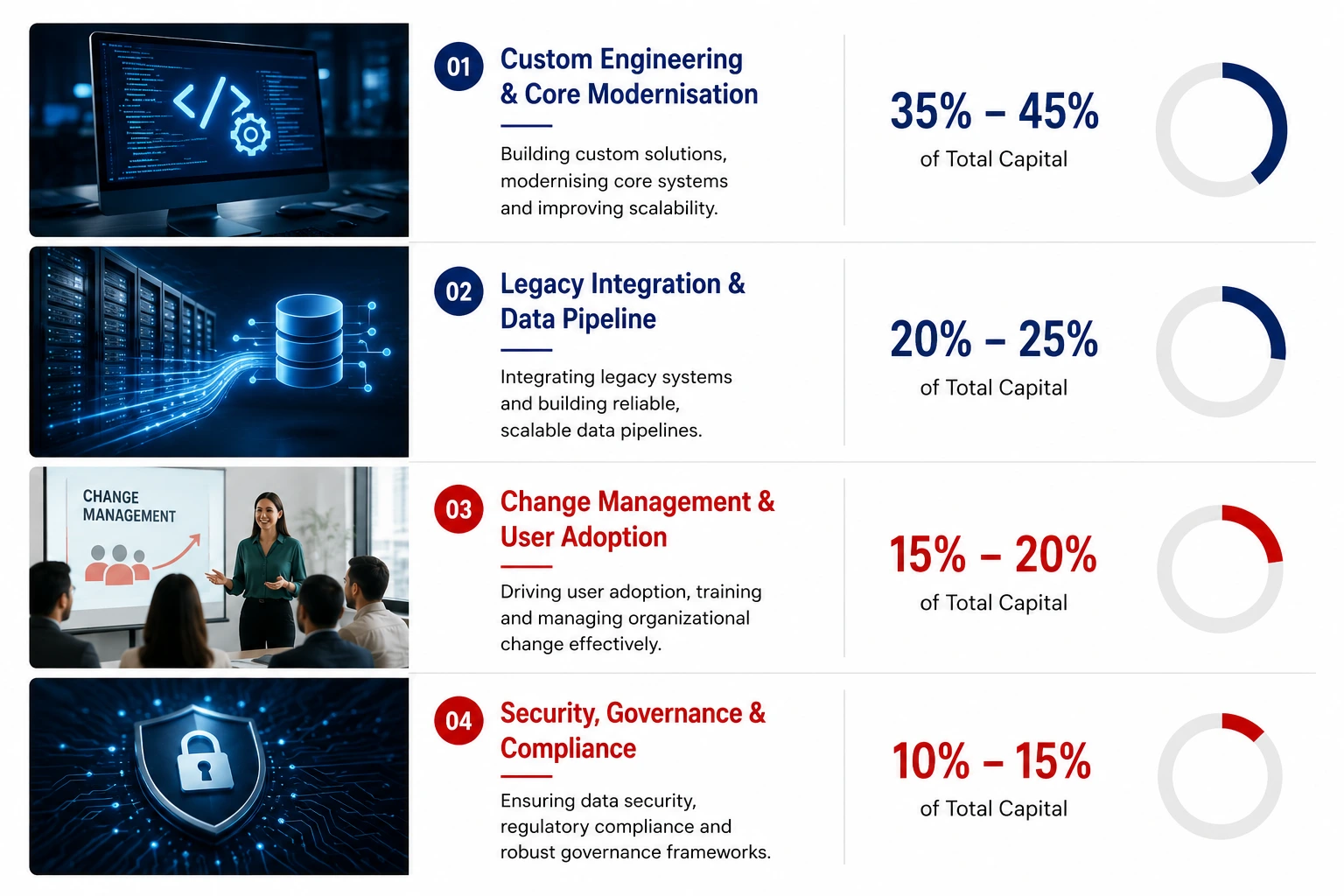
 ◦ Software Engineering & Cloud Architecture (35% – 45%): Front-end UI/UX design, back-end microservices, cloud infrastructure setup (AWS, Azure, GCP), and automated testing suites.
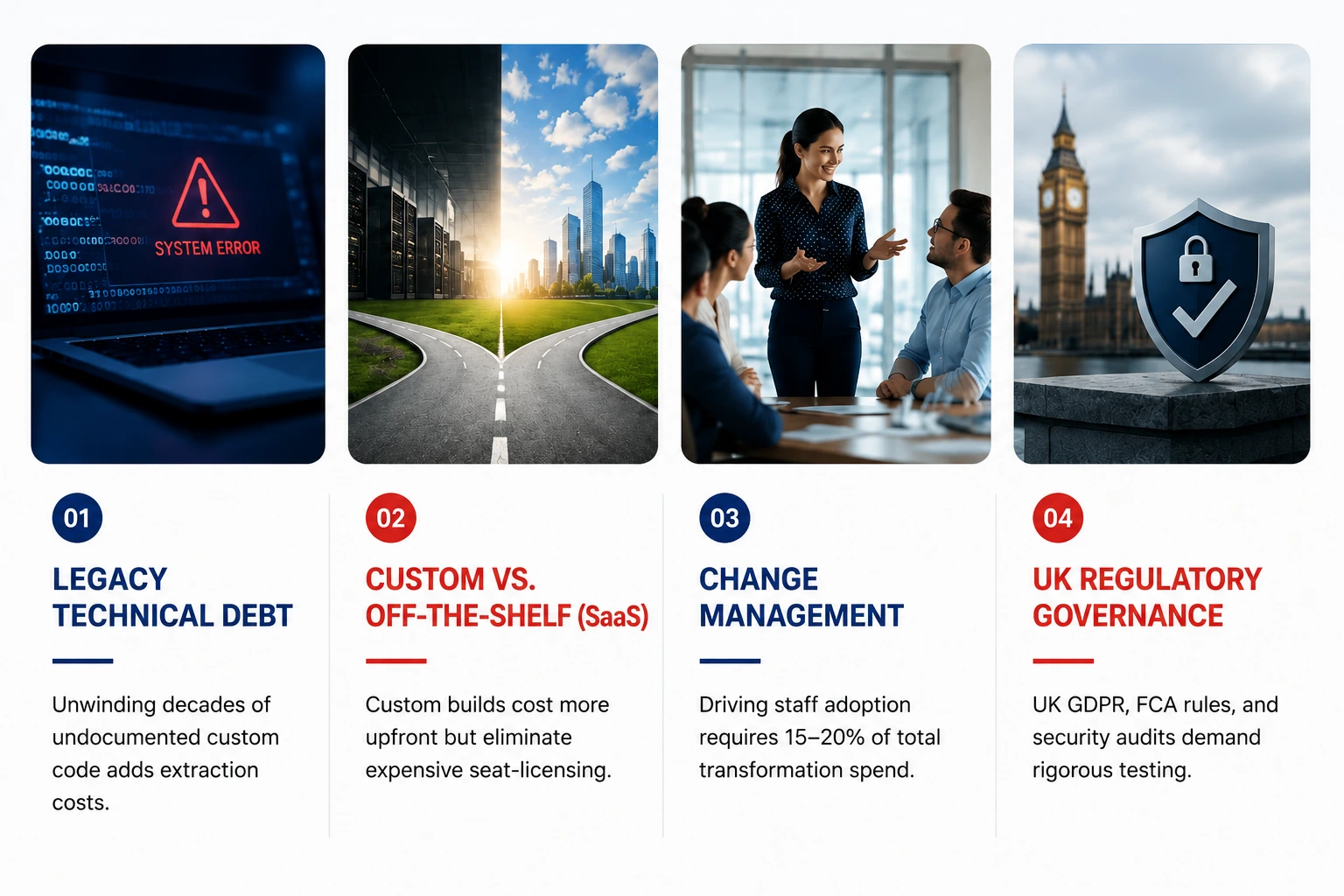 1. Unresolved Legacy Technical Debt: Tearing out old databases or attempting to connect modern cloud apps directly to legacy monolithic platforms introduces friction. Extracting, cleansing, and re-formatting unstructured legacy data requires specialized engineering hours.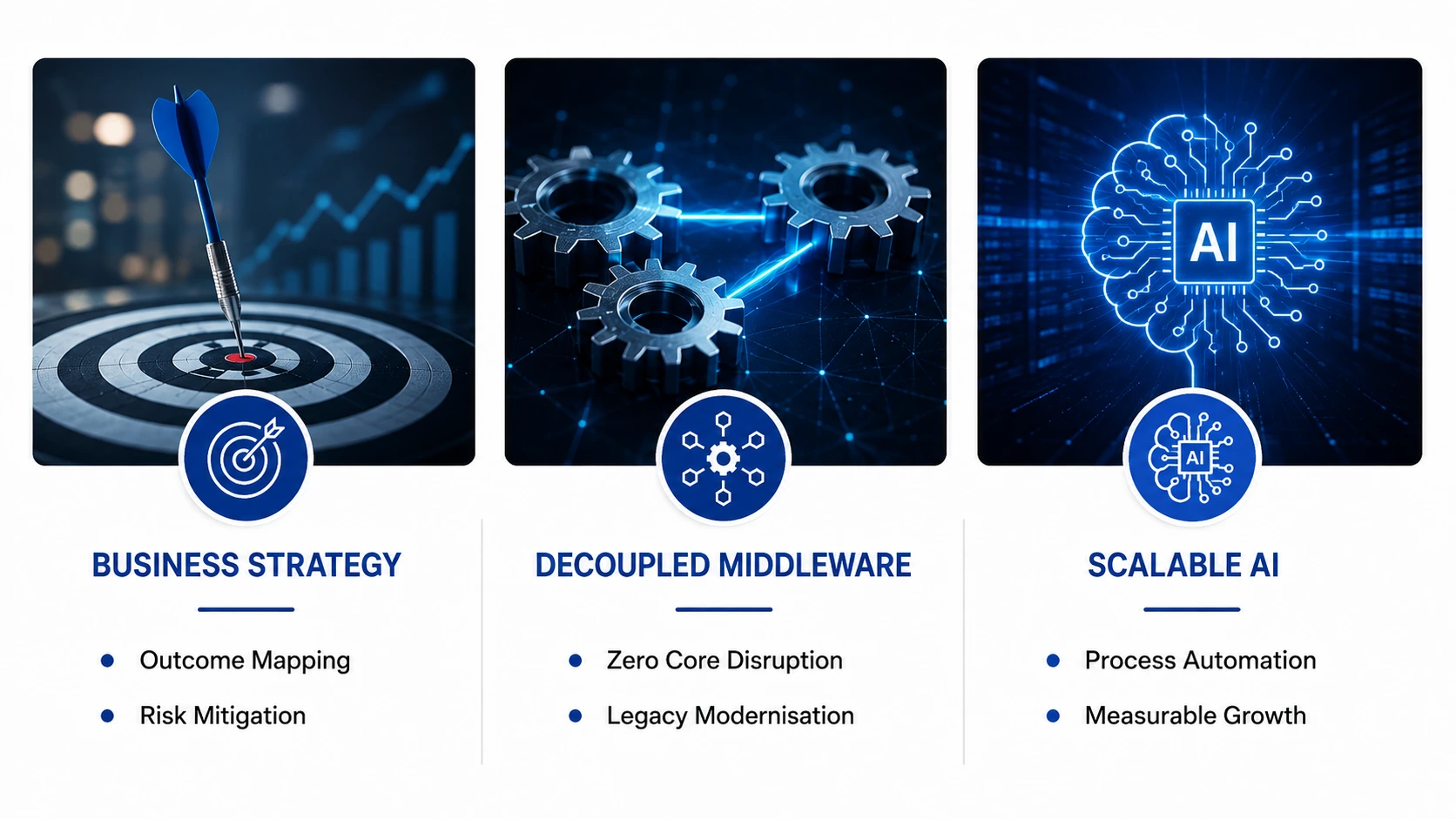
 • R&D Tax Relief: UK companies engaging in custom software engineering or solving complex technical challenges can claim valuable tax relief on qualified engineering expenditure.

The Industry Landscape: Why Digital Transformation Budgeting Matters
The advent of digital technology has brought about changes in how UK firms compete. In a report by McKinsey & Company, 90 percent of businesses are now engaged in some kind of digital transformation process.
Despite near-universal adoption, industry research highlights a major risk: up to 70% of digital transformation initiatives fail to achieve their intended commercial or operational targets. These failures rarely stem from poor coding. Instead, they occur due to undisciplined budgeting, unmapped legacy technical debt, and a failure to decouple core software systems before launching new features.
 21 mins