






Skip to content

How RegTech is Helping Build Compliance-Ready Digital Banking Platforms in the UK

Featured Image

TD;LR

The UK’s digital banking sector is expanding rapidly. Challenger banks and fintech platforms are scaling fast, but regulatory pressure is rising just as quickly. In this environment, building a digital bank is not just about innovation, it requires compliance-ready platforms from day one.

→ The UK RegTech market was valued at $521 million in 2024 and is projected to reach $2.4 billion by 2033, growing at a CAGR of 18.5%.

→ UK financial institutions spent over £34 billion on compliance in 2024, highlighting the growing regulatory burden.

→ Rapid growth without strong compliance infrastructure creates significant regulatory risk for digital banks.

This is where RegTech (Regulatory Technology) becomes essential. It enables digital banks to automate compliance, monitor transactions, manage regulatory reporting, and stay aligned with FCA regulations, PSD2 requirements, and Consumer Duty obligations.

In this blog, we explore how RegTech is helping fintech companies build compliance-ready digital banking platforms in the UK.

Imagine opening a banking app in the UK today. Within seconds, you check your balance, send money, freeze your card, or apply for a loan, all from your phone.

This seamless experience is exactly why digital-only banks have become so popular across the country. By 2026, nearly 40% of UK adults are expected to have a digital-only bank account, a sharp rise from just 24% in 2023.

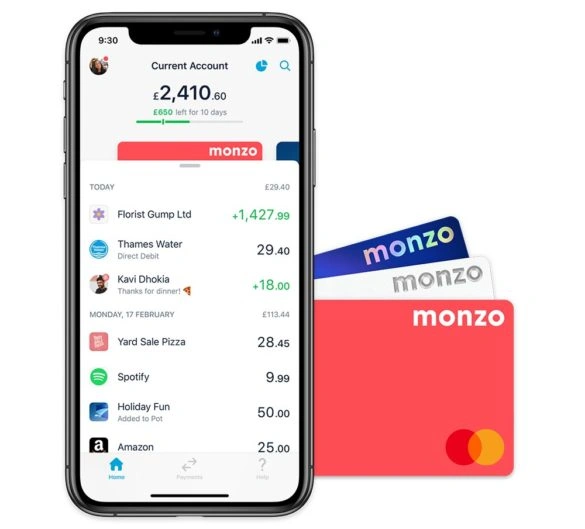
→ Challenger banks like Monzo, Revolut, and Starling have transformed everyday banking.
→ Customers expect instant transactions, real-time notifications, and fully digital financial services.
→ But behind these smooth experiences lies a complex layer of financial regulation and compliance.

Digital banks in the UK must operate under strict rules set by regulators such as the Financial Conduct Authority (FCA) and the Prudential Regulation Authority (PRA). They also need to comply with frameworks like AML regulations, PSD2, Open Banking requirements, Consumer Duty, and upcoming regulations like DORA. For a neobank trying to grow from thousands to millions of users, managing these compliance demands manually is extremely difficult.

This is where RegTech (Regulatory Technology) comes in. Today, RegTech is becoming a key part of digital banking infrastructure, helping fintech companies automate compliance, monitor transactions, and build compliance-ready digital banking platforms in the UK while continuing to scale and innovate.

£34B

Spent by UK financial institutions on compliance in 2024

This massive expenditure highlights the urgent need for cost-effective automated solutions.

50%

Reduction in compliance processing time with RegTech (City of London Corp)

Implementation of RegTech solutions allows institutions to double their operational efficiency.

$60B+

Global RegTech market projected by 2030

The rapidly expanding market indicates strong global adoption and future growth potential.

70%

Reduction in false AML positives with AI-driven tools

AI models significantly increase accuracy, saving hundreds of hours lost to false alerts.

What Exactly is RegTech, and Why Should UK Fintechs Care?

At its core, RegTech (Regulatory Technology) is the application of technologies such as AI, machine learning, cloud computing, blockchain, big data analytics, and core banking integrations to automate, streamline, and enforce regulatory compliance across financial systems.

Think of it as the compliance officer who never sleeps, never misses an update, and can process ten million transactions before your morning coffee.

For UK fintechs and digital banks, this matters for a very specific reason: the regulatory environment here is among the most demanding in the world. The Financial Conduct Authority (FCA) alone issues thousands of regulatory updates annually.

Post-Brexit, UK-specific divergences from EU frameworks (like DORA and 6AMLD) are creating unique compliance obligations. And the Consumer Duty rules, introduced in 2023, added an entirely new layer of requirements around customer outcomes.

💡

Quick Analogy: Think of RegTech Like a GPS for Compliance

Traditional compliance is like navigating London with a paper map, possible, but slow, error-prone, and you'll miss the roadworks. RegTech is the live GPS: it knows the latest rules, reroutes in real time when regulations change, and alerts you before you drive into a penalty zone.

The shift is fundamental. Where banks once hired armies of compliance officers to manually review transactions, today they deploy machine learning models that analyse millions of data points in milliseconds, flagging suspicious behaviour with a precision no human team could match.

The RegTech Compliance Landscape: What UK Digital Banks Must Navigate

Before we dive into how RegTech solves these challenges, let’s understand the battlefield. This is the regulatory map every UK digital bank operates in, and it’s not for the faint-hearted.

Regulatory Requirement Governing Body Key Obligation Compliance Complexity RegTech Solution Layer
Anti-Money Laundering (AML) FCA / FATF Transaction monitoring, suspicious activity reporting Very High AI transaction monitoring, risk scoring
Know Your Customer (KYC) FCA Identity verification, ongoing due diligence High Automated onboarding, biometric ID verification
Consumer Duty (2023) FCA Demonstrate good customer outcomes across all touchpoints High Behavioural analytics, outcome monitoring dashboards
PSD2 / Open Banking FCA / PSR Secure API access, strong customer authentication (SCA) Medium API compliance layers, SCA engines
DORA (Digital Resilience) PRA / FCA ICT risk management, resilience testing, incident reporting Very High Automated resilience testing, audit trail management
UK GDPR / Data Protection ICO Data privacy, breach notification within 72 hours Medium Data governance platforms, consent management tools
Sanctions Screening OFSI / HM Treasury Real-time screening against OFSI, UN, EU sanctions lists Very High Automated sanctions list integration, NLP matching
Prudential Requirements PRA Capital adequacy, liquidity reporting Medium Regulatory reporting automation (RegReporting)

That table alone tells you something important: this isn’t one problem, it’s eight overlapping ones.

No manual process can handle all of this at scale. And that’s precisely why RegTech has gone from a nice-to-have to a survival requirement for UK digital banking platforms.

How RegTech Works Inside a Digital Banking Platform: End-to-End

Let’s get technical. Here’s exactly how a modern RegTech layer integrates into a digital banking platform, from the moment a user opens an account to the moment a suspicious transaction is flagged and reported.

1

Customer Onboarding Automated KYC Engine

Users submit identity documents such as passports or driving licences during Digital Onboarding & KYC Automation. RegTech platforms process them using OCR, verify identities against government databases like DVLA, HMRC, and Companies House, run liveness detection checks, and generate automated risk scores instantly.

2

Sanctions & PEP Screening Real-Time List Matching

Every new customer is screened against OFSI sanctions lists, HM Treasury watchlists, PEP databases, and adverse media sources. NLP-powered fuzzy matching detects name variations and hidden connections that traditional rules-based compliance systems often miss.

3

Dynamic Risk Profiling ML Risk Scoring Model

Each customer receives a dynamic risk score as part of Regulatory Compliance Enablement, based on profile data, transaction behaviour, and behavioural patterns. Through perpetual KYC monitoring, these risk scores update continuously whenever suspicious activity or high-risk connections appear.

4

Transaction Monitoring AI Anomaly Detection Engine

Every transaction passes through AI models trained on fraud and money-laundering datasets. The system detects structuring behaviour, unusual transaction velocity, suspicious cross-border flows, and behavioural anomalies, significantly reducing false positives compared to legacy rule-based monitoring systems.

5

Suspicious Activity Reporting (SAR) Automated Escalation

When suspicious activity appears, the system automatically generates a draft SAR with relevant transaction details and customer data. Compliance officers review and submit reports to UKFIU, reducing preparation time from days to hours.

6

Regulatory Reporting Automated FCA Submissions

RegTech platforms integrate with FCA reporting portals to automate regulatory submissions. Reports covering capital adequacy, liquidity coverage, Consumer Duty outcomes, and operational resilience are generated from live banking data with complete audit trails.

7

Continuous Horizon Scanning Regulatory Change Management

AI-driven regulatory intelligence tools monitor FCA, PRA, and Bank of England publications. New rules automatically map to internal policies, highlight compliance gaps, and notify teams early, allowing banks to adapt systems before regulatory deadlines arrive.

💡

Quick Analogy: Think of RegTech Like a GPS for Compliance

93% of financial institutions plan to adopt agentic AI for compliance within two years. The top use cases: fraud detection (36%), KYC maintenance (19%), and transaction monitoring (16%).

Compliance is no longer a cost centre, it's a competitive differentiator. 🏦🤖 #RegTech #FinancialCompliance #AML

Real-World Case Studies: When Compliance Goes Right (and Very, Very Wrong)

Theory is useful. Real money on the line is better. Let’s look at what actually happened when UK digital banks either embraced or neglected their RegTech infrastructure.

CASE STUDY 01 - THE COST OF UNDER-INVESTMENT

Starling Bank's £28.96M Wake-Up Call

Starling Bank Case Study

Between September 2021 and November 2022, Starling Bank opened over 54,000 accounts for approximately 49,000 high-risk customers, despite the FCA having already placed restrictions on exactly this kind of onboarding. The FCA's language in its ruling was unusually blunt: Starling's financial crime controls were "shockingly lax", and critically, the bank had opened hundreds of new accounts for customers it had previously exited for financial crime concerns - a failure that highlights the importance of systems discussed in FCA-Ready Digital Onboarding.

The result? A £28.96 million fine, the largest ever for a UK challenger bank, and a 10% slowdown in account growth (to 4.6 million, half the previous year's rate). Post-tax profit fell from £301 million to £223 million. Starling's story is a masterclass in what happens when you scale your customer base without scaling your compliance infrastructure in parallel.

The Technical Failure

Starling's onboarding engine lacked the real-time risk-scoring logic needed to flag high-risk profiles dynamically. Their sanctions screening was rule-based rather than AI-driven, which meant it couldn't catch the velocity and pattern signals that a perpetual KYC system would have identified immediately. The fix? It required a full compliance infrastructure overhaul, the very kind of RegTech stack they should have built before hitting 3 million customers.

CASE STUDY 02 - GROWING PAINS AT SCALE

Monzo's £21.1M Fine, and Its Recovery Blueprint

Monzo, the UK's most downloaded neobank with 9.7 million customers as of 2024 (up 31% year-on-year), received a £21.1 million FCA fine for similar AML control failures. Deposits climbed 88% to £11.2 billion, remarkable growth, but also remarkable regulatory risk if the compliance layer can't keep pace, a challenge explored in Modern Core Banking Integration in the UK: API-First Strategies for Legacy System Transformation.

What's instructive about Monzo's case is what came after. The bank earned a 30% reduction on its fine precisely because of its subsequent cooperation with the FCA and its investment in remediation. This included deploying more sophisticated transaction monitoring systems, improving their customer risk segmentation, and building tighter integration between their onboarding engine and ongoing monitoring flows.

Monzo's RegTech Remediation

Monzo's recovery involved implementing dynamic risk scoring that updates customer profiles in real time as behaviour changes, rather than relying on static onboarding assessments. This perpetual KYC model means a customer who opened an account as "low risk" and then began exhibiting structuring behaviour gets immediately re-flagged, not caught in a quarterly review cycle. The bank is now planning a £6 billion LSE IPO, demonstrating that compliance investment is compatible with growth ambition.

Three Core Use Cases Where RegTech is Transforming UK Digital Banking

01

Perpetual KYC (pKYC): From Static Snapshots to Living Risk Profiles

Traditional KYC takes a point-in-time snapshot. Perpetual KYC changes this fundamentally by using real-time data feeds from Companies House, sanctions lists, and adverse media. If anything significant changes in a customer profile, an alert fires immediately rather than waiting for a quarterly review cycle.

Real-time Data Feeds ML Risk Scoring Companies House API Adverse Media NLP OFSI Sanctions Integration
02

Transaction Monitoring: Replacing Rules with Behavioral AI

Legacy systems rely on rigid "if-then" rules that generate massive amounts of false positives. Modern RegTech uses machine learning models trained on millions of historical transactions to detect specific anomalies, velocity patterns, and structuring schemes, reducing investigative workloads by up to 70%.

Anomaly Detection Velocity Logic Structuring Alerts False Positive Reduction Network Graphing
03

Automated SARs: Streamlining Financial Intelligence Escalation

When an analyst flags suspicious activity, compiling the report manually can take hours. RegTech platforms auto-generate draft Suspicious Activity Reports (SARs), instantly pre-populating regulatory fields with the associated transaction metadata, cutting submission preparation time down into mere minutes.

Auto-Drafting NCA Integration Metadata Extraction Audit Logging Escalation Workflows

What’s Coming Next: RegTech Trends Shaping 2025-2026 in UK Digital Banking

Agentic AI Innovation
Innovation Focus

1. Agentic AI in Compliance

The next frontier in RegTech is agentic AI, systems that do more than flag issues. They autonomously investigate alerts, gather customer data, cross-reference external sources, draft Suspicious Activity Reports (SARs), and route them for approval. With the UKFIU receiving over 900,000 SARs annually, autonomous compliance automation is becoming essential for modern digital banks.

Blockchain KYC Innovation
Blockchain-based KYC

2. Blockchain-Based Audit Trails and KYC Utilities

UK financial institutions are exploring blockchain-based KYC utilities, where verified identity data is stored on immutable ledgers and securely shared across institutions. Banks like HSBC, Barclays, and Standard Chartered have piloted such models. These systems reduce repetitive onboarding, improve audit transparency, and could lower AML compliance costs significantly.

RegTech as a Service
API-first compliance

3. RegTech-as-a-Service (RaaS)

Not every fintech has the resources to build complex compliance infrastructure. RegTech-as-a-Service (RaaS) platforms provide cloud-based, API-first compliance tools for KYC, AML monitoring, and regulatory reporting. This allows smaller UK fintech firms and payment institutions to access enterprise-grade compliance capabilities without maintaining costly in-house systems.

Consumer Duty Analytics
API-first compliance

4. Consumer Duty Analytics

The FCA’s Consumer Duty framework, fully implemented in 2023, requires financial institutions to prove they deliver fair outcomes for customers. RegTech platforms now provide analytics tools that monitor product transparency, pricing fairness, and treatment of vulnerable customers, turning regulatory expectations into measurable and auditable compliance metrics.

The Bottom Line: RegTech Isn’t Optional Anymore

Let’s bring this home. The UK digital banking landscape in 2025 is defined by two competing forces: explosive growth and intensifying regulatory scrutiny. £34 billion spent on compliance in 2024. £28.96 million fine for Starling. £21.1 million fine for Monzo. Revolut’s full banking licence still on hold after 14 months. These numbers tell one story very clearly.

The digital banks that will win in the next decade aren’t just the ones with the best mobile app or the cleverest referral scheme. They’re the ones that have made RegTech a core engineering priority, building compliance infrastructure that scales automatically as customer volumes grow, that adapts in real time as regulations evolve, and that turns every FCA submission from a painful quarterly scramble into a routine automated output.

The technology exists. The platforms are mature. The case studies, both positive and cautionary, are written. The only question that remains is: when will your digital banking platform catch up?

Azilen’s Engineering Blueprint: Building Compliance-Ready Digital Banking Platforms

Compliance failures in digital banking rarely happen because teams ignore regulation. They happen because compliance is treated as an afterthought — layered onto systems that were never designed to support regulatory complexity at scale.

Azilen is a Digital Transformative Company working with UK fintech firms, challenger banks, payment institutions, and wealth platforms to build compliance-first digital banking infrastructure that grows with regulatory demands rather than struggling to catch up with them.

Instead of adding compliance tools after a platform is already live, Azilen focuses on architecting regulatory resilience directly into the product foundation.

KYC & AML Automation Pipelines: Intelligent onboarding frameworks that integrate with the UK’s regulatory data ecosystem including Companies House, OFSI sanctions lists, and FCA registries to automate identity verification and compliance screening.

Perpetual KYC & Real-Time Risk Monitoring: Event-driven architectures that continuously update customer risk profiles using real-time data streams rather than relying on static onboarding checks.

AI-Powered Transaction Monitoring Systems: Machine learning models designed to detect suspicious behaviour patterns while significantly reducing false positives and operational compliance workload.

Automated FCA Reporting Infrastructure: Regulatory reporting frameworks that connect directly with FCA submission systems, enabling structured reporting workflows that remain audit-ready at all times.

Azilen does not approach compliance as a final validation step before product launch. Instead, it becomes a core engineering principle embedded within the banking architecture itself, ensuring that innovation scales without increasing regulatory exposure.

FAQs: Loan Origination System UK

1. What are the biggest digital banking innovations in the UK in 2026?

The biggest digital banking innovations in the UK in 2026 include predictive analytics and real-time machine learning, tokenised deposits, embedded finance under PSD3 frameworks, biometric authentication 2.0, quantum-resistant cryptography, sustainable fintech platforms, and immersive banking experiences.

These innovations are reshaping customer engagement, operational efficiency, fraud prevention, and regulatory compliance across UK financial institutions.

2. How is predictive analytics transforming UK banking?

Predictive analytics in UK banking uses real-time machine learning models such as XGBoost and autoencoders to analyse transaction data, customer behaviour, and risk signals.

Banks use these systems to predict fraud, reduce churn, personalise financial products, and automate credit decisions. This improves operational efficiency, lowers fraud losses, and increases customer retention across digital banking platforms.

3. What is embedded finance and why is it important in the UK?

Embedded finance allows banking services such as payments, lending, and account verification to be integrated directly into non-bank platforms through secure APIs.

Under the UK’s Open Banking and evolving PSD3 frameworks, embedded finance enables real-time credit scoring, instant checkout financing, and seamless digital payments without requiring customers to leave the host platform.

4. Are tokenised deposits and stablecoins regulated in the UK?

Yes. The UK regulatory environment, guided by the Financial Conduct Authority (FCA) and the Bank of England, is developing structured frameworks for tokenised assets and stablecoins.

Pilot programmes and digital settlement initiatives aim to ensure 1:1 reserve backing, consumer protection, and systemic resilience while enabling faster, programmable settlement infrastructure.

5. How can UK banks implement digital banking innovation securely?

UK banks can implement digital banking innovation securely by adopting API-first architecture, integrating predictive analytics engines, modernising legacy systems through phased transformation, and embedding regulatory compliance enablement within core infrastructure.

Working with a digital transformation company that specialises in core banking integration and real-time intelligence systems ensures scalable, regulator-aligned implementation.

Glossary

API-First Architecture : A system design approach where banking services are built around secure, scalable APIs, enabling seamless integration with fintech platforms, embedded finance solutions, and core banking systems.

Atomic Settlement : A blockchain-based settlement mechanism where two assets are exchanged simultaneously, eliminating counterparty risk and reducing settlement time from days to seconds.

Autoencoder (Machine Learning) : A neural network model used in fraud detection that reconstructs expected transaction behaviour and flags anomalies when reconstruction error exceeds a defined threshold.

Behavioural Biometrics : Authentication technology that analyses user behaviour patterns such as typing speed, device motion, and swipe rhythm to detect fraud in real time.

Embedded Finance : The integration of banking services (payments, lending, credit scoring) directly into non-bank digital platforms using regulated APIs under UK Open Banking frameworks.

FIDO Authentication : Passwordless authentication standards using cryptographic keys to enhance secure login and Strong Customer Authentication (SCA) compliance.

Generative AI in Banking : AI models that analyse financial data, simulate outcomes, personalise products, and automate customer interaction across digital banking channels.

Hyper-Personalisation : AI-driven financial customisation using predictive analytics and behavioural data to deliver tailored offers, pricing, and product recommendations.

Post-Quantum Cryptography (PQC) : Encryption algorithms such as CRYSTALS-Kyber and Dilithium designed to resist attacks from future quantum computers.

Predictive Analytics : The use of machine learning models (e.g., XGBoost, gradient boosting) to forecast fraud risk, customer churn, creditworthiness, and financial behaviour.

Tokenised Deposits : Bank-issued digital representations of fiat currency on distributed ledger networks, backed 1:1 by reserves and used for programmable settlement.

Zero-Knowledge Proof (ZKP) : A cryptographic method that verifies information without revealing the underlying data, improving privacy in digital asset transactions.

Composable Banking : A modular banking architecture where financial products are built using independent microservices that can be scaled or modified without disrupting the entire system.

RegTech (Regulatory Technology) : Technology solutions that automate compliance reporting, monitoring, and risk management in line with UK financial regulations.

Strong Customer Authentication (SCA) : A regulatory requirement under PSD frameworks mandating multi-factor authentication for digital payments and banking access.

Kulmohan Makhija
Kulmohan Makhija
Vice President – Growth & Enterprise Strategy

Kulmohan Makhija is an enterprise technology and business strategy writer with over 12 years of experience analyzing digital transformation across global and European markets. His work focuses on applied artificial intelligence, product engineering, enterprise architecture, and large-scale legacy modernization. He explores how complex organizations modernize core systems, adopt AI responsibly, and align innovation with regulatory, cultural, and operational realities — particularly within the UK and broader European technology landscape. With a pragmatic enterprise perspective, Kulmohan emphasizes transformation that delivers measurable impact without disrupting mission-critical operations. His writing bridges executive strategy with technical depth, providing clarity for technology leaders, product teams, and decision-makers navigating modernization journeys.

Related Insights