
Skip to content

Digital Product Passport for Automotive Manufacturers: Preparing for End-to-End Vehicle Traceability

Featured Image

TL;DR

The Digital Product Passport (DPP) is becoming a reality for automotive manufacturers selling into the EU, with the Battery Passport set to become mandatory from February 2027. While the UK has no equivalent regulation yet, UK exporters will still need to meet EU requirements.

The biggest challenge is preparing the data. Building accurate records for materials, suppliers, carbon footprint, and product lifecycle information can take months.

In this blog, we’ll explain what the Digital Product Passport means for automotive manufacturers, the key compliance timelines, and how to prepare for end-to-end vehicle traceability before the deadlines arrive.

Why Are UK Automotive Manufacturers Talking About Digital Product Passports?

The Digital Product Passport for Automotive Manufacturers is becoming a key requirement for companies selling vehicles and components into the EU.

Modern vehicles rely on complex global supply chains, and manufacturers are now expected to provide clear information about materials, suppliers, sustainability, and product lifecycle data.

→ Creates a digital record of vehicle and component information.

→ Improves vehicle traceability across the supply chain.

→ Supports Battery Passport compliance for EV batteries.

→ Tracks carbon footprint, recycled content, and material origins.

→ Helps meet upcoming EU Digital Product Passport regulations.

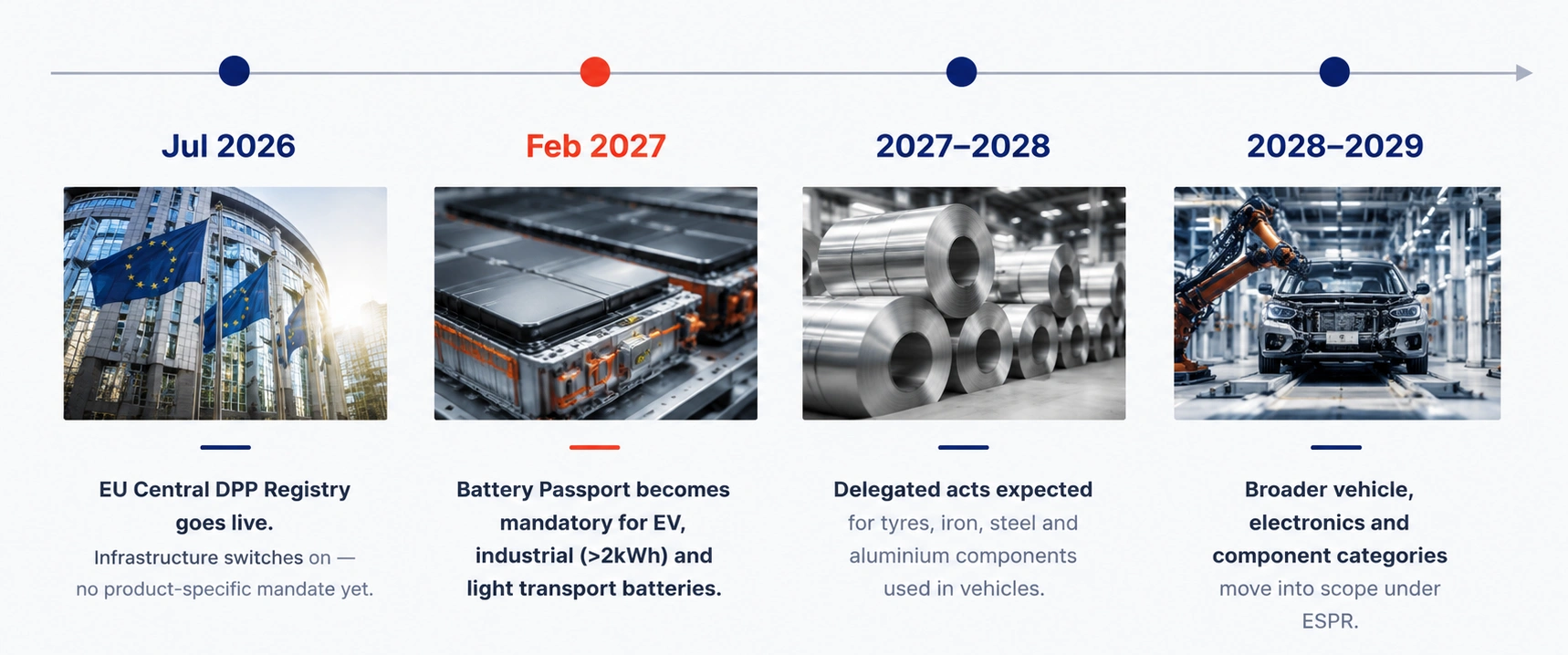
While the UK does not yet have its own DPP regulation, UK automotive manufacturers exporting to Europe must still meet EU deadlines. With the DPP Registry launching in 2026 and Battery Passports becoming mandatory in 2027, preparation needs to start now.

Digital Product Passport for Automotive Manufacturers: Key Compliance Dates

The Digital Product Passport for Automotive Manufacturers will be introduced in phases, giving businesses time to prepare. However, the most important deadlines are already approaching.

Key Compliance Dates DPP

Key Takeaway

While some guidance may evolve, the major compliance deadlines are unlikely to change. Automotive manufacturers should treat these dates as planning milestones and begin preparing their Digital Product Passport for Automotive Manufacturers strategy now.

What Information Does a Digital Product Passport for Automotive Manufacturers Contain?

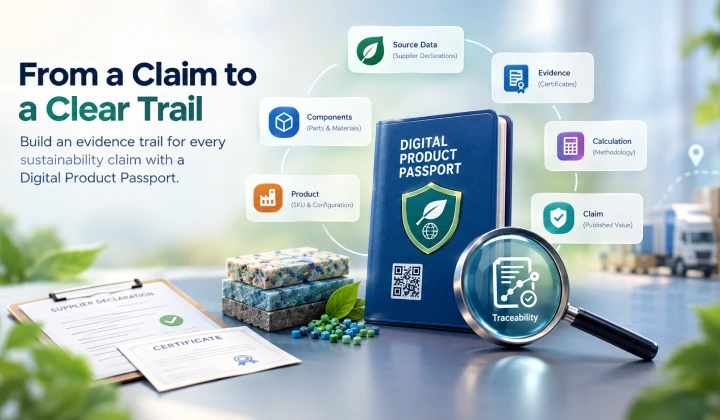
A Digital Product Passport for Automotive Manufacturers is a secure digital record that follows a vehicle, battery, or component throughout its lifecycle. Rather than being a static document, it continuously updates as new data becomes available across the supply chain.

Material Composition & Origin: Tracks material sources and component-level data, including lithium, cobalt, nickel, and conflict-mineral verification.

Product Carbon Footprint: Captures lifecycle emissions data and carbon impact across manufacturing, transportation, and usage stages.

Recycled Content Information: Records the percentage of recycled materials used and supports compliance with evolving EU sustainability targets.

Battery Health & Performance Data: Monitors battery state-of-health, performance, degradation, and lifecycle metrics over time.

Supply Chain Traceability: Provides visibility into suppliers, manufacturing processes, and product movement across the value chain.

2,000–5,000

Direct suppliers automotive manufacturers source across 30–50 countries

18 Feb 2027

Mandatory date for the EV Battery Passport under EU Regulation 2023/1542

12–18 months

Typical time needed to build verified, structured supply chain data from scratch

Not sure where you stand on Digital Product Passport readiness?

Run our free DPP Assessment Calculator and get a clear, personalised readiness score in under five minutes.

Try Free DPP Assessment

What UK Automotive Manufacturers Need to Focus On

Supply Chain Traceability: Track materials, components, and suppliers across the entire automotive supply chain.

Material Origin Verification: Maintain accurate records for critical materials such as lithium, cobalt, and nickel.

Sustainability & Compliance Data: Capture carbon footprint, recycled content, and product lifecycle information required for Digital Product Passports.

Connected Data Systems: Integrate ERP, PLM, supplier, and manufacturing systems to maintain accurate and up-to-date product data.

Future-Ready Operations: Build the digital infrastructure needed to support upcoming Digital Product Passport regulations and Battery Passport requirements.

Why the 12–18 Month Runway Isn’t Optional

Automotive supply chains are deep, not flat. A single vehicle can draw on 2,000 to 5,000 direct suppliers spread across 30 to 50 countries. Consequently, collecting verified, structured data from every tier of that chain simply cannot be switched on overnight.

Manufacturers who wait for a delegated act to be finalised before starting tend to run out of runway fast. Meanwhile, those who treat 2026 as the readiness year arrive at February 2027 with a working system, not a scramble. The cost of starting early is small. The cost of starting late is market access into Europe, which, for most UK manufacturers, is not a risk worth taking.

✓ Audit current supplier data against what a Digital Product Passport actually requires

✓ Engage cell and battery pack suppliers early, as Battery Passport compliance depends on their data

✓ Connect ERP, PLM, and supplier systems to enable automated and accurate data sharing

✓ Structure product data to align with EU Digital Product Passport and UK export requirements

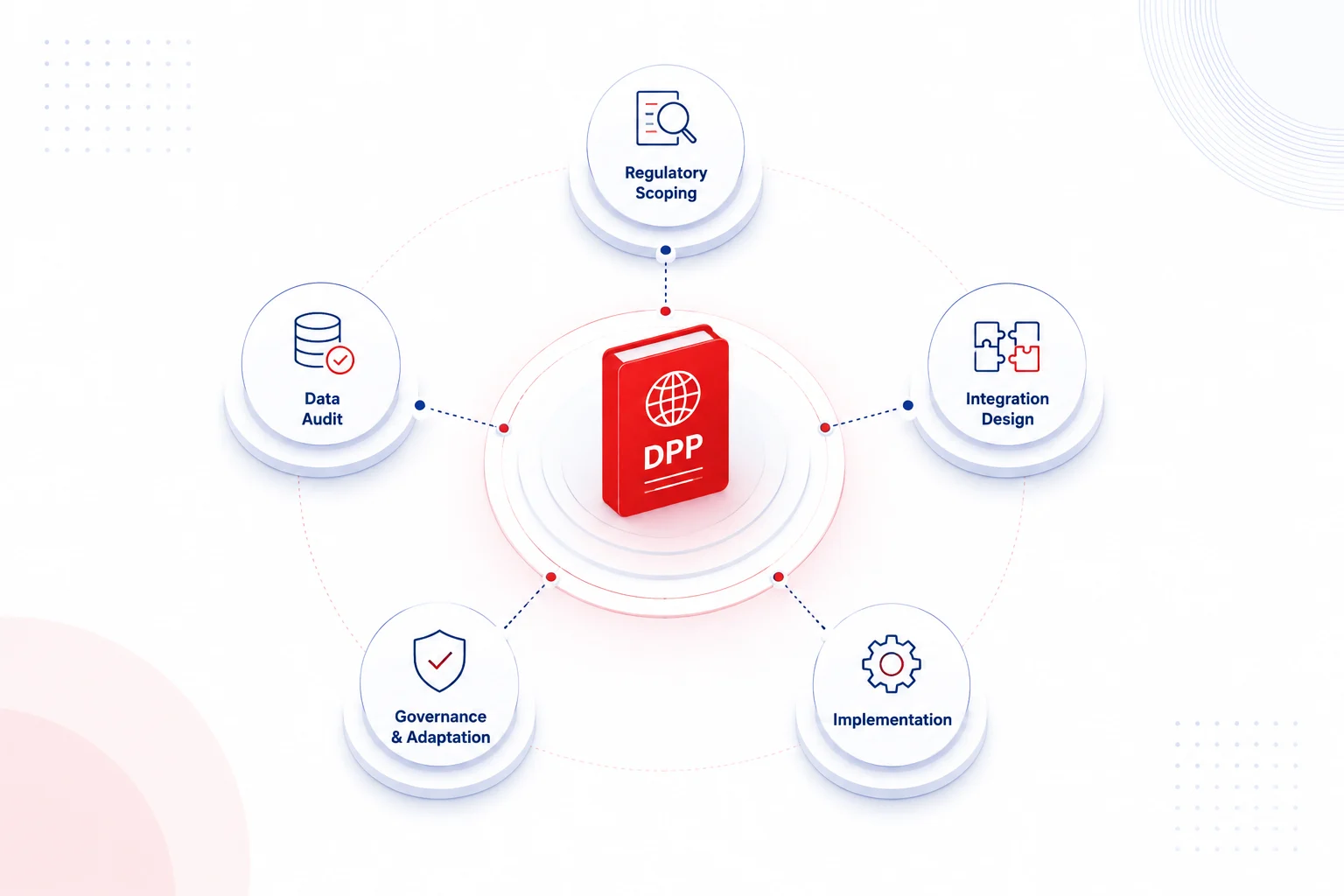
How Azilen Helps Automotive Manufacturers Prepare for Digital Product Passports

Azilen helps automotive manufacturers build the data foundation needed for a Digital Product Passport for Automotive Manufacturers. We connect product, supplier, and lifecycle data into a single traceable system that supports EU Digital Product Passport and Battery Passport requirements.

1. Assess Your Digital Product Passport Readiness

We review your existing product and supplier data, identify compliance gaps, and create a roadmap for Digital Product Passport implementation.

2. Connect Data Across Systems

We integrate ERP, PLM, and supplier platforms to automate data collection, improve traceability, and reduce manual processes.

3. Build Passport-Ready Records

We structure and organize data into a compliant, updatable Digital Product Passport aligned with EU regulations and UK export requirements.

Why Start Now?

Manufacturers that invest in supply chain traceability and connected data systems today will be better prepared for upcoming Digital Product Passport regulations, Battery Passport requirements, and future EU market access needs.

Why Azilen Technologies Stands Out in Digital Product Passport Implementation

Preparing for a Digital Product Passport for Automotive Manufacturers requires more than meeting compliance requirements. It demands connected data, end-to-end traceability, and a technology foundation capable of supporting evolving EU regulations. This is where Azilen Technologies brings a distinct advantage.

As a digital transformation partner, Azilen focuses on creating scalable traceability solutions that support compliance, improve operational visibility, and strengthen supply chain transparency.

Supply Chain Traceability Expertise: Creates end-to-end visibility across suppliers, materials, components, and manufacturing processes to support Digital Product Passport requirements.

Connected Data Ecosystems: Integrates ERP, PLM, MES, supplier, and sustainability platforms to establish a single source of product truth.

Digital Product Passport Readiness Assessment: Evaluates existing product and supplier data, identifies compliance gaps, and develops a clear implementation roadmap.

Battery Passport Compliance Support: Helps manufacturers capture and manage battery lifecycle, recycled content, material origin, and performance data required under EU Battery Regulations.

Real-Time Product Lifecycle Visibility: Enables continuous tracking of product data from raw material sourcing through manufacturing, usage, and end-of-life recycling.

Azilen helps automotive manufacturers move beyond compliance and build a strong foundation for long-term traceability, sustainability, and Digital Product Passport success. By connecting data, systems, and supply chain stakeholders, businesses can prepare for upcoming regulations while creating more transparent and resilient operations.

FAQs: Digital Product Passport for Automotive Manufacturers

1. What is a Digital Product Passport for Automotive Manufacturers?

A Digital Product Passport for Automotive Manufacturers is a digital record that stores and shares information about a vehicle, battery, or component throughout its lifecycle. It includes data such as material composition, carbon footprint, recycled content, battery health, and supply chain traceability to support compliance with upcoming EU regulations.

2. When will Digital Product Passports become mandatory for the automotive industry?

The rollout begins with the EU Central DPP Registry in 2026, while Battery Passports become mandatory in February 2027 for electric vehicle, industrial, and light transport batteries. Additional automotive products and components are expected to be covered under Digital Product Passport regulations between 2027 and 2029.

3. Do UK automotive manufacturers need to comply with Digital Product Passport regulations?

Yes. Even though the UK does not currently have its own Digital Product Passport regulation, UK automotive manufacturers exporting vehicles, batteries, or components to the EU will need to meet EU Digital Product Passport requirements to maintain market access.

4. What data is required for a Digital Product Passport?

A Digital Product Passport typically includes material origin information, carbon footprint data, recycled content details, battery performance records, supply chain traceability information, and product lifecycle data. The exact requirements depend on the product category and applicable EU regulations.

5. How can automotive manufacturers prepare for Digital Product Passport compliance?

Manufacturers should start by assessing existing product and supplier data, improving supply chain traceability, integrating ERP and PLM systems, and establishing processes to collect sustainability and lifecycle information. Early preparation helps reduce compliance risks and supports smoother implementation of Digital Product Passport requirements.

Glossary

Digital Product Passport (DPP): A digital record that stores and shares product information throughout its lifecycle to improve traceability, sustainability, and compliance.

Digital Product Passport for Automotive Manufacturers: A framework that helps automotive companies track vehicle, battery, and component data across the supply chain.

Battery Passport: A digital record containing battery origin, carbon footprint, recycled content, performance, and lifecycle information.

Supply Chain Traceability: The ability to track materials, components, and products from sourcing and manufacturing through to recycling and disposal.

Product Lifecycle Management (PLM): A system used to manage product information and processes throughout a product’s entire lifecycle.

Enterprise Resource Planning (ERP): Business software that integrates manufacturing, procurement, inventory, finance, and supply chain operations.

Product Carbon Footprint: The total greenhouse gas emissions generated throughout a product’s lifecycle, from production to end-of-life.

Recycled Content: The percentage of recycled materials used within a product to support sustainability and circular economy goals.

Kulmohan Makhija
Kulmohan Makhija
Vice President – Growth & Enterprise Strategy

Kulmohan Makhija is an enterprise technology and business strategy writer with over 12 years of experience analyzing digital transformation across global and European markets. His work focuses on applied artificial intelligence, product engineering, enterprise architecture, and large-scale legacy modernization. He explores how complex organizations modernize core systems, adopt AI responsibly, and align innovation with regulatory, cultural, and operational realities — particularly within the UK and broader European technology landscape. With a pragmatic enterprise perspective, Kulmohan emphasizes transformation that delivers measurable impact without disrupting mission-critical operations. His writing bridges executive strategy with technical depth, providing clarity for technology leaders, product teams, and decision-makers navigating modernization journeys.

Related Insights