 17 mins
Jun 19, 2026
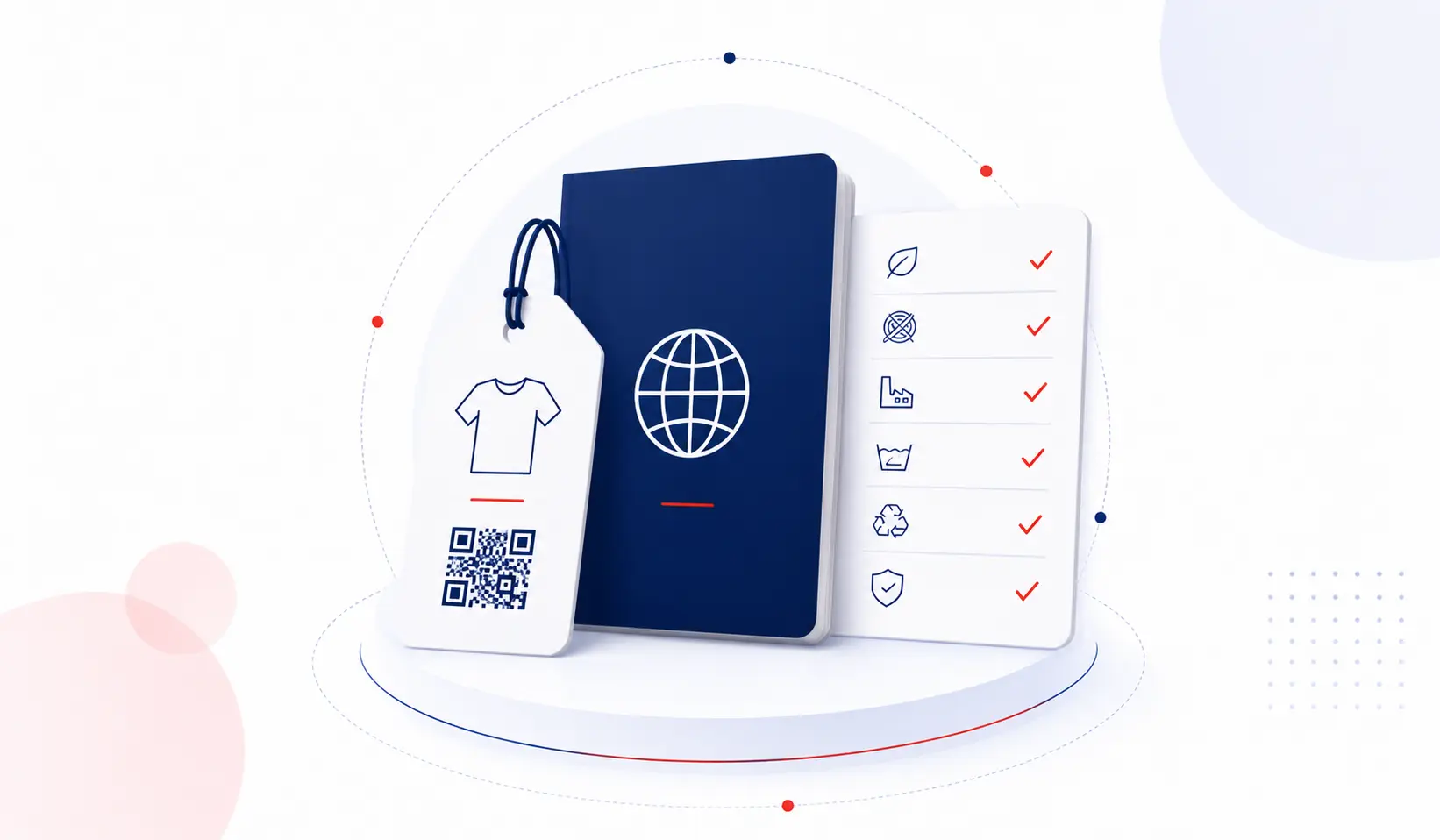
The clock is ticking for the UK fashion and textile sectors. While the UK operates outside the European Union, its fashion economy remains bound to it. Under the EU’s Ecodesign for Sustainable Products Regulation (ESPR), any brand selling garments, footwear, or textiles into the European single market must provide a validated DPP. With the earliest textile-specific mandates expected to land as early as 2028, the runway for adaptation is remarkably short.
For executive teams, this is not a routine update to your website’s sustainability page. It is a fundamental rewiring of your data architecture. The DPP requires brands to capture, verify, and expose hundreds of data points for every single SKU—spanning raw fiber extraction, chemical dyeing recipes, carbon footprints, and circular end-of-life pathways.
“Modern consumers are no longer satisfied with vague promises. Meeting their evolving expectations requires brands to shift toward radical data transparency—leveraging technology like traceability frameworks to help consumers educate themselves and verify the ethical sourcing of their purchases.” — Deloitte Insights
If your organization treats this strictly as a compliance headache, you will end up building an incredibly expensive data-collection system that acts as a permanent drain on your resources. But if you decouple compliance from your core systems and use a dedicated integration layer, you can transform this forced regulation into your most powerful engine for brand loyalty, supply chain efficiency, and market differentiation.
The primary obstacle to DPP readiness isn’t a lack of willingness; it’s the fragmented reality of modern fashion supply chains. The data required to populate a single garment’s digital passport currently lives across a chaotic, disconnected ecosystem of global vendors.
Consider the baseline data lineage required for a standard cotton jacket:
• Tier 4 (Raw Materials): Soil health certificates and water usage logs sitting in a spreadsheet at a farm in Peru.
• Tier 3 (Material Processing): Yarn production metrics and spinning mill databases in India.
• Tier 2 (Fabric Manufacturing): Chemical dye recipes and social audit results locked in a legacy system in Vietnam.
• Tier 1 (Final Assembly): Cut-and-sew production logs, sensor data, and shipping manifests scattered across factories in Europe or the UK.
According to the benchmark KPMG European DPP Readiness Survey, an overwhelming 70% of firms cite supplier data silos as their top barrier to compliance. When you layer on the fact that 89% of operations leaders see subpar tech returns due to data quality issues (PwC), trying to manually aggregate this information is a recipe for operational gridlock. Furthermore, benchmark data confirms that 93% of stakeholders lack accessible DPP data out of the box.
Without an automated middleware layer to ingest, validate, and standardize these incoming data fragments, your compliance journey will stall before it even begins.
A professional DPP integration service functions as the intelligent connective tissue sitting quietly on top of your existing software stack. It doesn’t require a high-risk replacement of your core systems. Instead, it deploys a decoupled data layer that extracts data via secure APIs, standardizes it, and publishes it seamlessly.
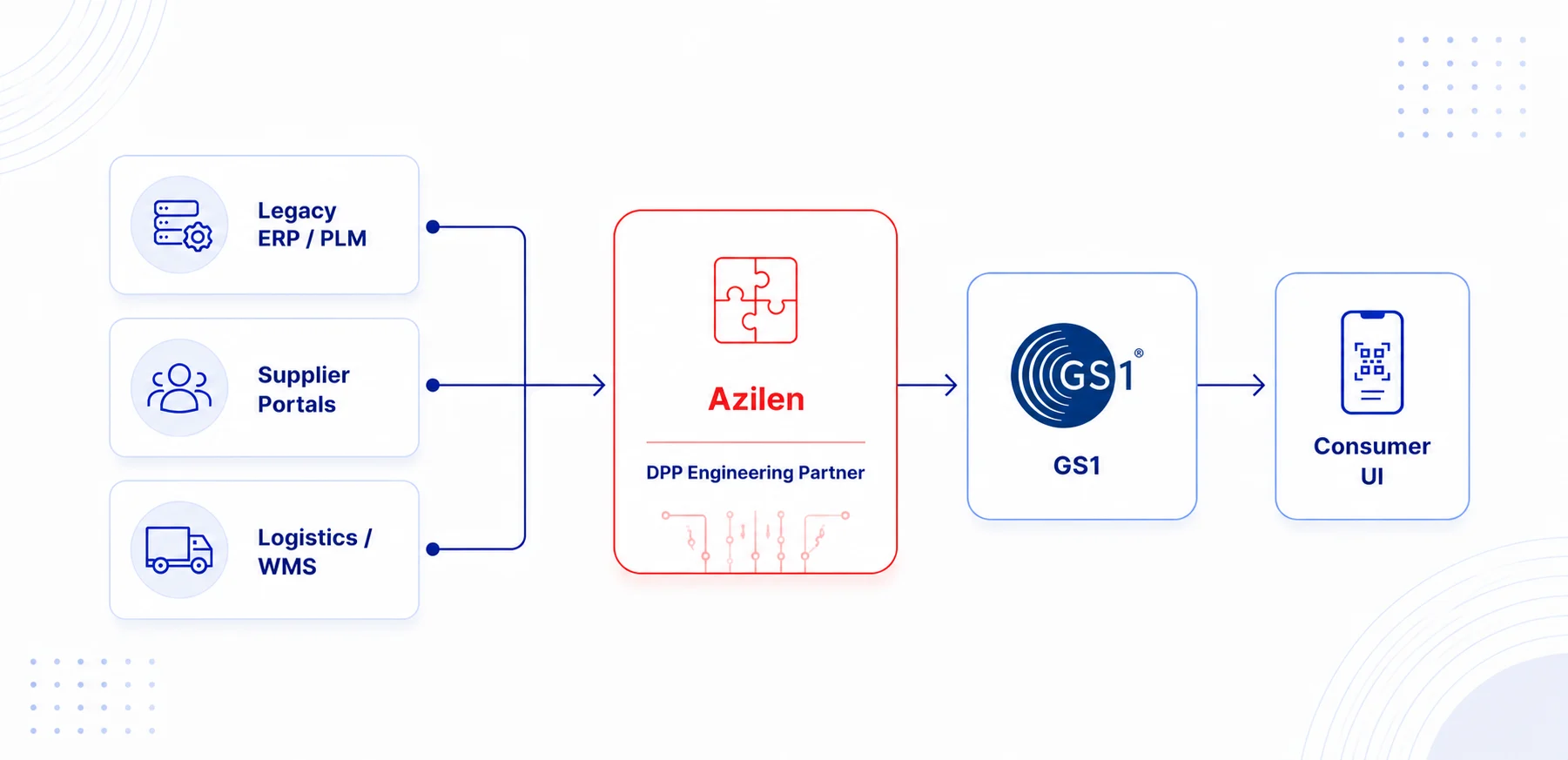 By leveraging global standards like GS1, the middleware ensures that every product receives a unique Global Trade Item Number (GTIN) encoded into a scannable carrier (such as a QR code or NFC tag). When a regulator or consumer scans that code, the middleware safely serves up a secure, beautiful web application detailing the item’s authentic history—without ever exposing your proprietary supplier pricing or internal operational secrets.
Deploying a real-world, scalable DPP framework requires deep expertise in system data models, enterprise systems, and interoperability layers. Here is how Azilen successfully architected and implemented enterprise-grade solutions for market leaders:
Don’t treat the Digital Product Passport as a costly administrative burden. Leverage it as a profound opportunity to rebuild consumer trust through radical, unassisted transparency. Partnering with an experienced integration provider ensures that your back-end operational data translates seamlessly into compelling, compliance-certified customer experiences.
Under the EU’s Ecodesign for Sustainable Products Regulation (ESPR), framework laws entered into force in mid-2024. The earliest textile and apparel sector mandates are expected to become legally binding between 2028 and 2030. Because UK enterprises exporting to the European single market must fully comply to maintain market access, implementation of data architecture updates must begin immediately.
Enterprise-grade DPP integration solutions employ granular, multi-tiered data access control models. The architecture separates internal master operational data from public-facing transparency data. While regulators see verified, unredacted certifications and full supply chain links via secure keys, end consumers interact with a curated, user-friendly interface that protects proprietary supplier identities and commercial trade secrets.
No. Professional integration services are explicitly engineered to sit on top of your existing software ecosystem. They use secure APIs, middleware connectors, and web services to systematically aggregate, extract, and format data from existing platforms like SAP, Oracle, or PTC Windchill without requiring expensive, high-risk core system replacements.
ROI is quantified across three primary streams: operational cost reduction, compliance penalty mitigation, and marketing performance. On the commercial side, companies track unique scan rates, session duration on the passport web app, subsequent conversion rates into warranty registrations, and repeat purchase metrics via embedded loyalty links compared to baseline non-scanning consumer segments.
While the UK continues to align closely with international eco-design standards to maintain frictionless trade with Europe, independent frameworks like the UK’s own developing circular economy and resource strategies are monitored carefully. DPP integration services utilize flexible, rule-based data mapping schemas to ensure that a single product passport can seamlessly adapt its data presentation to meet both UK and EU regulatory requirements simultaneously.
 17 mins
  86 mins