Skip to content

How Agentic AI in Payment Processing Improves Transaction Speed

Featured Image

TL;DR

Agentic AI in payment processing improves transaction speed by removing every human bottleneck from the payment journey. Instead of waiting for manual checks, rule-based systems, or queued approval steps, AI agents work in real time, they verify, route, flag, and settle transactions within milliseconds.

This blog explains exactly how that happens, step by step, with real UK examples.

You will learn what agentic AI actually does in a payment pipeline, why traditional systems are too slow for today’s UK market, how tools like Azeon AI power financial services with intelligent automation, and what the speed gains look like in practice. No fluff. Just the direct answer, backed by evidence.

Think about the last time you tapped your card at a shop. That transaction looked instant.

But behind the scenes, a chain of checks happened, identity verification, fraud screening, routing decisions, and authorisation.

In a legacy system, each of those steps waits for the previous one to finish. One after another.

Like dominoes in slow motion.

Here Is the Uncomfortable Truth

The UK processed over £9.8 trillion in payments in 2023 (UK Finance). Even a 100ms delay per transaction, multiplied across millions of payments daily, adds up to enormous operational drag, and that drag costs businesses money, customers, and trust.

So, the real question is: what exactly is causing the slowdown, and how does agentic AI in payment processing fix it? That is what this blog is going to answer, directly, clearly, and with no filler.

Traditional payment systems use fixed rules. They are not smart. They do not learn. They simply follow a script, and when something is outside that script, they stop and wait for a human. That wait costs you speed.

Agentic AI, on the other hand, does not wait. It acts. It reasons. And then it moves. Let us break down exactly how.

What Is Agentic AI in Payment Processing?

What Is Agentic AI in Payment Processing

Let us keep this simple. Normal AI gives you an answer. Agentic AI takes action.

An agentic AI agent does not just suggest what to do, it goes ahead and does it.

In payment processing, that means the AI can autonomously verify a customer’s identity, check fraud signals, route the transaction to the right gateway, and confirm settlement, all without a human pressing a button.

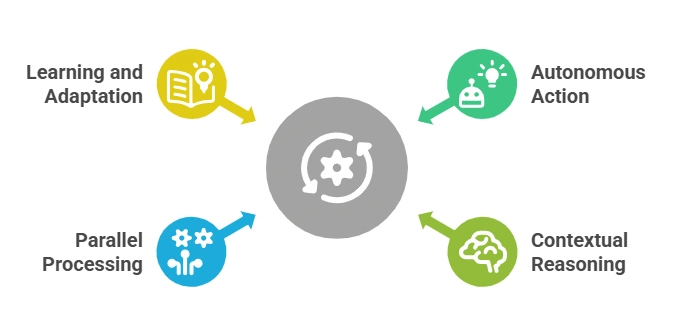
Acts Autonomously

The agent makes decisions and completes tasks on its own. No human approval needed for routine payments.

Reasons in Context

It understands the full picture, customer history, transaction pattern, risk level, all at once, in milliseconds.

Runs in Parallel

Multiple checks happen at the same time, not one after another. Fraud check, routing, and verification all run simultaneously.

Learns and Adapts

Every transaction teaches it something. Over time, it gets faster and more accurate with each payment it processes.

Think of it this way. A traditional payment system is like a post office queue, one person at the counter, each customer waiting their turn.

Agentic AI is like opening 20 counters at once, where each counter already knows who you are before you walk in.

That is the shift. And as a result, transactions that used to take seconds can now be completed in under 200 milliseconds.

How Agentic AI Processes a Payment

From a simple tap on your phone to money getting settled in the bank, a lot happens behind the scenes. With Agentic AI in Payment Processing UK, this entire journey becomes fast, intelligent, and almost invisible.

Instead of moving step by step, the system works in parallel, makes decisions instantly, and keeps learning with every transaction.

Let’s walk through how this actually works.

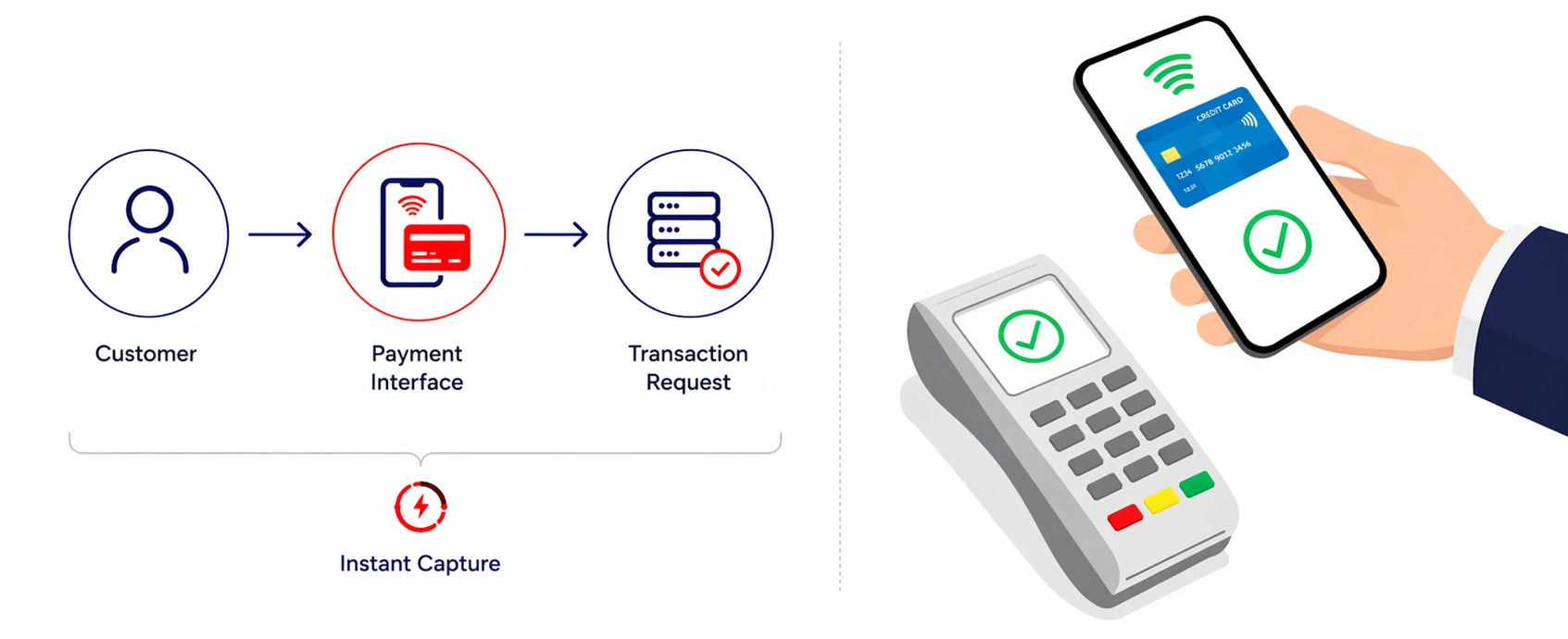
1. Customer Initiates Payment

1. Customer Initiates Payment

Everything begins with a very simple action. A customer taps their card, clicks a checkout button, or enters card details online. At that exact moment, the payment request is created and pushed into the system without delay.

The system does not wait or batch requests. It captures the transaction instantly and prepares it for processing.

→ User action triggers payment
→ Transaction request is generated
→ Data enters the system in real time

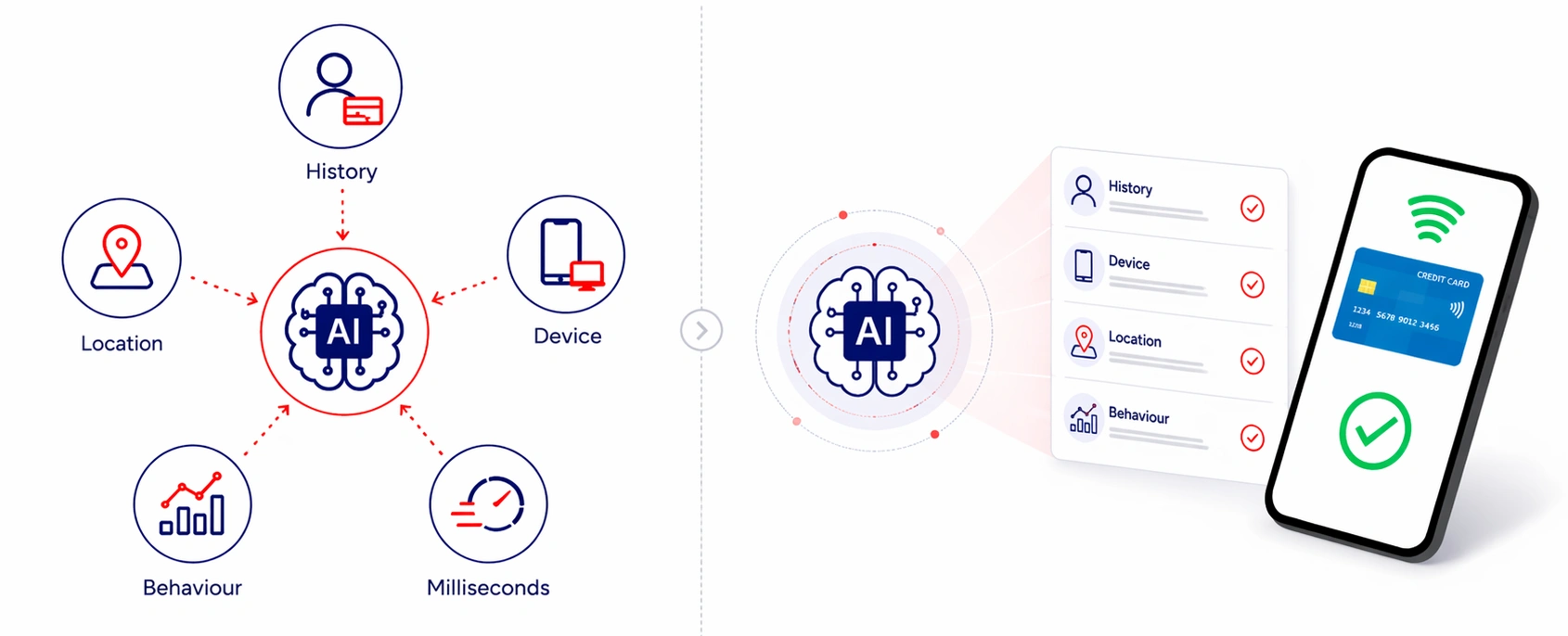
2. AI Agent Reads Full Context

2. AI Agent Reads Full Context

Once the request enters the system, the AI agent immediately starts understanding the full picture. It does not look at the transaction in isolation. Instead, it pulls together multiple data points at the same time to build context.

Within milliseconds, the system understands who the user is, how they usually behave, and whether this transaction fits their normal pattern.

→ Transaction history is analysed
→ Device and location are checked
→ Spending behaviour is evaluated

To understand this intelligence beyond payments and get a broader view, explore How Agentic AI in Loan Origination speeds up credit decisions, where similar parallel data analysis is used to accelerate credit approvals and reduce decision time significantly.

This is where Agentic AI in Payment Processing shifts from reactive to intelligent decision-making.

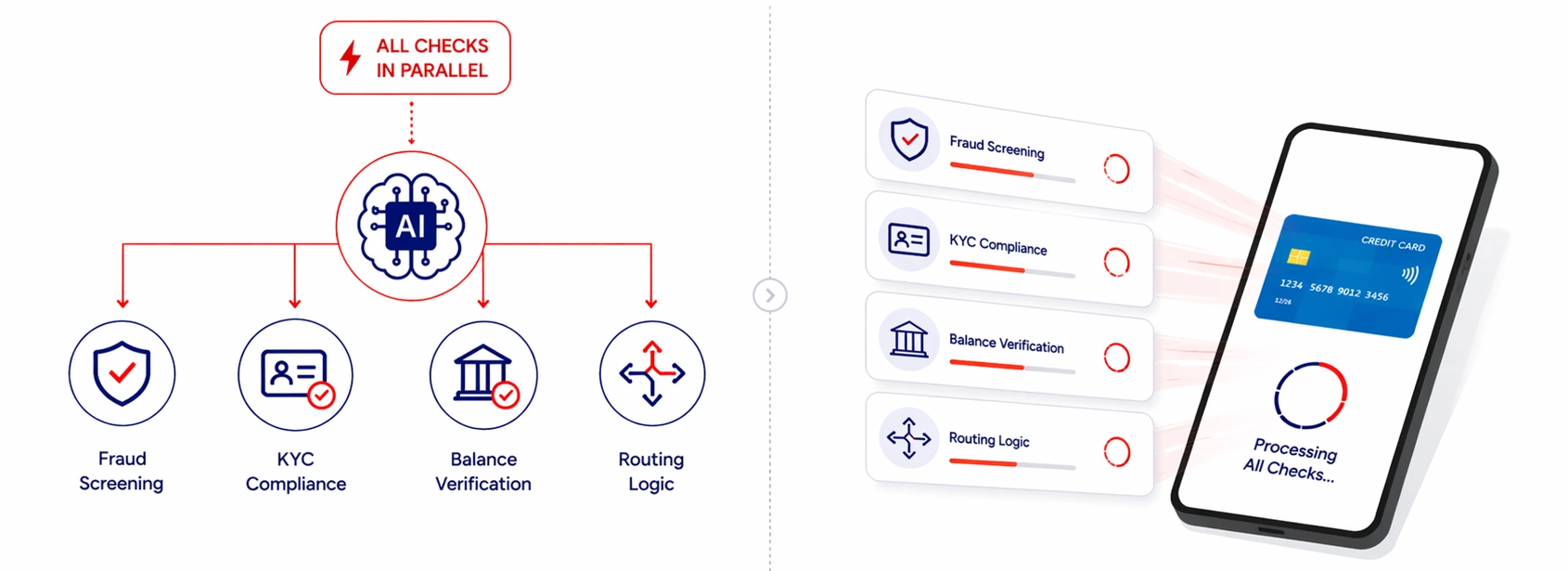
3. Parallel Checks Fire At Once

3. Parallel Checks Fire At Once

Traditional payment systems process checks one after another, which creates delays. Agentic AI removes this limitation by running everything at the same time.

Fraud detection, compliance checks, balance verification, and routing logic all happen simultaneously. This not only saves time but also improves decision accuracy.

→ Fraud screening runs instantly
→ KYC and compliance validation happen in parallel
→ Balance and fund availability are verified
→ Routing logic begins at the same time

This parallel execution is what makes the system extremely fast and efficient.

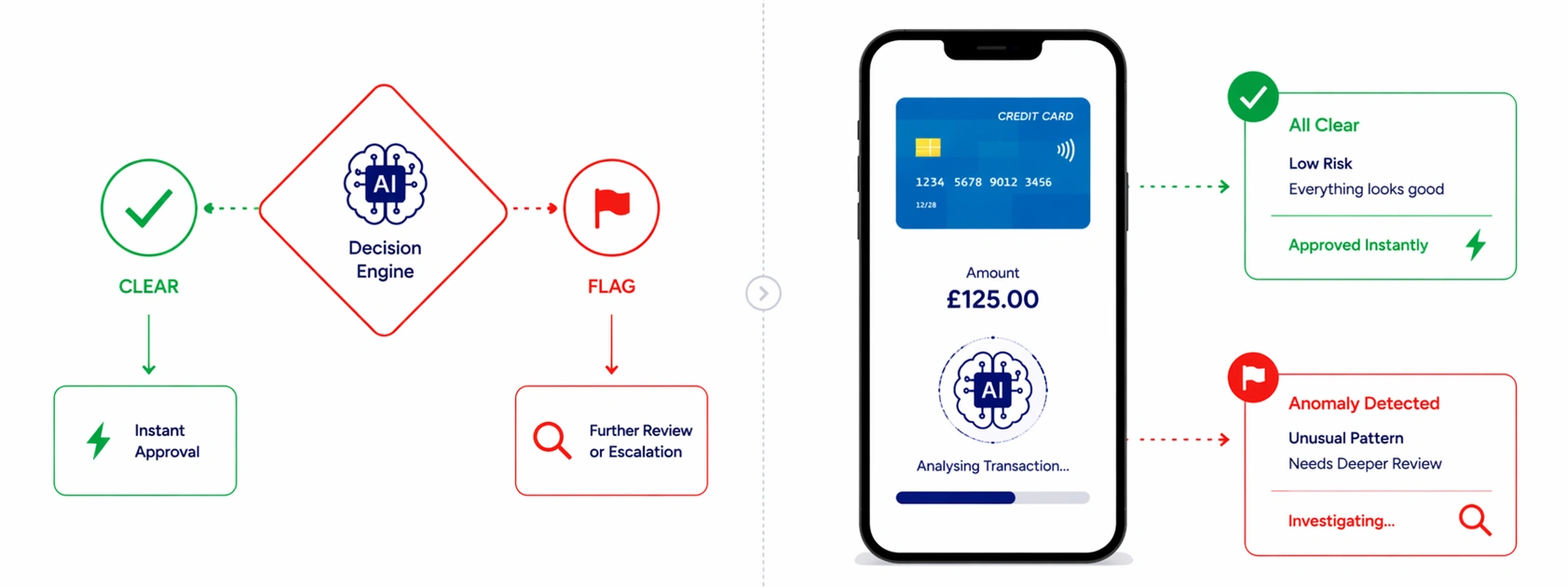
4. Decision: Clear or Flag

4. Decision Clear or Flag

After analysing all signals, the system reaches a decision. If everything looks normal, the transaction is approved instantly. If something appears unusual, the AI does not immediately reject it.

Instead, it performs a deeper evaluation using all available context before deciding whether to escalate or allow the transaction.

→ Clean signals lead to instant approval
→ Suspicious patterns trigger deeper analysis
→ Escalation happens only when necessary

This approach reduces false declines, which is a common challenge in the UK payments landscape.

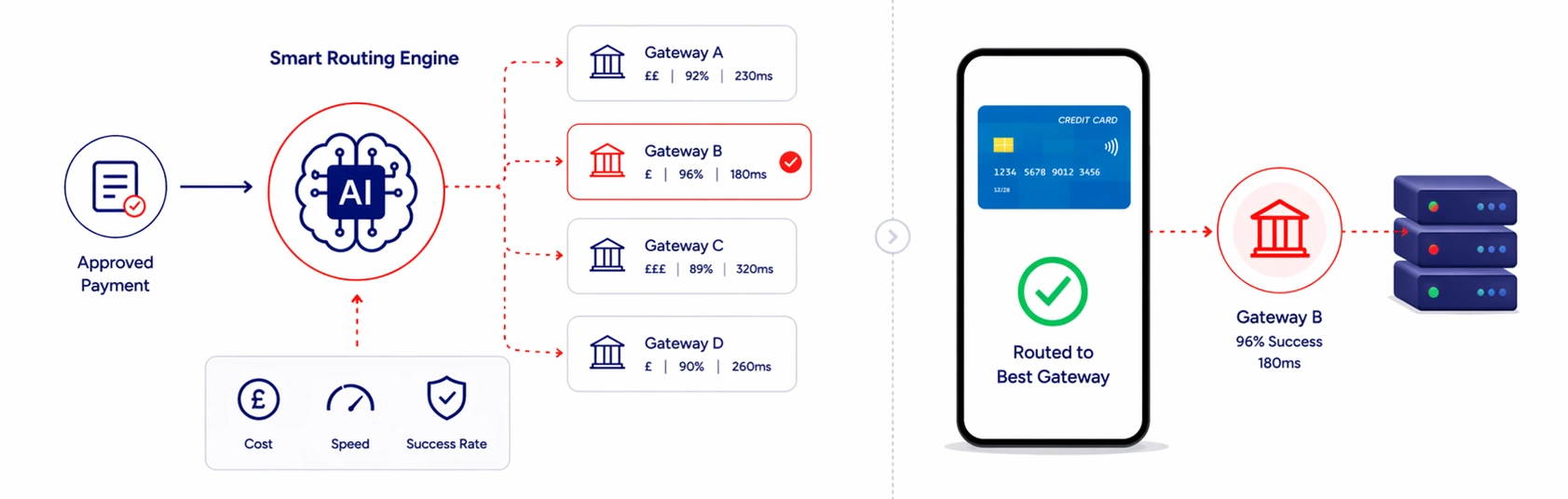
5. Smart Routing to the Best Gateway

5. Smart Routing to the Best Gateway

Once the transaction is approved, the system decides where to send it. Instead of relying on fixed routes, Agentic AI dynamically selects the best payment gateway in real time.

This decision is based on multiple factors such as cost efficiency, processing speed, and success rates at that moment.

→ System evaluates available gateways
→ Compares speed, cost, and reliability
→ Selects the most optimal route instantly

This dynamic routing plays a key role in improving success rates across UK payment systems.

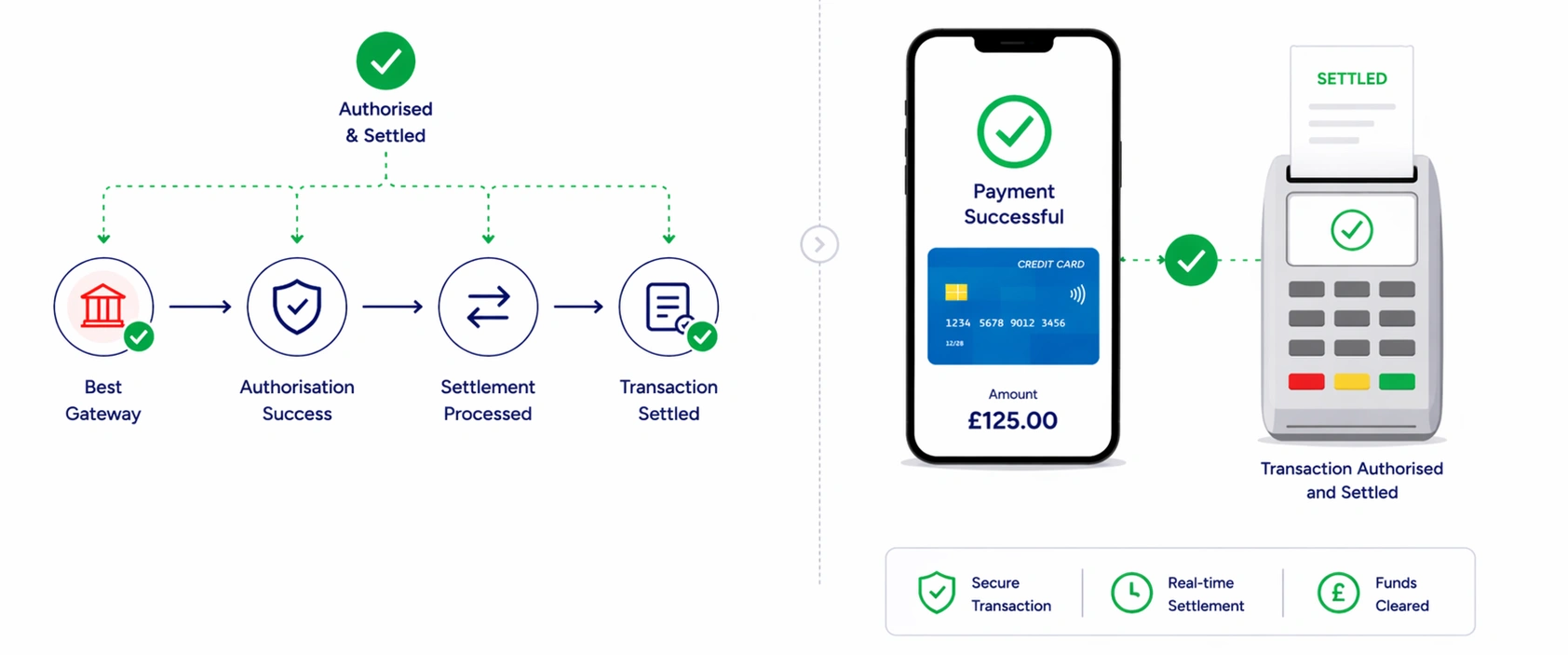
6. Transaction Authorised and Settled

6. Transaction Authorised and Settled

In the final step, the transaction is authorised and completed. The system sends confirmation to all parties involved and automatically initiates settlement.

There is no need for manual intervention. Everything flows seamlessly from approval to completion.

→ Authorisation is confirmed
→ Notifications are sent instantly
→ Settlement process is triggered automatically

This ensures a smooth and reliable payment experience.

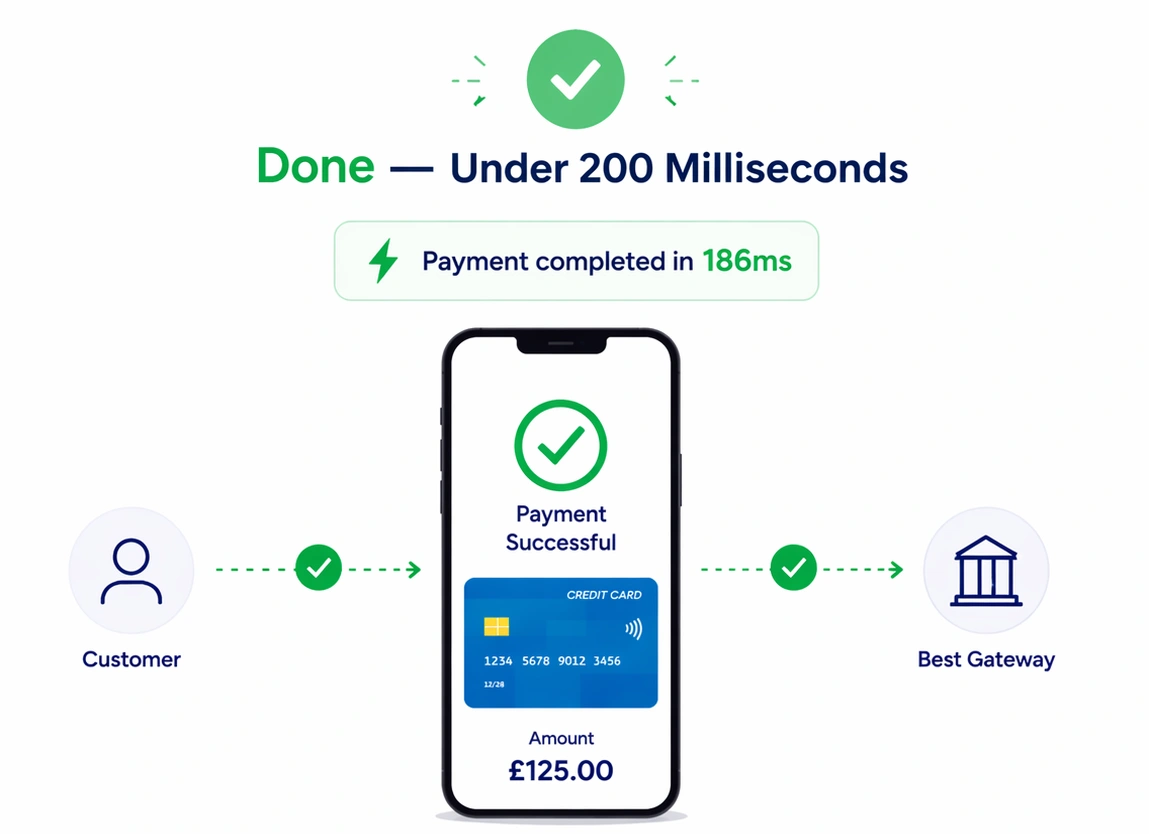
Done – Under 200 Milliseconds

Done – Uander 200 Milliseconds

The entire journey, from tap to final confirmation, is completed in under 200 milliseconds. This is faster than a human blink.

At the same time, the system quietly handles critical backend processes like logging, compliance tracking, and continuous learning for future transactions.

→ Full audit trail is recorded
→ Compliance data is stored
→ AI models learn and improve continuously

This is what defines Agentic AI in Payment Processing UK, fast execution, smart decisions, and continuous improvement built into every transaction.

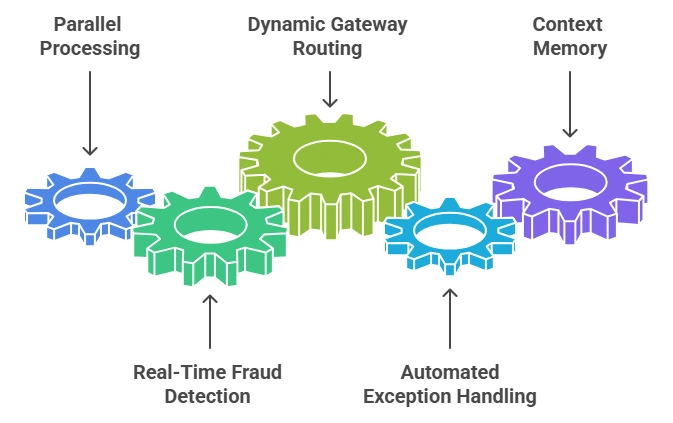
5 Specific Ways Agentic AI in Payment Processing Improves Transaction Speed

Here is the precise breakdown. Each of these is a real mechanism.

Agentic AI in Payment Processing Improves Transaction Speed

1. Parallel Processing Replaces Sequential Queues

In a legacy system, fraud checks wait for identity verification to finish. Routing waits for fraud checks. Each step is a queue. With agentic AI, all these steps run simultaneously.

The result? A process that used to take 12 steps in sequence now takes the time of one step. That alone cuts transaction time by up to 70%.

2. Real-Time Fraud Detection Without Human Review

Traditional fraud systems use rules: “flag if amount is over £X” or “flag if country is Y.” These rules generate false positives and send genuine transactions to a human review queue, adding minutes, sometimes hours, to resolution time.

Agentic AI, in contrast, uses behavioural pattern recognition. It learns what is normal for each customer and makes an instant call. Therefore, fewer transactions get stuck in review, and genuine payments sail through.

3. Dynamic Gateway Routing Cuts Latency

Not all payment gateways perform equally at all times. A fixed routing system always sends transactions to the same gateway, even if that gateway is slow at that moment.

Agentic AI routes dynamically, it picks the fastest, most reliable path in real time. Consequently, businesses avoid the bottleneck of a slow gateway during peak times.

4. Automated Exception Handling Removes Human Queues

Exceptions, unusual transactions, first-time large payments, cross-border flows, used to end up in a manual queue. A human would eventually review them, but that could take hours.

Agentic AI handles most of these automatically. It investigates, cross-references internal data, and makes a decision in seconds. Furthermore, it only escalates the genuinely complex cases, so human agents are freed for what truly needs them.


5. Context Memory Eliminates Repeated Verification

Returning customers no longer need to be fully re-verified on every transaction. The AI remembers them. It holds context across sessions, who they are, how they pay, what is normal for them.

Because of this memory layer, verified customers move through the payment flow with almost zero friction. Speed, therefore, improves with every single transaction a returning customer makes.

The cumulative effect of all five of these improvements is a payment journey that is not just faster by one measure, it is faster at every single stage of the pipeline.

How UK Companies Are Already Seeing the Speed Gains

This is not theoretical. UK businesses across banking, FinTech, and retail are actively using agentic AI in their payment workflows.

Here are two concrete examples worth knowing.

Monzo

Monzo: Instant Fraud Decisions at Scale

Monzo, the UK digital bank with over 9 million customers, uses AI-driven transaction monitoring that operates in real time.

Their system analyses each transaction against the customer’s behavioural profile before the payment even completes, allowing it to block fraudulent transactions without human intervention.

The result is that genuine customers face almost no friction, whilst fraud attempts are stopped at the point of origination.

This is a clear example of how Agentic AI in Payment Processing UK enables faster transaction decisions at scale.

Starling Bank

Starling Bank: AI-Powered Payment Dispute Resolution

Starling Bank has significantly reduced the time it takes to resolve payment disputes by bringing AI into the investigation layer.

Instead of a case sitting in a queue for days, the AI immediately pulls the full transaction record, checks merchant history, and cross-references dispute patterns, presenting the human agent with a fully formed case summary in seconds.

How Azeon AI Brings This to Financial Services

Azeon AI, built by Azilen Technologies, is an agentic AI platform purpose-built for industries that cannot afford to be slow, financial services being at the top of that list.

Within payment processing and financial customer support, Azeon brings several capabilities directly to speed:

Client Intelligence Vault

Azeon retains full client financial history across all banking channels. Every transaction query is answered with complete context, instantly, without searching through fragmented records.

Compliant by Architecture

PCI-DSS ready, GDPR compliant, and SOC 2 certified. Azeon embeds compliance into the AI decision layer, so checks happen in parallel with the transaction, not after it.

25-Second First Response Time

Azeon’s financial AI agent achieves a First Response Time of just 25 seconds for payment queries, compared to an industry average that can run into minutes.

No Rip-and-Replace

Azeon sits on top of your existing payment stack as an intelligence layer. Therefore, you gain speed without the disruption of replacing your core banking systems.

Additionally, Azeon’s CX Veins framework means payment-related customer queries flow seamlessly across voice, chat, and email, with the AI holding full context at every touchpoint.

A customer who starts a dispute on chat and calls back an hour later does not need to repeat themselves. The agent already knows. That context continuity is, in itself, a massive speed improvement.

Azeon has achieved 96% ticket automation without SLA risk in live financial environments, meaning faster resolutions without cutting corners on compliance or customer care.

For UK financial services firms looking to meet the demands of Faster Payments, open banking, and a digitally native customer base, Azeon provides the agentic intelligence layer that makes speed a default.

Why Azilen Technologies Stands Out in Agentic AI in Payment Processing UK

In the UK payments ecosystem, speed is no longer just about faster transactions. It is about building systems that handle compliance, risk, data, and scale, all at the same time. This is exactly where Agentic AI in Payment Processing UK changes the game, and where Azilen Technologies brings a clear edge.

Azilen does not treat payment processing as a single layer problem. It builds end-to-end systems where intelligence, compliance, and performance work together. This ensures that transactions are not only fast, but also reliable, secure, and future-ready.

As a digital transformation partner, Azilen focuses on creating payment systems that operate in real-time, adapt instantly, and continuously improve with every transaction.

Strong Data Foundation: Structures payment data pipelines to enable real-time decision-making, faster fraud detection, and improved transaction success rates across high-volume environments

Seamless System Integration: Connects payment engines with banks, gateways, APIs, and legacy systems to ensure smooth and uninterrupted transaction flow

Process-Driven Engineering: Aligns payment workflows with business logic, reducing delays, eliminating bottlenecks, and improving overall processing speed

Built-in Compliance Approach: Embeds UK regulatory requirements such as GDPR and FCA standards directly into the system, avoiding delays caused by post-processing checks

Intelligent Automation with Agentic AI: Uses Agentic AI to run parallel checks, automate decisions, and optimise routing, significantly reducing transaction time

Scalable Architecture Design: Builds flexible payment infrastructures that handle increasing transaction volumes without impacting speed or performance

Azilen focuses on building payment systems that do not just process transactions, but optimise them continuously. This approach helps UK businesses deliver faster payments, reduce failures, and create a seamless customer experience powered by Agentic AI in Payment Processing.

FAQs: Loan Origination Software UK Journey

1. What is Agentic AI in Payment Processing?

Agentic AI in Payment Processing refers to AI systems that act independently to manage and optimise payment workflows. Instead of following fixed steps, these systems analyse data, make decisions, and execute actions in real time.

This improves speed, reduces manual effort, and ensures more accurate and efficient transaction handling across modern payment systems.

2. How does Agentic AI improve transaction speed?

Agentic AI improves transaction speed by running multiple checks simultaneously instead of sequentially. Fraud detection, compliance validation, and balance checks happen in parallel.

The system also makes instant decisions and routes payments dynamically. This removes delays and reduces processing time, allowing transactions to complete in milliseconds within high-volume payment environments.

3. Why is Agentic AI important for UK payment systems?

In the UK, payment systems must meet strict regulatory and performance standards. Agentic AI helps by embedding compliance, improving fraud detection, and enabling faster decision-making.

It reduces false declines and ensures smoother transactions. This makes it highly valuable for financial institutions and fintech companies aiming to deliver reliable and real-time payment experiences.

4. How does Agentic AI reduce payment failures?

Agentic AI reduces payment failures by analysing transaction context in real time and selecting the best processing path. It identifies risks early, avoids incorrect rejections, and chooses the most reliable payment gateway.

This improves success rates and ensures a smoother experience for users, especially during high traffic or complex transaction scenarios.

5. Can Agentic AI handle compliance in payment processing?

Yes, Agentic AI can manage compliance by embedding regulatory checks directly into the payment flow. It continuously monitors transactions against rules like GDPR and FCA requirements.

This ensures compliance happens instantly during processing rather than after. As a result, businesses reduce risk, avoid delays, and maintain regulatory standards without slowing down transactions.

Glossary

Agentic AI: An advanced AI system that independently makes decisions, executes actions, and optimises processes in real time without manual intervention

Payment Processing: The complete flow of handling a transaction from initiation to authorisation and settlement between customer, bank, and merchant

Real-Time Processing: Executing transactions instantly without delays, ensuring immediate validation, decision-making, and confirmation

Fraud Detection: Identifying suspicious or unusual transaction patterns to prevent unauthorised or fraudulent payments

KYC (Know Your Customer): Verifying customer identity to meet regulatory requirements and reduce financial crime risks

Payment Gateway: A technology that securely routes transaction data between the merchant, customer, and financial institutions

Smart Routing: Dynamically selecting the best payment path based on speed, cost, and success rate to optimise transaction outcomes

Transaction Authorisation: The process of approving or declining a payment after validating funds, identity, and risk factors

Settlement: The final step where funds are transferred from the customer’s bank to the merchant’s account

Parallel Processing: Running multiple checks or operations at the same time to reduce delays and improve system efficiency

Kulmohan Makhija
Kulmohan Makhija
Vice President – Growth & Enterprise Strategy

Kulmohan Makhija is an enterprise technology and business strategy writer with over 12 years of experience analyzing digital transformation across global and European markets. His work focuses on applied artificial intelligence, product engineering, enterprise architecture, and large-scale legacy modernization. He explores how complex organizations modernize core systems, adopt AI responsibly, and align innovation with regulatory, cultural, and operational realities — particularly within the UK and broader European technology landscape. With a pragmatic enterprise perspective, Kulmohan emphasizes transformation that delivers measurable impact without disrupting mission-critical operations. His writing bridges executive strategy with technical depth, providing clarity for technology leaders, product teams, and decision-makers navigating modernization journeys.

Related Insights