

Skip to content

How Software Developers Build Claim Management Systems for Insurance

Featured Image

TL;DR:

Scalable claim management systems for insurance help insurers settle claims faster, reduce costs, and improve customer trust. Software developers build these systems using modern technologies like cloud, APIs, automation, and AI to handle large volumes without failure.

These systems reduce manual work, improve fraud detection, and support better decision-making while staying compliant with regulations. In simple terms, they make insurance operations faster, smarter, and ready for future growth.

In This Blog, You’ll Learn

→ How software developers approach scalability challenges in claim management systems for insurance from both a technical and business perspective.
→ What architectural decisions help claim management systems for insurance stay stable, cost-efficient, and resilient under heavy load.
→ How cloud-native design, APIs, and event-driven systems support large-scale claim processing and business growth.
→ Where automation and intelligence deliver real operational and financial value in claims workflows.
→ Why security, compliance, and reliability must be designed into claim management systems for insurance to meet UK regulatory expectations.
→ How scalable claims systems create a strong technology and business case for insurers competing in the UK market.

By the end of this article, you will understand not just what scalable claims systems are, but how and why Software Developer Insurance teams build them.

A customer submits a motor insurance claim after an accident.

They expect quick acknowledgement, clear updates, and a fair settlement.

Instead, the claim sits in a queue for days.

Documents go missing.

Status updates are unclear. Behind the scenes, the insurer’s claims platform is struggling under peak load, manual workflows, and ageing infrastructure.

This scenario is still common across parts of the UK insurance market.

Claim management systems for insurance sit at the heart of an insurer’s promise. When they fail to scale, everything feels slow: customers get frustrated, claims teams feel overwhelmed, and regulators start paying attention. As claim volumes fluctuate due to weather events, fraud spikes, or market growth, scalability is no longer optional.

This is where modern Software Developer Insurance expertise becomes critical. Building scalable insurance claims systems is no longer just a technical challenge; it is a business imperative.

Why Claim Management Systems for Insurance Struggle with Scalability Today

Claim management systems for insurance are built to handle uncertainty. Claims do not arrive in a steady, predictable flow. They spike during natural disasters, accidents, fraud waves, or sudden market growth. This makes scalability the single most important challenge in claims technology.

For many insurers, the problem is not that their systems do not work. The problem is that their systems work only under normal conditions. When claim volumes rise sharply, systems slow down, processes break, and customers feel the impact immediately.

From a technology perspective, claims systems must be able to:

→ Accept a large number of claims at the same time without crashing
→ Process documents, checks, and approvals in parallel
→ Continue operating even if one component fails
→ Maintain performance while meeting strict compliance requirements

This is where Software Developer Insurance expertise becomes essential. Developers are no longer just building software to record claims. They are engineering platforms that stay stable under pressure, adapt quickly to change, and support both automation and human decision-making.

If you want to understand how automation and intelligence power this shift, explore our blog: Automated Insurance Claims Explained: AI, OCR, and Risk Scoring in Action.

How Software Developers Architect Claim Management Systems For Insurance

Building a claim management systems for insurance is not about adding more servers or speeding up screens. From a software developer’s perspective, scalability is an architectural discipline. It requires deliberate design choices that allow the system to grow, absorb pressure, and remain stable under unpredictable claim volumes.

Below are the four core architectural pillars developers focus on when designing claim management systems for insurance platforms.

1. Breaking the Claims System into Independent Services

The first technical decision developers make is how the system is structured.

Instead of building one large claims application, developers split the system into independent services, each responsible for a single function such as claim intake, document processing, fraud checks, or payments. This architectural style is commonly known as microservices.

From a scalability point of view, this solves multiple problems:

→ Each service scales independently based on load
→ Failures remain contained within one service
→ High-traffic functions do not overload the entire system
→ Development teams deploy updates without affecting unrelated claim processes

This approach is foundational in Software Developer Insurance architecture because claims volumes are never evenly distributed across system components.

2. Designing for Asynchronous and Event-Driven Processing

Claims systems handle many long-running processes. Fraud analysis, document verification, and approvals do not happen instantly. Developers therefore avoid synchronous designs that force users or systems to wait.

Instead, they use event-driven architectures.

In practical terms:

→ A claim submission generates an event
→ Other services react to that event independently
→ Processing happens in parallel, not sequentially
→ The customer receives immediate acknowledgement, even if backend work continues

From a developer’s view, event-driven design is essential for claims systems where speed, resilience, and customer experience portals must coexist.

3. Building API-First and Integration-Ready Platforms

Modern insurance claims systems do not operate in isolation. They must integrate with brokers, garages, medical providers, payment gateways, fraud services, and regulatory reporting systems.

Developers therefore design claims platforms using an API-first approach.

This means:

→ Every function is exposed through secure, well-defined APIs
→ External systems connect without direct database access
→ Integrations scale independently from core claim processing
→ Security and access control are enforced consistently

For Software Developer Insurance teams, APIs are not an add-on; they are the backbone of scalable claims platforms.

To understand how this approach is shaping financial systems at a broader level, explore: Modern Core Banking Integration in the UK: API-First Strategies for Legacy System Transformation.

4. Cloud-Native Infrastructure

Scalable claims systems require infrastructure that can grow and shrink in real time. This is why UK insurers increasingly rely on cloud-native platforms such as AWS or Azure.

Cloud-native infrastructure enables:

→ Elastic scaling during peak claim periods
→ Automatic provisioning without manual intervention
→ Built-in redundancy across regions and availability zones
→ Integrated disaster recovery and backup capabilities

Developers design claims systems with the assumption that infrastructure failures will occur. Services are expected to restart, relocate, or scale automatically without impacting claim processing.

This shift turns infrastructure from a limitation into a resilience mechanism.

5. Containerisation and Orchestration

To run microservices reliably at scale, developers package services using container technologies such as Docker and manage them using orchestration platforms like Kubernetes.

This provides:

→ Consistent behaviour across development, testing, and production
→ Automated scaling based on real-time demand
→ Self-healing services that restart automatically after failures
→ Faster deployments with minimal operational risk

In claims environments, where downtime directly affects customers and regulators, container orchestration becomes a critical reliability layer.

Data Architecture: SQL and NoSQL Working Together

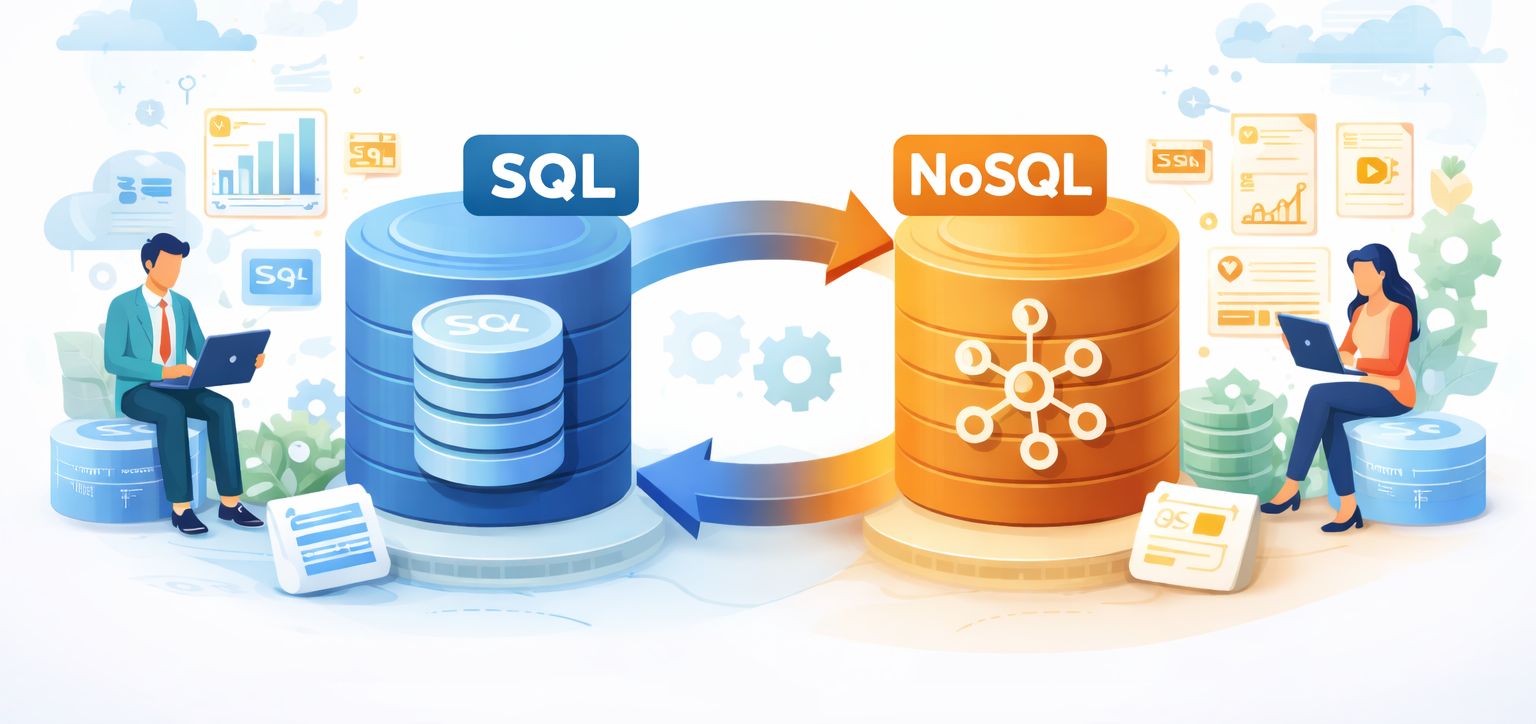
SQL and NoSQL

Insurance claims systems manage different types of data, ranging from structured policy and claim records to semi-structured workflow logs and unstructured documents such as images and PDFs.

Using a single database for all of this data creates performance and scalability issues as claim volumes increase.

To solve this, software developers design a hybrid data architecture.

Relational databases (SQL) are used for transactional accuracy and reporting, while NoSQL databases or object storage handle high-volume and unstructured content more efficiently.

Techniques like partitioning and sharding distribute data load across the system, allowing claims platforms to scale without compromising performance or compliance, as demonstrated in real-world insurance claims modernisation case studies such as the Insurity ClaimsXpress transformation documented by Sikich.

Performance and Scalability Challenges

HTML Table Generator
Dimension
Traditional Model
Transformed Model
Decision speed Slow, manual Near real-time
Risk accuracy Historical Predictive
Cost structure Labour-heavy Automation-led
Compliance Reactive Embedded
Agility Low High

These outcomes compound over time, creating structural advantage rather than incremental improvement.

Realistic Business and Technology Examples of Claim Management Systems for Insurance

Example 1: Handling Motor Claims Surges After Severe Weather

The problem: A mid-sized UK motor insurer experienced significant claim backlogs following severe weather events. Legacy claims systems struggled with sudden volume spikes, leading to delayed claim acknowledgements, slow document processing, and rising customer complaints.

What changed technically: The insurer modernised its claims platform by introducing event-driven claim intake, auto-scaling microservices, and automated document ingestion. Claim submissions were decoupled from downstream processing, allowing the system to absorb traffic spikes without blocking customers.

Similar architectural approaches are described in real-world cloud insurance case studies published by AWS, including how insurers build event-driven claims processing platforms for surge scenarios.

Business impact:

→ Claim settlement times reduced by approximately 40%
→ Noticeable improvement in customer satisfaction and NPS scores
→ Lower overtime and operational pressure on claims teams during peak periods

This shift turned weather-driven claim spikes from a crisis into a manageable operational scenario.

Example 2: Modernising Fraud Detection Without Slowing Claims

The problem: Manual fraud checks slowed the claims process. Low-risk claims were delayed unnecessarily, while fraud teams were overloaded with cases that did not require deep investigation. UK insurers including AXA UK have highlighted similar challenges when relying on manual or rule-heavy fraud processes.

What changed technically: The insurer introduced machine learning–based fraud scoring integrated directly into the claims workflow. Claims were automatically assessed in real time, with low-risk cases moving straight through and high-risk cases routed for human review.

This “human-in-the-loop” approach mirrors fraud modernisation strategies publicly discussed by insurers such as Aviva and AXA, who have highlighted the role of AI in improving claims efficiency while maintaining regulatory control.

Business impact:

→ Faster approvals for legitimate, low-risk claims
→ Improved fraud detection accuracy and reduced leakage
→ Greater transparency and confidence during regulatory audits

By combining Claims Processing Automation with human oversight, the insurer improved both speed and trust without compromising compliance.

How Azilen Technologies Enables Scalable Insurance Claims Platforms

Building scalable insurance claims systems requires more than just cloud capabilities or coding expertise. It demands a strong understanding of insurance workflows, regulatory expectations, and how technology decisions directly influence business performance. This is where Azilen Technologies plays a strategic role as a Digital Transformative Technology and engineering partner for insurers.

Azilen works at the intersection of software architecture, insurance domain knowledge, and scalable system design, helping insurers modernise claims platforms without disrupting live operations.

What Azilen brings to scalable claims systems:

✅ Architecture-first engineering approach
Designing claims platforms using microservices, event-driven patterns, and cloud-native principles to ensure systems scale reliably under peak claim loads.

✅ Strong insurance domain understanding
Building systems aligned with real claims workflows, regulatory expectations, audit needs, and operational realities of UK insurers.

✅ Scalability built into the foundation
Engineering claims systems that scale horizontally, isolate failures, and maintain performance during sudden claim surges.

✅ Automation with control
Integrating workflow engines, AI-driven decision support, and human-in-the-loop designs to improve speed without sacrificing accuracy or compliance.

✅ Security and compliance by design
Embedding data protection, role-based access, audit logging, and resilience into the system architecture from day one.

Rather than delivering one-off solutions, Azilen focuses on building long-term, scalable insurance platforms that evolve with business needs, regulatory changes, and customer expectations. This makes Azilen a strong enabler for insurers looking to turn claims technology into a stable, growth-ready business capability.

Conclusion: Claim Management Systems Are a Strategic Necessity

Claim management systems for insurance define the customer experience at the most critical moment. When these systems scale effectively, claims are settled faster, trust improves, and operations remain stable. When they do not, even strong insurance products fail where it matters most.

Scalability comes from deliberate engineering choices, not from a single tool or platform. Modern claims systems use microservices, event-driven design, cloud-native infrastructure, and hybrid data architectures to handle claim surges, support automation, and meet UK regulatory expectations.

In a competitive and highly regulated market, scalable claims systems are now a core business capability, enabled by strong Software Developer Insurance expertise.

FAQs: Claim Management Systems for Insurance

1. What does scalability mean in an insurance claims system?

Scalability in an insurance claims system means the platform can handle sudden increases in claim volume without slowing down, failing, or compromising compliance. It includes technical scalability, operational resilience, and the ability to adapt workflows as business and regulatory needs change.

2. Why do legacy claims systems struggle to scale?

Legacy claims systems are typically monolithic and tightly coupled. When claim volumes increase, the entire system must scale together, which leads to performance bottlenecks, higher costs, and increased risk during changes or failures.

3. How do software developers design claims systems for peak claim events?

Software developers design for peak events by using microservices, event-driven processing, and cloud-native infrastructure. These approaches allow only high-load components to scale while keeping the rest of the system stable and responsive.

4. Is automation risky in insurance claims processing?

Automation becomes risky only when it lacks control. Modern claims systems use decision automation with human-in-the-loop designs, ensuring that complex or high-risk claims receive human review while simple claims are processed faster and more efficiently.

5. Why is Software Developer Insurance expertise critical for insurers?

Insurance claims systems involve complex workflows, strict compliance rules, and unpredictable volumes. Software Developer Insurance expertise ensures that systems are engineered with scalability, security, and regulatory requirements built into the architecture from the start, not added later.

Glossary

Scalable Claims System: A claims platform designed to handle increasing claim volumes without performance issues, downtime, or loss of control.

Microservices Architecture: A software design approach where a system is built as small, independent services that scale and deploy separately.

Event-Driven Architecture: A system design where actions trigger events, and other components respond asynchronously without blocking processes.

API-First Design: An approach where all system functionality is exposed through secure APIs, enabling easy integration and scalability.

Cloud-Native Infrastructure: Systems built specifically for cloud platforms, allowing automatic scaling, resilience, and faster deployments.

Horizontal Scaling: Increasing system capacity by adding more service instances rather than upgrading a single server.

Hybrid Data Architecture: Using both SQL and NoSQL databases together to manage structured, semi-structured, and unstructured data efficiently.

Kulmohan Makhija
Kulmohan Makhija
Vice President – Growth & Enterprise Strategy

Kulmohan Makhija is an enterprise technology and business strategy writer with over 12 years of experience analyzing digital transformation across global and European markets. His work focuses on applied artificial intelligence, product engineering, enterprise architecture, and large-scale legacy modernization. He explores how complex organizations modernize core systems, adopt AI responsibly, and align innovation with regulatory, cultural, and operational realities — particularly within the UK and broader European technology landscape. With a pragmatic enterprise perspective, Kulmohan emphasizes transformation that delivers measurable impact without disrupting mission-critical operations. His writing bridges executive strategy with technical depth, providing clarity for technology leaders, product teams, and decision-makers navigating modernization journeys.

Related Insights