

Skip to content

Building a Claims Automation Framework in Insurance: AI, OCR, and Risk Scoring at Work

Featured Image

TL;DR:

Automated Claims Processing Insurance is redefining how insurers manage one of their most complex operations. Traditional claims workflows are slow, document-heavy, and highly dependent on human judgement, which leads to delays, errors, and fraud leakage. By combining AI, OCR, and risk scoring, insurers are now building end-to-end claims automation frameworks that digitise documents, interpret claim data intelligently, assess risk in real time, and automate settlements.

This blog explains how an insurance claims automation framework works from FNOL to payout. You’ll understand the role of AI-driven claims automation, OCR in insurance claims, and AI risk scoring for insurance. It also covers business impact, real-world outcomes, implementation challenges, and how insurers achieve faster settlements, lower operational costs, and stronger fraud control at scale.

In This Article, You’ll Learn

→ How Automated Claims Processing Insurance works across the full claims lifecycle
→ Why AI-driven claims automation delivers faster, more consistent claim decisions
→ How OCR in insurance claims extracts, validates, and understands complex documents
→ How AI risk scoring for insurance detects fraud early and prioritises claims intelligently
→ What an end-to-end insurance claims automation framework looks like in practice
→ The real business impact of claims automation on cost, speed, and customer experience
→ Common implementation challenges insurers face and how to avoid them

A claim never arrives at a convenient time. It shows up after an accident, a medical emergency, or a loss that already has the customer stressed. What happens next decides everything. Not just the payout, but whether the customer trusts the insurer again.

Inside most insurance organisations, this moment still triggers a familiar chain reaction. Emails start flying. PDFs get downloaded, renamed, and re-uploaded. Adjusters open spreadsheets, cross-check policy details, and manually verify documents one by one. What should be a straightforward process slowly turns into a bottleneck. Settlements drag on, decisions vary from case to case, and fraud often hides in plain sight.

This is where Automated Claims Processing Insurance changes the story. Instead of treating claims as paperwork to be pushed through, insurers apply AI, OCR, and intelligent risk scoring to make claims smarter from the first second. Documents get understood instantly, risks are evaluated in real time, and genuine claims move forward without unnecessary friction. The result is faster settlements, calmer customers, and claims teams that finally work ahead of the problem, not behind it.

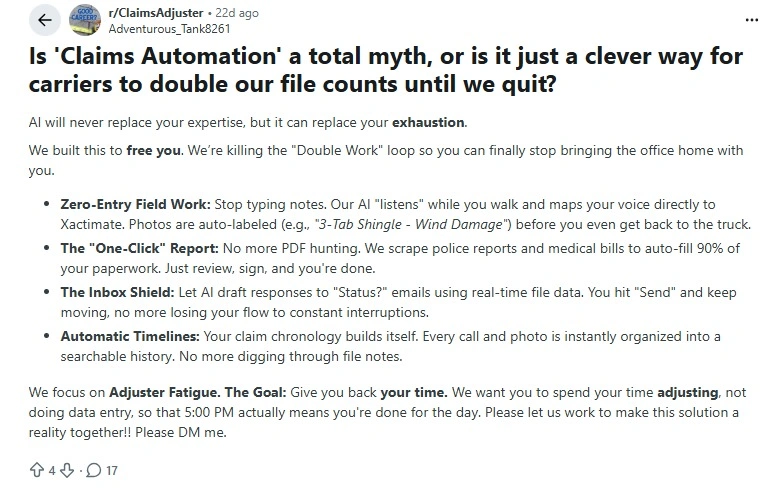
Claims Automation Framework in Insurance reddit Comment

The Traditional Claims Processing Problem

Traditional claims processing struggles because it was designed for low volumes and predictable patterns, neither of which exist today.

Core issues insurers face:

→ Manual data entry across disconnected systems
→ High dependency on claims adjusters
→ Delayed settlements and customer dissatisfaction
Fraud detection happening too late
→ Rising operational costs as claim volumes grow

Traditional vs Automated Claims Processing Insurance

HTML Table Generator
Area
Traditional Processing
Automated Claims Processing Insurance
Document handling Manual review OCR and document intelligence
Decision logic Static rules AI-driven decision engines
Fraud detection Post-settlement audits Real-time risk scoring
Processing time Days or weeks Minutes to hours
Scalability Linear headcount growth Platform-driven scalability

According to McKinsey & Company, insurers that implement AI-driven claims automation reduce processing costs by up to 40% while significantly improving settlement speed, making automation a strategic necessity rather than an efficiency upgrade.

What Is a Claims Automation Framework?

A claims automation framework is not a single tool. It is a connected, end-to-end architecture that orchestrates data, intelligence, and execution.

Instead of deploying isolated OCR or fraud tools, insurers build a framework where every claim follows a consistent, intelligent flow, from intake to settlement.

Core Layers of a Claims Automation Framework

Data Ingestion

Claims enter through FNOL apps, emails, partner APIs, or call-centre systems. Structured and unstructured data flows into a unified intake layer.

Document Intelligence

OCR in insurance claims extracts information from bills, reports, invoices, and images with confidence scoring and validation logic.

Decision Intelligence

AI models evaluate coverage, claim validity, and severity, integrating with Underwriting Decision Engines for rule interpretation and eligibility checks.

Execution & Settlement

Low-risk claims are auto-approved, while complex or high-risk cases move to Claims Processing Automation workflows or manual review.

Role of AI in Claims Automation

AI-driven claims automation brings intelligence into claims handling by learning from data, predicting outcomes, and spotting patterns humans often miss. Instead of relying only on rules and manual checks, AI helps insurers make faster and more consistent claim decisions.

What AI actually does:

→ Predicts claim legitimacy using historical claims and behaviour patterns
→ Interprets free-text claim descriptions and adjuster notes using NLP
→ Estimates settlement ranges based on similar past claims
→ Flags suspicious or abnormal claim behaviour in real time

Real-World Applications of AI in Insurance Claims

Health insurance

Insurers like UnitedHealth Group and Anthem use AI models to analyse diagnosis codes, treatment patterns, and hospital billing behaviour. Claims that show unusual cost or treatment deviations are flagged early, while standard claims move through faster without manual delays.

Motor insurance

Companies such as Allstate and Progressive Insurance apply computer vision to assess vehicle damage from accident images. AI estimates repair severity and costs, enabling faster approvals for straightforward claims and closer review of inconsistent cases.

Property insurance

Insurers including State Farm and AXA use NLP to analyse surveyor reports and loss descriptions, combined with catastrophe and weather data. This allows them to prioritise genuine high-impact claims during natural disasters while managing large claim volumes efficiently.

A Deloitte insurance AI study reports that insurers applying AI to claims and fraud detection improve fraud identification accuracy by over 30% compared to traditional post-claim audits.

OCR & Intelligent Document Processing

Insurance claims depend heavily on documents, but reading documents is not enough. Modern claims automation uses intelligent OCR to understand document structure, extract the right data, and validate it in context. This allows insurers to process large claim volumes accurately without slowing down operations or overloading claims teams.

What Intelligent OCR Enables

→ Understands document layout and context, not just raw text
→ Extracts critical claim fields with confidence scoring
→ Flags low-confidence data for human review without stopping automation

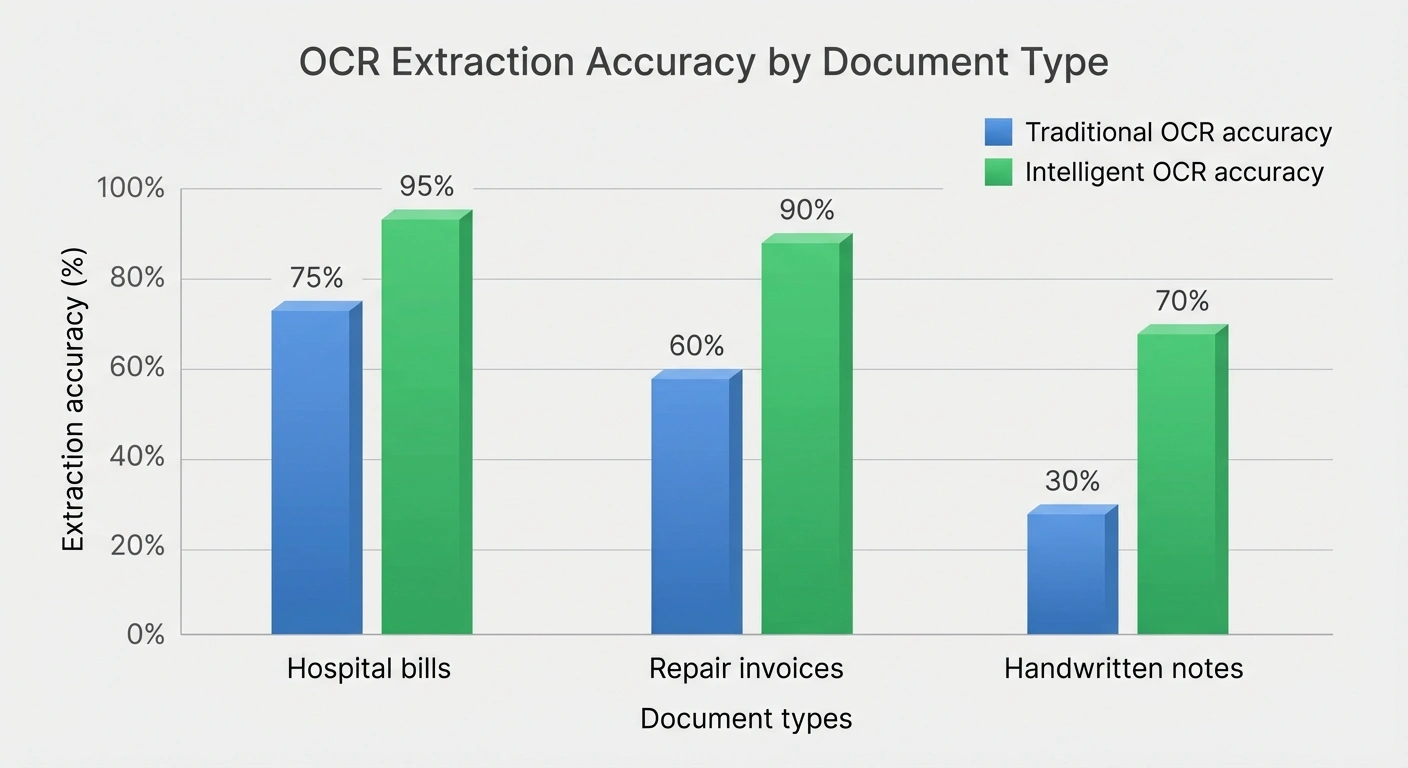
OCR Impact on Claims Processing

OCR & Intelligent Document Processing Azilen Technilogies

Insight to highlight: The graph clearly shows how intelligent OCR significantly improves data extraction accuracy across complex insurance documents, making Automated Claims Processing Insurance reliable at enterprise scale.

As highlighted by IBM, combining OCR with NLP enables insurers to extract and validate unstructured claim documents accurately at scale.

AI-Driven Risk Scoring & Fraud Detection

Risk scoring is where Automated Claims Processing Insurance becomes truly intelligent. Instead of approving or rejecting claims using fixed rules, modern insurers calculate dynamic risk scores for every claim using data, behaviour, and context.

Rather than asking “Is this claim valid or not?”, the system asks “How risky is this claim right now?”, and acts accordingly.

How AI-driven risk scoring works

Feature engineering from historical claims: AI models learn from past claim outcomes, settlement patterns, claim frequency, and customer behaviour.

Behavioural and network pattern analysis: The system detects unusual behaviours across customers, garages, hospitals, or service providers—revealing hidden fraud networks.

Real-time anomaly detection: Claims are analysed instantly at intake, not after settlement, allowing insurers to intervene early.

End-to-End Claims Automation Flow

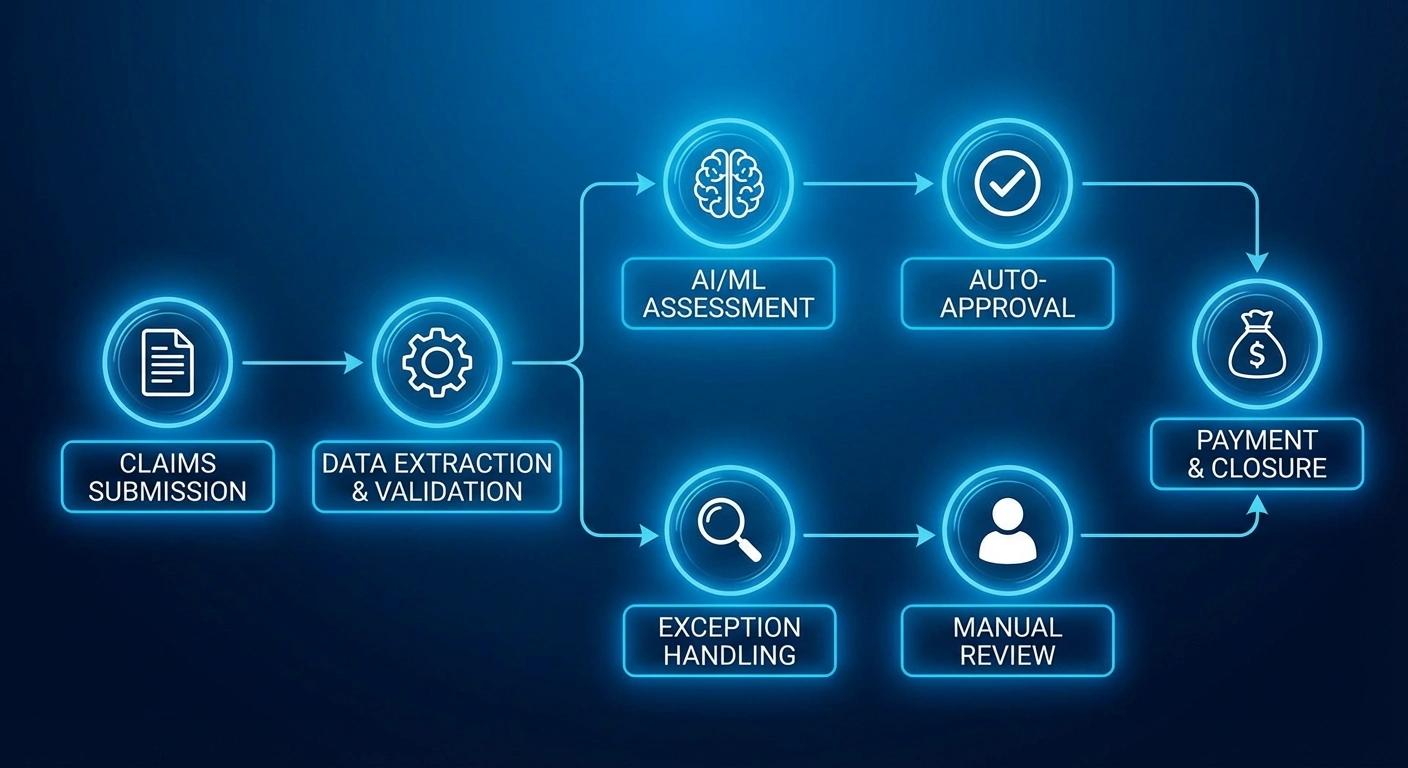
End-to-End Claims Automation Flow azilen

A claims automation framework only works when every step is connected. When AI, OCR, and risk scoring operate in isolation, benefits remain limited. When designed end to end, claims become predictable, fast, and scalable.

How a modern claims lifecycle flows

→ FNOL submission through apps, portals, or partner systems
→ Data capture via OCR, extracting information from documents and images
→ AI-based validation to check coverage, consistency, and completeness
→ Risk scoring to determine the processing path
→ Decisioning using automation or human review
→ Settlement or escalation, depending on risk and complexity

Throughout this journey, Customer Experience Portals keep policyholders informed in real time, reducing inbound calls, follow-ups, and frustration.

This is how Automated Claims Processing Insurance moves from fragmented steps to a single intelligent system.

Where Azilen Technologies Fits In Automated Claims Processing Insurance

Azilen Technologies, a Digital Transformation Company, ensures that all the capabilities discussed above, AI-driven decisioning, OCR-led document intelligence, real-time risk scoring, and end-to-end automation, operate as a unified, intelligently connected framework to deliver measurable business impact in Automated Claims Processing Insurance.

Azilen supports insurers across:

✅ AI-driven claims decisioning and risk scoring: Directly enabling real-time claim prioritisation, faster approvals, and early fraud prevention.

✅ Intelligent document processing using OCR and NLP: Powering accurate data extraction, validation, and automation at the document ingestion stage.

✅ Integration with core insurance platforms and legacy systems: Ensuring smooth data flow across FNOL, claims management, underwriting, and settlement workflows.

✅ Governance, compliance, and human-in-the-loop design: Balancing AI automation with regulatory control and operational oversight.

The approach is consultative and architecture-first, helping insurers modernise claims operations without disrupting existing systems, compliance requirements, or business continuity.

Final Perspective: Claims Automation as a Strategic Advantage

Claims automation is no longer about speed alone. It is about intelligence, trust, and control. As claim volumes grow and fraud patterns become more complex, insurers need systems that understand context, learn from data, and make consistent decisions at scale. Automated Claims Processing Insurance delivers this by connecting AI, OCR, and risk scoring into one cohesive framework rather than a set of disconnected tools.

→ It shifts claims handling from reactive processing to real-time, risk-aware decisioning
→ It reduces operational strain while improving accuracy and fraud prevention
→ It creates a smoother, more transparent experience for both customers and claims teams

Ultimately, the future of insurance claims belongs to insurers who treat claims as an intelligent capability, not an operational burden. Those who invest in connected, AI-driven claims automation today will be better positioned to scale efficiently, respond faster, and earn lasting customer trust tomorrow.

FAQs: Automated Claims Processing Insurance

1. What is Automated Claims Processing Insurance?

Automated Claims Processing Insurance refers to using AI, OCR, and risk scoring to handle insurance claims with minimal manual intervention. Instead of relying on emails, spreadsheets, and human reviews, claims are validated, assessed, and settled through intelligent systems. This approach improves speed, reduces errors, detects fraud earlier, and allows insurers to scale claims operations efficiently without increasing operational costs.

2. How does AI improve insurance claims processing?

AI improves claims processing by analysing historical claims data, understanding unstructured information, and predicting risk in real time. Machine learning models assess claim legitimacy, NLP interprets claim descriptions and documents, and anomaly detection flags suspicious behaviour. This enables insurers to make faster, more consistent decisions while reducing fraud leakage and manual workload across the claims lifecycle.

3. What role does OCR play in automated claims processing?

OCR plays a critical role by converting claim documents such as hospital bills, repair invoices, and reports into usable digital data. Intelligent OCR goes further by understanding document layout, context, and key fields. This allows insurers to extract accurate information, validate it automatically, and process high claim volumes without delays caused by manual document review.

4. How does AI risk scoring help in fraud detection?

AI risk scoring assigns a dynamic risk score to every claim based on multiple factors such as claim history, behaviour patterns, provider data, and anomalies. Instead of detecting fraud after settlement, insurers identify high-risk claims at intake. Low-risk claims are fast-tracked, while high-risk claims are routed for Fraud Detection & Risk Analysis, reducing losses and improving control.

5. Is claims automation suitable for large insurers with legacy systems?

Yes. Modern claims automation frameworks are designed to integrate with existing core insurance platforms and legacy systems. Using APIs and modular architectures, insurers can automate claims incrementally without disrupting ongoing operations. This allows large insurers to modernise claims processing, improve efficiency, and stay compliant while continuing to use their existing technology investments.

Glossary

Automated Claims Processing Insurance: The use of AI, OCR, and automation technologies to handle insurance claims with minimal manual intervention, enabling faster settlements, lower costs, and improved fraud detection.

AI-Driven Claims Automation: The application of artificial intelligence models to analyse claims data, validate information, assess risk, and support real-time decision-making across the claims lifecycle.

Optical Character Recognition (OCR): A technology that converts scanned documents, images, or PDFs into machine-readable text, allowing insurance systems to process claim documents digitally.

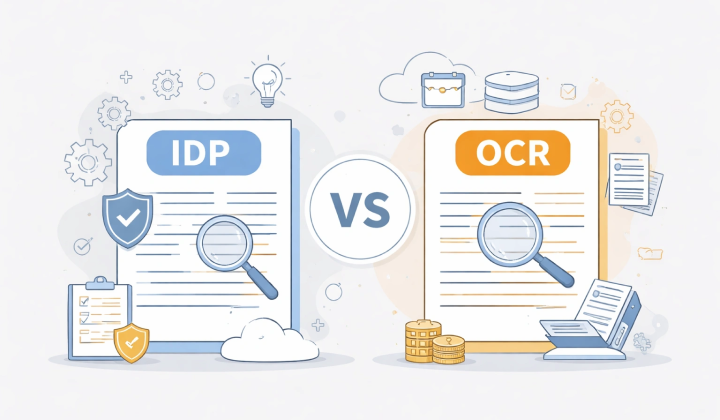
Intelligent Document Processing (IDP): An advanced form of OCR that uses AI and NLP to understand document layout, extract key fields, validate data, and assign confidence scores.

Risk Scoring: A method of assigning a numerical risk value to each claim based on historical data, behavioural patterns, and anomalies to determine approval or investigation paths.

Fraud Detection & Risk Analysis: AI-driven techniques used to identify suspicious claims by analysing patterns, relationships, and unusual behaviour before settlement occurs.

First Notice of Loss (FNOL): The initial notification provided by a policyholder to an insurer when a loss or incident occurs, marking the start of the claims process.

Kulmohan Makhija
Kulmohan Makhija
VP - Growth

Kulmohan Makhija writes at the intersection of technology and business, with a strong Europe-focused enterprise lens. His work covers digital transformation, product engineering, and applied AI, with attention to regulatory, cultural, and operational realities across European markets. He explores how complex organizations modernize core systems without disrupting what already works. His perspective balances innovation with pragmatism, shaped by how transformation actually plays out on the ground

Related Insights