

A returned product is not simply a product moving in the opposite direction through the supply chain.
Once a product comes back, a business has to answer several operational questions:
→ What exactly has been returned?
→ Which product version or configuration is it?
→ What components does it contain?
→ What materials were used?
→ Has it previously been repaired or serviced?
→ Which parts can be reused?
→ Can it be refurbished?
→ Is it suitable for resale?
→ Should it be remanufactured?
→ Which materials can be recovered?
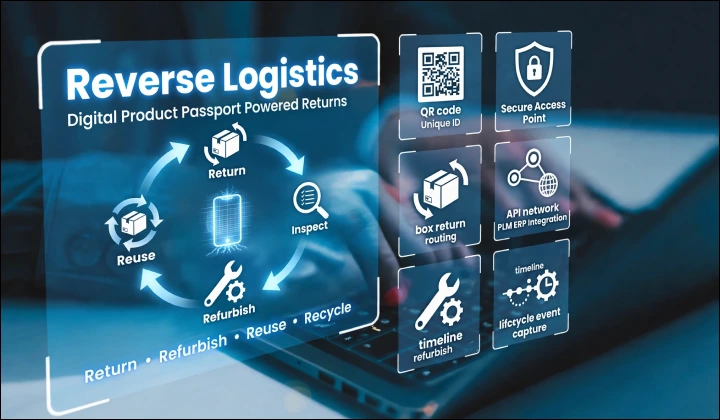
The physical product may arrive at a warehouse, service center or returns facility within minutes. The information needed to make those decisions may be spread across PLM, ERP, PIM, WMS, CRM, service platforms and supplier systems.
This creates a fundamental reverse-logistics problem:
The product comes back to the business, but the context needed to decide what happens next may not come back with it.
Digital Product Passports can help close that information gap by connecting a physical product with a persistent digital identity and relevant product lifecycle information.
The opportunity, therefore, is bigger than simply improving traceability.
 12 mins