
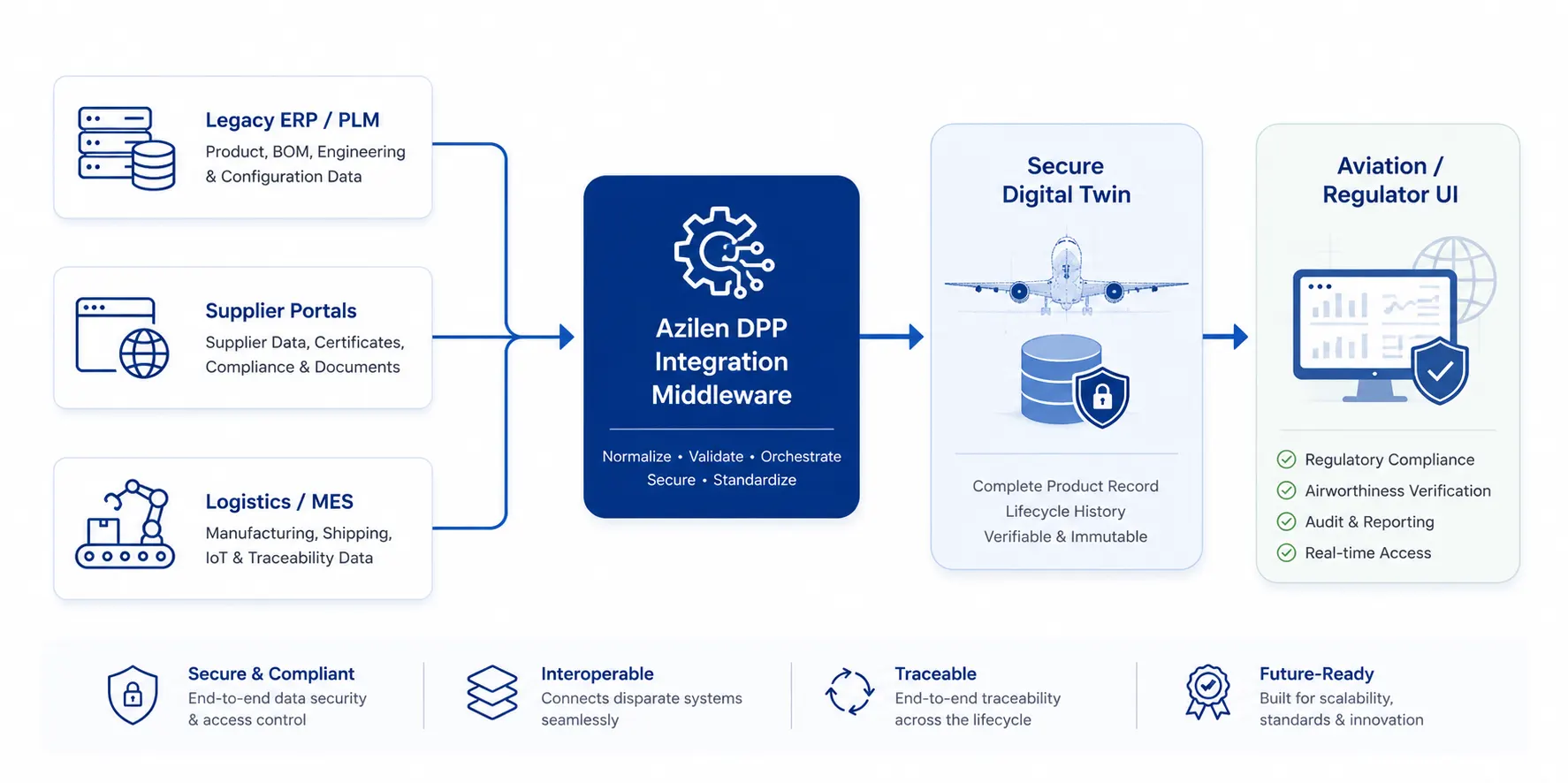
 Steering clear of rigid, hard-coded integrations, a modern enterprise architecture relies on four clear layers:



The era of relying on static, paper-heavy First Article Inspection (FAI) reports and disconnected PDF safety certificates to verify complex aerospace components is ending. As global procurement networks and aviation regulators tighten enforcement, manufacturers who rely on fragmented legacy tracking risk complete operational standstill.
Failing to transition to a machine-readable Digital Product Passport for Aerospace Manufacturers introduces severe baseline risks to your enterprise:
• Imminent Market Exclusion: Without the ability to securely transmit standardized, digital twin records, your components will face immediate disqualification from primary European aviation lines and tier-one defense networks.
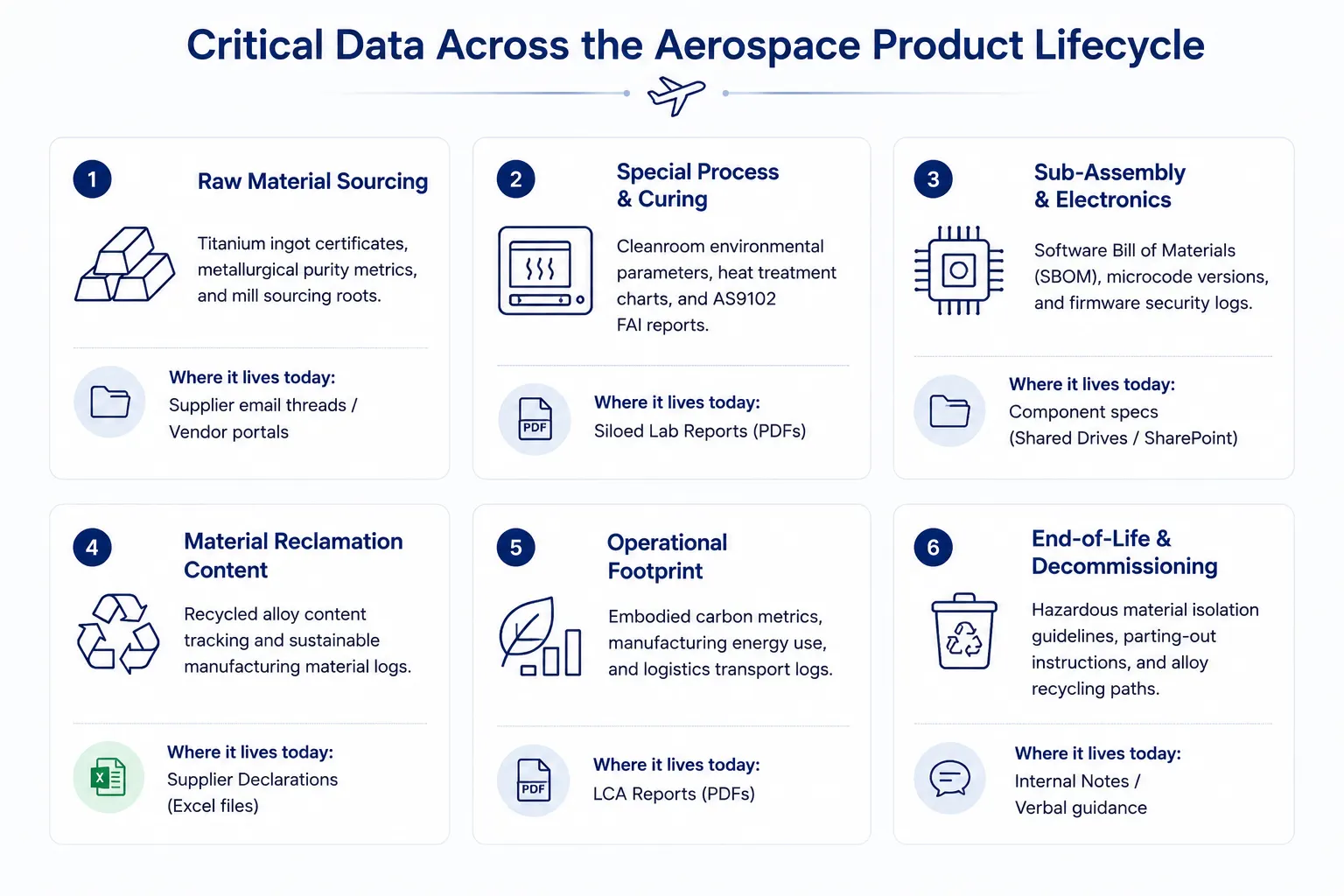
• Severe Technical Debt: Relying on manual data aggregation to track multi-tier supplier metrics, curing parameters, and metallurgical provenance creates massive operational bottlenecks and limits engineering scalability.
• Vulnerability to Counterfeit Parts: Opacity within the deeper tiers of the supply chain leaves your operational pipeline exposed to unapproved or sub-standard components, compromising strict AS9100 and EASA conformity.
• Forfeited B2B Vendor Advantage: Competitors who deploy integrated data networks early will capture preferred status with major global airframers by instantly delivering the verified lifecycle carbon and material metrics required in modern tenders.
 12 mins