


Skip to content

Digital Product Passport for Pharmaceutical Manufacturers: Building Ingredient Transparency and Lifecycle Intelligence

Featured Image

Executive Summary

Digital Product Passports (DPPs) are emerging as a powerful tool for improving transparency, compliance, and sustainability across pharmaceutical value chains.

As pharmaceutical manufacturers face increasing pressure to strengthen ingredient visibility, supplier accountability, sustainability reporting, and product lifecycle management, the need for connected and accessible product information continues to grow.

In this guide, we explore:

→ What a Digital Product Passport for Pharmaceutical Manufacturers is and why it matters

→ How DPP improves ingredient transparency and lifecycle intelligence

→ The data pharmaceutical manufacturers need to collect and manage

→ Key implementation challenges and opportunities

→ Practical steps to prepare for future DPP requirements

For pharmaceutical manufacturers, DPP is becoming more than a compliance initiative. It is a strategic capability that enables greater trust, operational visibility, and long-term sustainability across the pharmaceutical ecosystem.

“Every medicine tells a story. The future of pharmaceutical manufacturing depends on how accurately that story can be traced, verified, and shared.”

Modern pharmaceutical manufacturing is built on highly complex global supply chains.

A single pharmaceutical product may involve active pharmaceutical ingredients sourced from one region, excipients from another, manufacturing in a separate facility, packaging from multiple suppliers, and distribution across numerous markets.

Yet stakeholders increasingly expect answers to critical questions:

→ Where did the ingredients originate?
→ Which suppliers contributed to the final product?
→ How was the product manufactured?
→ What sustainability impact does the product create?
→ How can compliance information be accessed quickly?
→ What happens to packaging and materials at the end of their lifecycle?

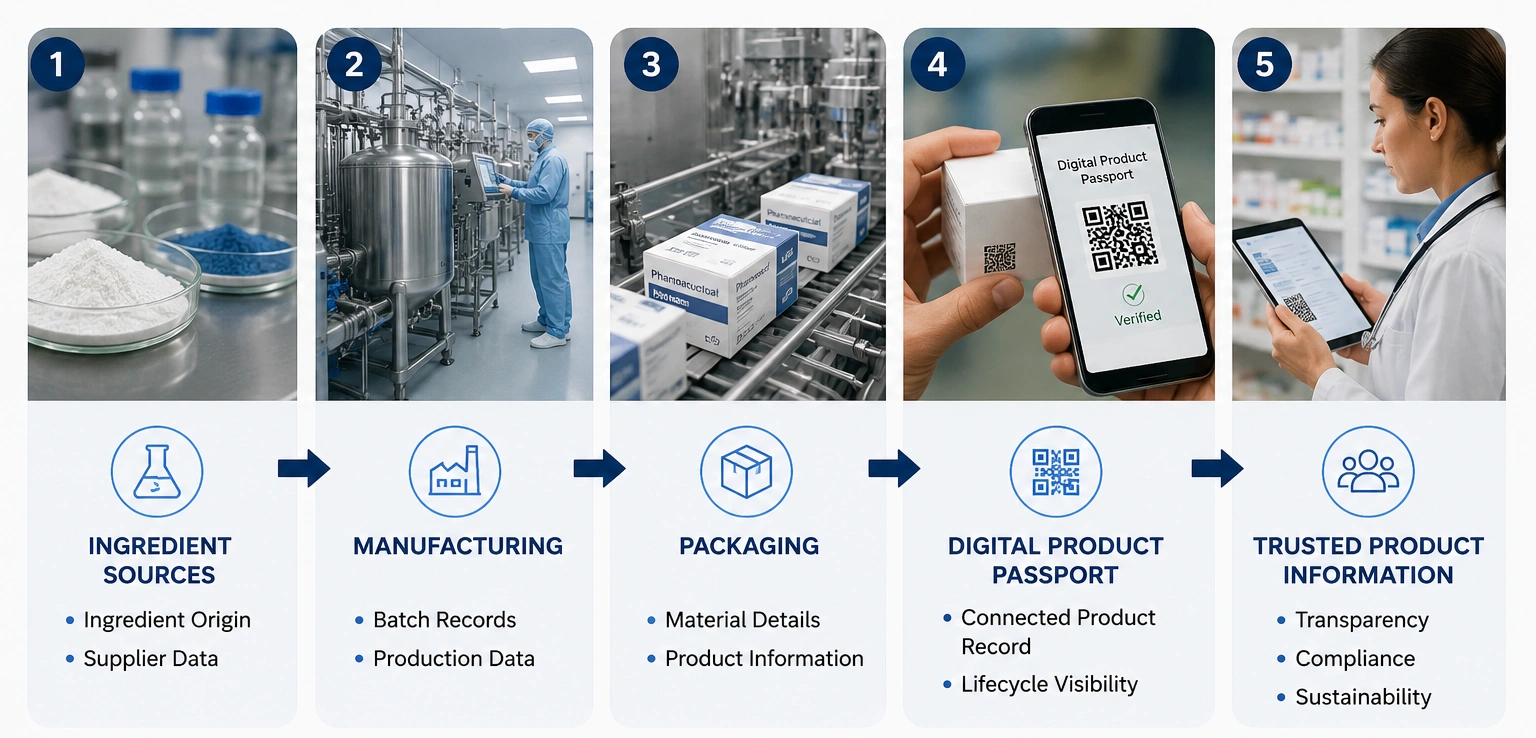
A Digital Product Passport for Pharmaceutical Manufacturers creates a digital identity for pharmaceutical products, bringing together ingredient, supplier, manufacturing, sustainability, compliance, and lifecycle information into a single accessible record.

What Information Does a Digital Product Passport for Pharmaceutical Manufacturers Include?

A Digital Product Passport for Pharmaceutical Manufacturers brings together critical product, ingredient, supplier, manufacturing, compliance, and sustainability information into a single digital record.

The exact information may vary depending on the product, regulatory requirements, and business objectives, but a pharmaceutical DPP typically includes the following data categories:

Information Category Examples
Product Information Product name, SKU, dosage, batch number
Ingredient Information APIs, excipients, ingredient origins
Supplier Information Supplier details and sourcing locations
Manufacturing Information Production facilities, manufacturing records
Compliance Information GMP records, certifications, approvals
Sustainability Information Carbon footprint, environmental metrics
Packaging Information Packaging materials and recyclability details
Lifecycle Information Storage, handling, and disposal guidance

The purpose of a Digital Product Passport for Pharmaceutical Manufacturers is to ensure stakeholders can access accurate and trusted product information whenever required.

Not sure where you stand on Digital Product Passport readiness?

Run our free DPP Assessment Calculator and get a clear, personalised readiness score in under five minutes.

Try Free DPP Assessment

Why Is Ingredient Traceability Critical for a Digital Product Passport in Pharmaceuticals?

DPP for Pharmaceutical Azilen

Ingredient traceability is one of the most important foundations of a Digital Product Passport for Pharmaceutical Manufacturers. Since pharmaceutical products often contain APIs, excipients, and packaging materials sourced from multiple suppliers and regions, manufacturers need accurate visibility into where materials originate and how they move through the supply chain.

A Digital Product Passport relies on this traceability data to create a trusted and transparent record of a product throughout its lifecycle.

Ingredient traceability helps pharmaceutical manufacturers:

→ Track the origin of APIs, excipients, and raw materials.

→ Improve visibility across global supplier networks.

→ Strengthen product transparency and stakeholder trust.

→ Support sustainability and responsible sourcing initiatives.

→ Create a more complete product lifecycle record.

→ Improve data accuracy across DPP ecosystems.

As pharmaceutical supply chains become increasingly complex, ingredient traceability provides the foundation for building Digital Product Passports that support transparency, compliance, and long-term operational visibility.

Key Statistics Pharmaceutical Manufacturers Should Know About DPP

As sustainability, transparency, and supply chain accountability continue to reshape pharmaceutical operations, organisations are investing more heavily in connected product information and lifecycle visibility.

The European Digital Product Passport initiative is further accelerating the need for traceability and lifecycle data across industries.

Reference: EU’s Digital Product Passport

These statistics highlight why Digital Product Passports are becoming increasingly relevant for pharmaceutical manufacturers.

70%

Supply chain activities generate a significant share of pharmaceutical sustainability impacts.

80%+

Critical product information originates across suppliers, partners, and facilities.

2030

Transparency requirements are expected to increase across pharmaceutical value chains.

What Data Is Required for a Digital Product Passport for Pharmaceutical Manufacturers?

The effectiveness of a Digital Product Passport depends on the quality and accessibility of product information.

Many pharmaceutical organisations manage data across multiple systems, departments, suppliers, and regulatory platforms.

Key DPP data categories include:

Data Category Examples
Product Data Product code, batch number, dosage information
Ingredient Data API details, excipient information, sourcing origins
Supplier Data Supplier records, sourcing locations, certifications
Manufacturing Data Production facilities, batch records, packaging sites
Quality Data Testing results, quality certifications, audits
Compliance Data GMP records, regulatory documentation, approvals
Sustainability Data Emissions, packaging sustainability metrics
Disposal Data Safe disposal instructions and environmental guidance

Collecting and maintaining this information enables pharmaceutical manufacturers to build stronger transparency and lifecycle intelligence capabilities.

How Does DPP for Pharmaceutical Manufacturers Support Sustainable Pharmaceutical Operations?

DPP for Pharmaceutical

Sustainability is becoming a growing priority across pharmaceutical manufacturing.

Organisations are increasingly expected to understand not only what they produce but also how products, ingredients, and packaging impact the environment throughout their lifecycle.

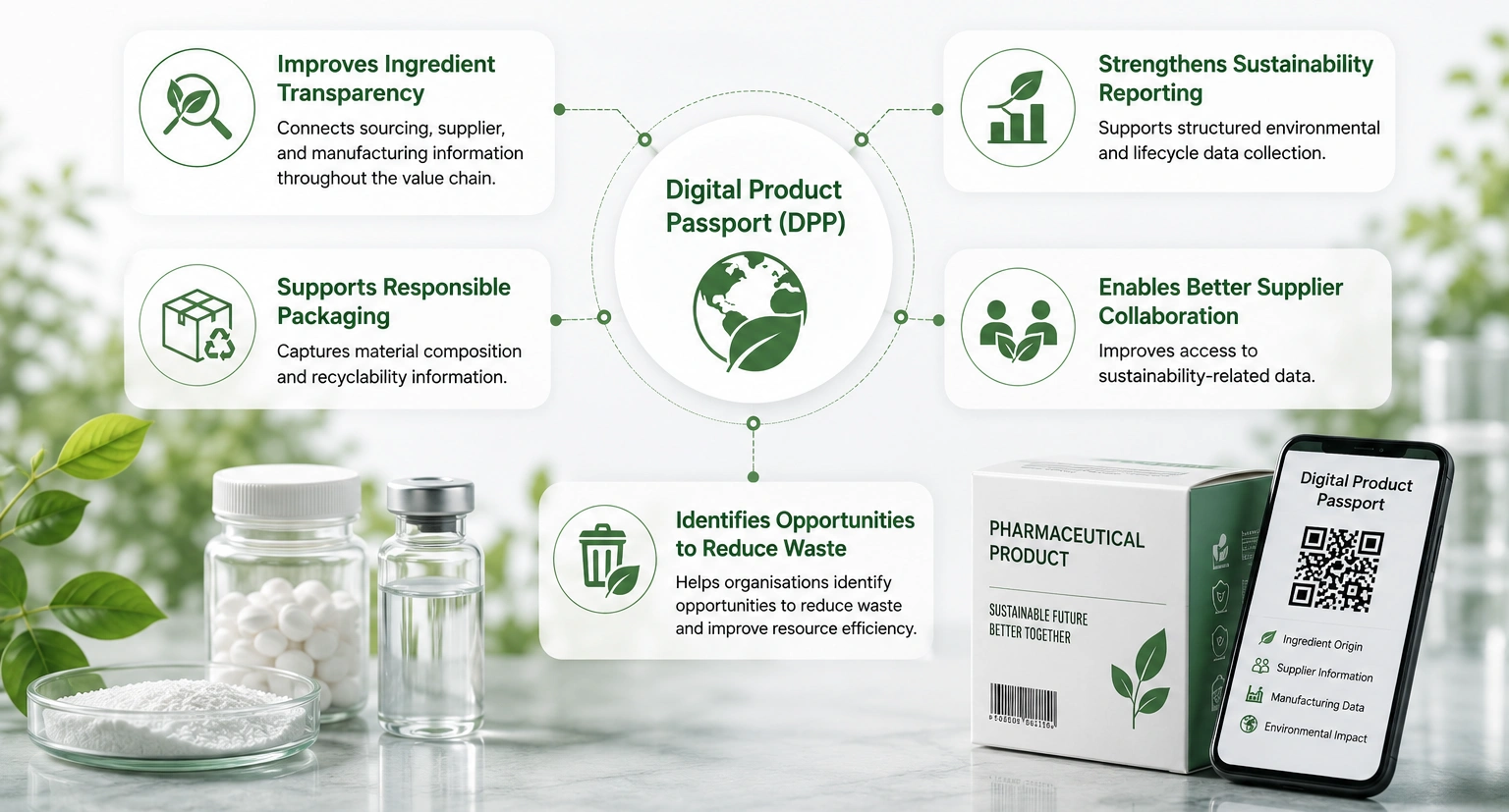
A Digital Product Passport for Pharmaceutical Manufacturers supports these objectives by providing greater visibility into product-related data.

Improves ingredient transparency by connecting sourcing, supplier, and manufacturing information throughout the value chain.

Strengthens sustainability reporting through structured environmental and lifecycle data collection.

Supports responsible packaging initiatives by capturing material composition and recyclability information.

→ Enables better supplier collaboration through improved access to sustainability-related data.

→ Helps organisations identify opportunities to reduce waste and improve resource efficiency.

By creating a more connected view of product information, DPP helps pharmaceutical manufacturers support long-term sustainability goals while improving operational visibility.

How Can DPP Help Pharmaceutical Manufacturers Strengthen Compliance and Quality Management?

Compliance and quality management are critical across pharmaceutical manufacturing. From ingredient sourcing and production records to supplier documentation and quality controls, manufacturers must maintain accurate and accessible information throughout the product lifecycle.

A Digital Product Passport for Pharmaceutical Manufacturers helps centralise this information, making it easier to manage, verify, and access when needed.

DPP helps pharmaceutical manufacturers:

→ Improve access to compliance and quality documentation.

→ Connect ingredient, supplier, and manufacturing records.

→ Support audit readiness with traceable product information.

→ Strengthen data consistency across operations.

→ Improve visibility into regulatory and lifecycle data.

→ Reduce reliance on fragmented systems and manual processes.

As compliance requirements continue to evolve, DPP can help pharmaceutical manufacturers improve operational efficiency, strengthen quality management, and maintain greater confidence in product-related information.

What Does Azilen’s DPP Implementation Framework for Pharmaceutical Manufacturers Look Like?

Successfully implementing a Digital Product Passport for Pharmaceutical Manufacturers requires a connected ecosystem that brings together ingredient data, supplier information, manufacturing records, compliance documentation, and sustainability insights across the product lifecycle.

Azilen helps pharmaceutical manufacturers accelerate DPP readiness through a structured implementation approach.

Phase 1: Data Readiness Assessment

Azilen evaluates product, ingredient, supplier, compliance, and sustainability data to identify information gaps, traceability challenges, and DPP readiness levels.

This creates a clear roadmap for implementation.

Phase 2: Connected Data Foundation

We integrate critical systems such as ERP, MES, QMS, PLM, and supplier platforms to create a unified and trusted source of pharmaceutical product information.

This ensures data consistency, accessibility, and visibility across the organisation.

Phase 3: Ingredient Traceability Enablement

Azilen enables end-to-end traceability by connecting ingredient origins, supplier records, manufacturing data, quality documentation, and sustainability information.

This helps manufacturers build the transparency required for future DPP initiatives.

Phase 4: Enterprise-Wide DPP Scale-Up

Once the foundation is established, Azilen supports the expansion of DPP capabilities across products, facilities, and supplier networks.

Ongoing governance, data quality management, and optimisation help ensure long-term scalability, transparency, and compliance readiness.

Choose Azilen Technologies for Digital Product Passport Initiatives

With 17+ years of experience as a Digital Transformation Company, Azilen helps pharmaceutical manufacturers build the data, traceability, and technology foundations required for successful Digital Product Passport adoption.

Ingredient & Supplier Traceability across APIs, excipients, packaging materials, and global supplier networks

Connected Data Ecosystems integrating ERP, MES, QMS, PLM, supplier, and compliance platforms

DPP Readiness Assessment to identify data gaps, traceability challenges, and implementation priorities

Product Lifecycle Visibility across sourcing, manufacturing, quality management, packaging, and distribution

Scalable Digital Solutions aligned with transparency, sustainability, compliance, and future DPP requirements

By connecting product data, enterprise systems, and supply chain stakeholders, Azilen helps pharmaceutical manufacturers build more transparent, compliant, and future-ready operations.

FAQs: Digital Product Passport for Pharmaceutical Manufacturers

1. What Is a Digital Product Passport for Pharmaceutical Manufacturers?

A Digital Product Passport (DPP) is a digital record that provides access to key pharmaceutical product information, including ingredient sourcing, supplier details, manufacturing records, compliance documentation, sustainability data, and lifecycle information.

2. Why Is a Digital Product Passport Important for Pharmaceutical Manufacturers?

A DPP helps pharmaceutical manufacturers improve ingredient transparency, strengthen supply chain visibility, support sustainability initiatives, enhance stakeholder trust, and prepare for evolving regulatory and reporting requirements.

3. What Information Should a Pharmaceutical Digital Product Passport Include?

A pharmaceutical DPP may include product details, batch information, API and excipient data, supplier records, manufacturing information, compliance certifications, sustainability metrics, packaging details, and disposal guidance.

4. How Can Pharmaceutical Manufacturers Prepare for Digital Product Passport Requirements?

Manufacturers can prepare by assessing existing product data, improving ingredient and supplier traceability, strengthening data governance, integrating business systems, and establishing a connected product information ecosystem.

5. What Are the Benefits of DPP for Pharmaceutical Manufacturers?

The key benefits include improved ingredient transparency, better supply chain visibility, enhanced sustainability reporting, stronger compliance readiness, improved stakeholder confidence, and greater operational efficiency across the pharmaceutical value chain.

Glossary

Digital Product Passport (DPP): Digital record containing product lifecycle and traceability data.

Digital Product Passport for Pharmaceutical Manufacturers: DPP framework designed for pharmaceutical products and supply chains.

DPP for Pharmaceutical Manufacturers: Short term for pharmaceutical Digital Product Passport initiatives.

Active Pharmaceutical Ingredient (API): Primary ingredient responsible for a medicine’s therapeutic effect.

Excipients: Inactive ingredients used to support drug formulation and delivery.

Supply Chain Traceability: Ability to track products, materials, and suppliers end-to-end.

Good Manufacturing Practice (GMP): Standards ensuring pharmaceutical product quality and safety.

Product Lifecycle Visibility: Access to product information from sourcing to disposal.

Ingredient Provenance: Verified record of ingredient origin and sourcing history.

Sustainability Reporting: Measurement and disclosure of environmental performance metrics.

Kulmohan Makhija
Kulmohan Makhija
Vice President – Growth & Enterprise Strategy

Kulmohan Makhija is an enterprise technology and business strategy writer with over 12 years of experience analyzing digital transformation across global and European markets. His work focuses on applied artificial intelligence, product engineering, enterprise architecture, and large-scale legacy modernization. He explores how complex organizations modernize core systems, adopt AI responsibly, and align innovation with regulatory, cultural, and operational realities — particularly within the UK and broader European technology landscape. With a pragmatic enterprise perspective, Kulmohan emphasizes transformation that delivers measurable impact without disrupting mission-critical operations. His writing bridges executive strategy with technical depth, providing clarity for technology leaders, product teams, and decision-makers navigating modernization journeys.

Related Insights