Skip to content

Digital Product Passport for Tyres: UK ESPR Compliance Guide

Featured Image

Executive Summary

The Digital Product Passport (DPP) for tyres is set to transform how tyre manufacturers demonstrate compliance, sustainability, and product traceability in the EU.

Tyres are a priority product under ESPR: The EU has identified tyres as one of six priority product categories for Digital Product Passport implementation, with an indicative rollout expected from 2027.

Existing tyre labels are only the starting point: The Digital Product Passport for tyres expands beyond current EU tyre labels by adding lifecycle, traceability, recycled content, and sustainability data.

Early preparation reduces compliance risks: Establishing a centralized product data strategy, integrating ERP/PLM systems, and improving supplier data collection will help manufacturers achieve faster, more cost-effective DPP compliance.

“The future of product compliance isn’t about proving what you manufacture—it’s about proving everything behind it.”

The Digital Product Passport (DPP) for tyres marks a fundamental shift in how tyre manufacturers demonstrate compliance, sustainability, and traceability across the product lifecycle.

Digital Product Passport for Tyres List

As the EU rolls out DPP requirements under the Ecodesign for Sustainable Products Regulation (ESPR), UK tyre manufacturers exporting to the EU must move beyond traditional product labeling and build a connected digital foundation that supports end-to-end product transparency.

£1.5bn

UK tyre manufacturing market, 2026

€43.9bn

GDP contribution of EU tyre manufacturing

19 Jul

2026, EU DPP Registry set-up deadline (A – 13)

60–70%

of required product data already exists

What Is a Digital Product Passport for Tyres?

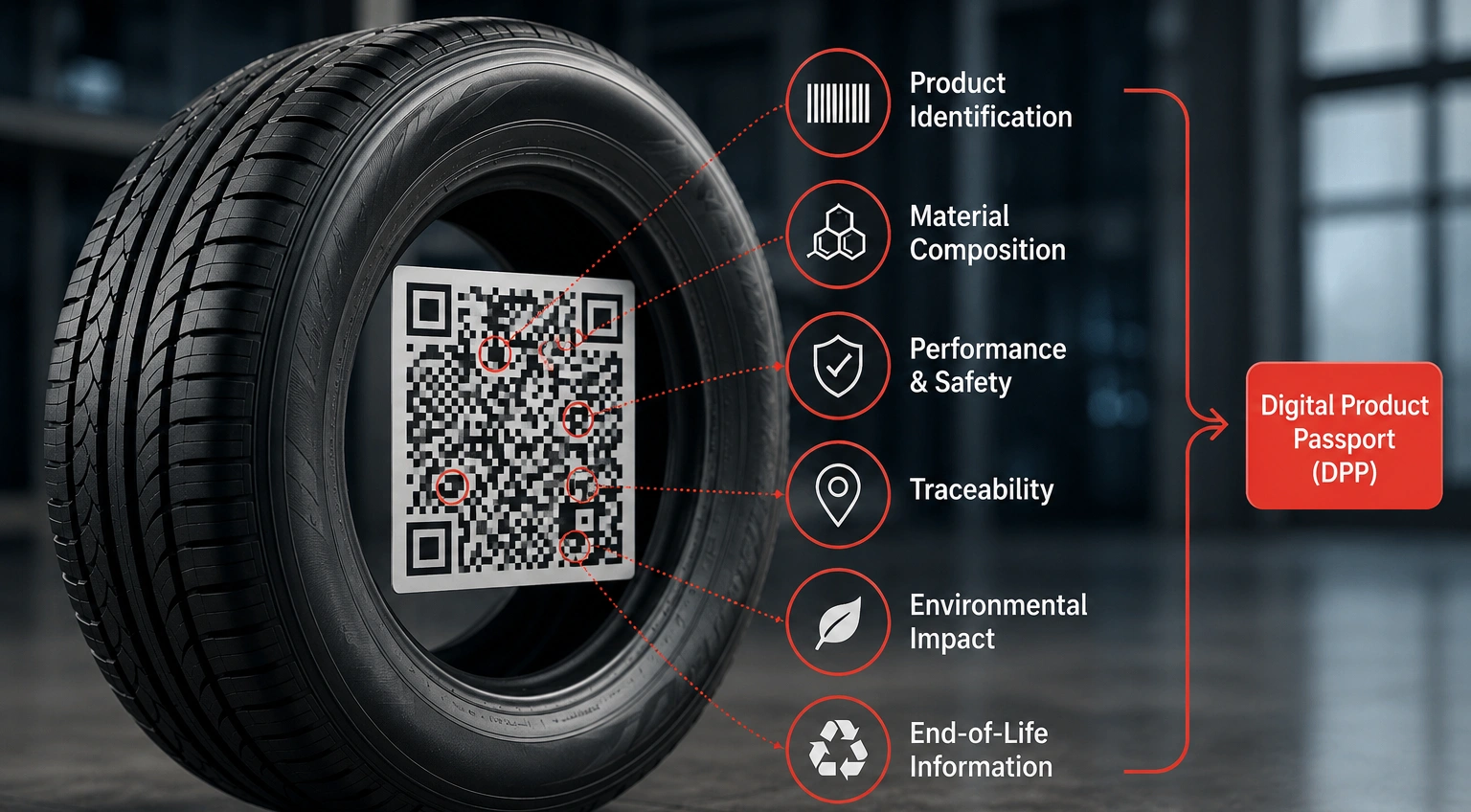
A Digital Product Passport is a structured, machine-readable record tied to one specific product, reached via a QR code or other data carrier, that follows a tyre from raw material sourcing through manufacturing, sale, in-use performance, and end-of-life recovery.

For tyres, it isn’t a system built from scratch. It’s an extension of one you already run.

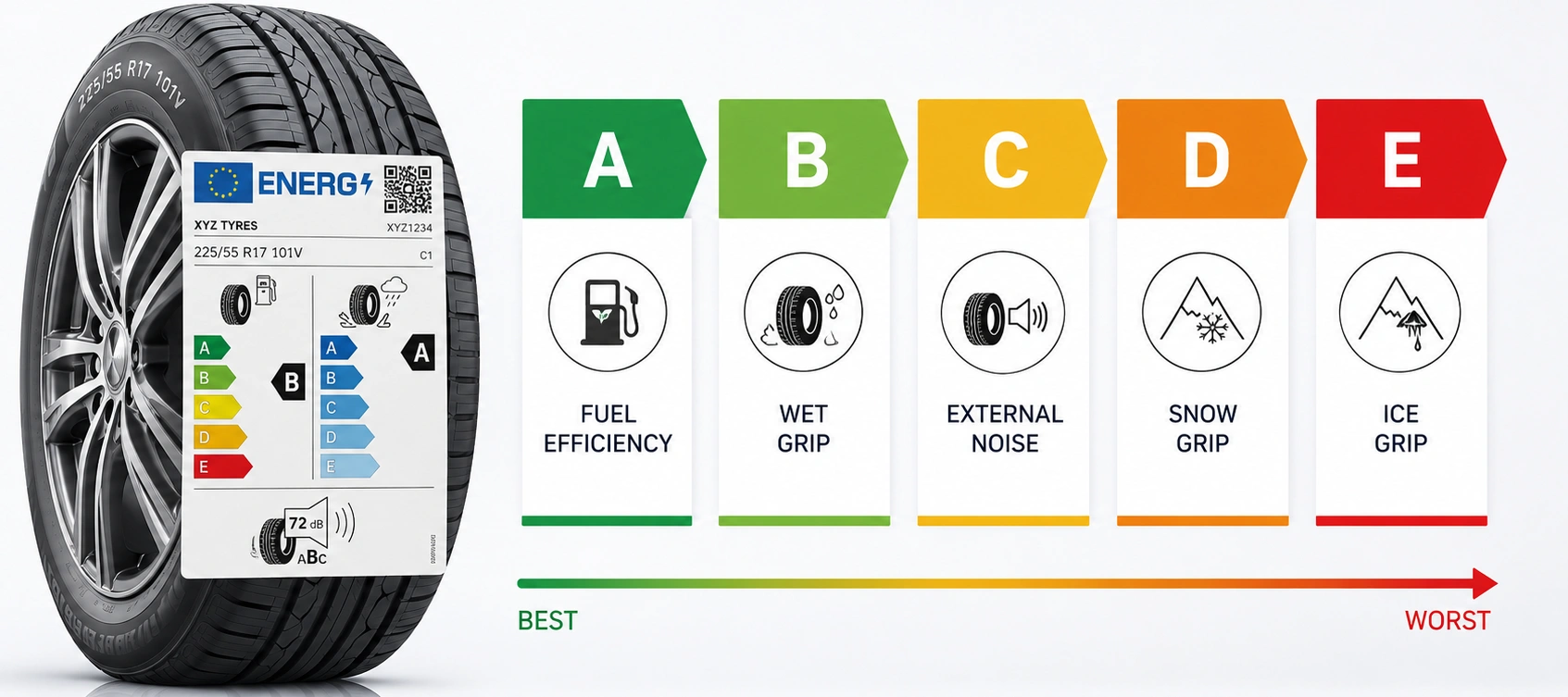
Since 1 May 2021, Regulation (EU) 2020/740 has required a label on every tyre sold in the EU, grading fuel efficiency, wet grip, and external noise, with its own QR code linking to the EU product database. The DPP widens this, it doesn’t replace it.

Here’s what today’s label already grades, using the same A–E scale that will likely carry over conceptually into how ESPR frames performance disclosure:

Digital Product Passport for Tyres checklist

Not sure where you stand on Digital Product Passport readiness?

Run our free DPP Assessment Calculator and get a clear, personalised readiness score in under five minutes.

Try Free DPP Assessment

Why Do UK Manufacturers Need a DPP If They’re Outside the EU?

The Digital Product Passport (DPP) applies to products sold in the EU, regardless of where they are manufactured. If a UK company exports tyres to EU countries, it must meet the same Digital Product Passport for tyres requirements as an EU-based manufacturer.

The rule applies to the product, not the factory location. UK tyre manufacturers exporting to the EU must comply with ESPR and future DPP requirements.

The EU remains a key export market. The UK tyre manufacturing industry is worth £1.5 billion, and Germany is one of its largest export destinations, making EU compliance essential for continued market access.

Non-compliance can disrupt business. Tyres that do not meet DPP requirements could face border delays, market restrictions, or rejection, leading to lost revenue and increased compliance costs.

What Data Will a Tyre Digital Product Passport Contain?

The European Commission has not yet published the tyre-specific delegated act, so the final list of mandatory data fields is still under development. However, the ESPR framework, Annex III, and the existing EU Tyre Labelling Regulation (EU) 2020/740 provide a strong indication of what manufacturers should prepare for.

The Digital Product Passport for tyres is expected to combine today’s performance information with additional sustainability, traceability, and lifecycle data. This will help regulators, customers, recyclers, and supply chain partners access trusted product information through a single digital record.

Existing EU Tyre Label (2020/740) Expected Additional DPP Information Why It Matters
Fuel efficiency class (A–E) Recycled rubber, recycled carbon black, and recycled steel content Demonstrates circular economy performance
Wet grip class (A–E) Material composition and substances of concern Supports product safety and regulatory compliance
External rolling noise (dB and class) Manufacturing location and supplier traceability Improves supply chain transparency
Snow and ice grip markings Carbon footprint and environmental impact Helps measure sustainability performance
Tyre size, model, and product identifier Durability, wear performance, and expected service life Enables better product lifecycle management
QR code linked to EPREL End-of-life guidance, recyclability, retreadability, and recovery information Supports recycling and responsible disposal

Note: The final mandatory data fields for the Digital Product Passport for tyres will be confirmed when the European Commission publishes the tyre-specific delegated act.

Until then, manufacturers should focus on improving data quality, traceability, and lifecycle information to stay ahead of compliance requirements.

How Does the Existing EU Tyre Label Fit Into the DPP?

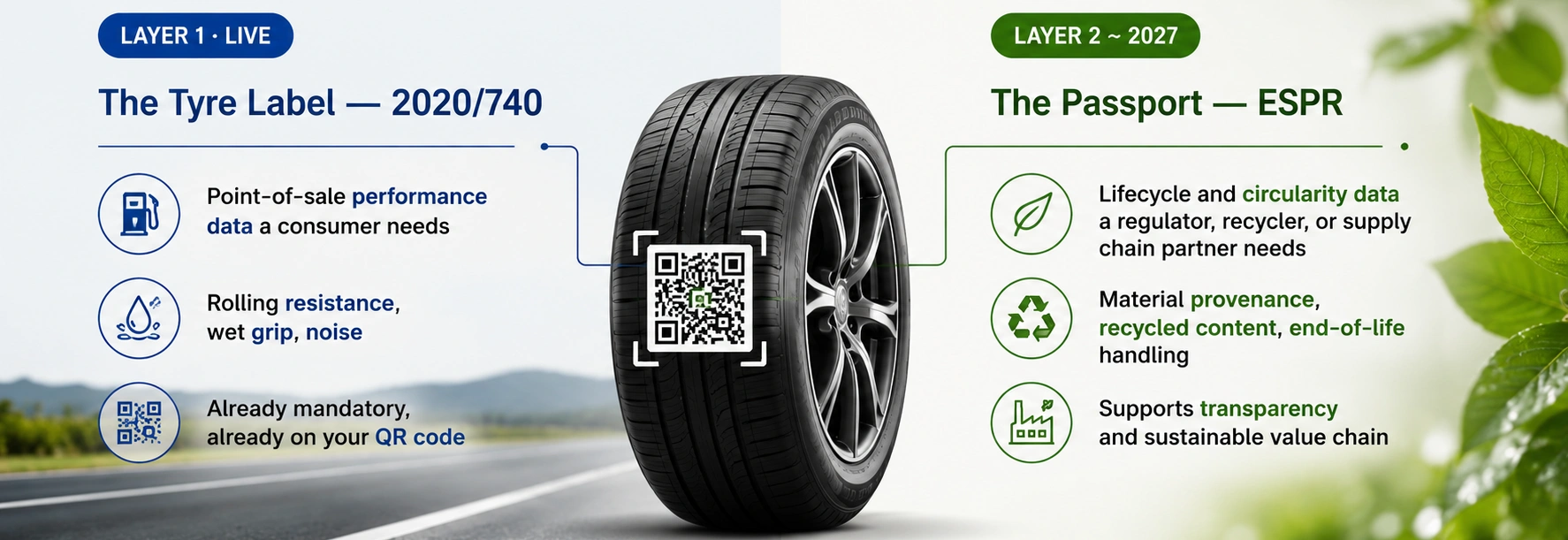
Think of it as two data layers stacked on the same product:

Digital Product Passport for Tyres Layers

The key is to build on your existing tyre label data, not create a separate system. By extending your current EPREL, ERP, and PLM data into a Digital Product Passport, you can avoid duplicate data entry, simplify compliance, and reduce implementation costs.

Azilen’s Digital Product Passport services help manufacturers integrate existing systems, automate data collection, and build a scalable Digital Product Passport solution that is ready for evolving ESPR requirements.

What Does a Digital Product Passport Implementation Roadmap Look Like?

Implementing a Digital Product Passport (DPP) for tyres is not just about generating a QR code. It requires bringing together product data, supplier information, and existing business systems into a single, compliant digital framework.

Most manufacturers can complete the implementation in 3–6 months, depending on the quality of their existing data and system readiness.

Phase What Happens Typical Timeline
01. Readiness & Gap Assessment Review existing product data, tyre labels, and business systems to identify gaps against expected ESPR and DPP requirements. Assess supplier readiness and compliance risks. 2–3 Weeks
02. Data Foundation & Governance Organize product information, define data ownership, standardize data formats, and build a reliable foundation for the Digital Product Passport. 4–8 Weeks
03. Supplier Data Collection Collect material composition, recycled content, chemical declarations, and traceability data from suppliers. Validate data quality and accuracy. 6–10 Weeks
04. System Integration Integrate ERP, PLM, MES, and enterprise systems using APIs. Implement GTINs, Digital Links, and automate data flow into the Digital Product Passport platform. 8–12 Weeks
05. Digital Passport Deployment Generate Digital Product Passports, assign secure QR codes, enable controlled access, and establish audit trails with version control for compliance. 4–6 Weeks
06. Continuous Compliance & Updates Monitor regulatory updates, maintain product data, onboard new suppliers, and keep Digital Product Passports updated as ESPR requirements evolve. Ongoing

A Smarter Way to Implement DPP

A successful Digital Product Passport implementation starts with clean, connected product data, not with building another standalone compliance system. By integrating your existing ERP, PLM, supplier, and manufacturing data into a centralized platform, you can simplify compliance, reduce manual work, and stay prepared for future ESPR updates.

Azilen’s Digital Product Passport services help manufacturers assess readiness, integrate enterprise systems, automate data collection, and deploy scalable DPP solutions that support long-term regulatory compliance and digital transformation.

Choose Azilen Technologies for Your Digital Product Passport Journey

With 17+ years of experience delivering enterprise digital transformation solutions, Azilen Technologies helps tyre manufacturers build the data, integration, and traceability capabilities needed for successful Digital Product Passport (DPP) implementation.

→ DPP Readiness Assessment to evaluate your current product data, identify compliance gaps, and create a practical implementation roadmap.

→ Product & Supplier Traceability across raw materials, recycled content, manufacturing processes, suppliers, and distribution networks.

→ Connected Enterprise Systems by integrating ERP, PLM, MES, QMS, and supplier platforms into a unified Digital Product Passport ecosystem.

→ Digital Product Passport Development with secure QR codes, centralized product data, lifecycle information, audit trails, and compliance-ready digital records.

→ Future-Ready Compliance designed to support ESPR requirements, EU Tyre Labelling Regulation (EU) 2020/740, evolving DPP standards, and long-term sustainability goals.

By connecting product data, enterprise systems, and supply chain partners into a single digital ecosystem, Azilen Technologies helps tyre manufacturers simplify compliance, improve traceability, and prepare for the future of digital product transparency.

FAQs: Digital Product Passport for Tyres

1. What is a Digital Product Passport (DPP) for tyres?

A Digital Product Passport (DPP) for tyres is a digital record that stores important product information, including material composition, sustainability data, recycled content, performance, and end-of-life information. It is accessed through a QR code or another digital data carrier and helps improve product traceability, regulatory compliance, and supply chain transparency under the Ecodesign for Sustainable Products Regulation (ESPR).

2. Will UK tyre manufacturers need to comply with the Digital Product Passport?

Yes. Although the UK is no longer part of the EU, UK tyre manufacturers exporting tyres to EU member states must comply with the same Digital Product Passport requirements as EU-based manufacturers. The regulation applies to products placed on the EU market, regardless of where they are manufactured.

3. What information will a tyre Digital Product Passport include?

The final data requirements will be confirmed in the tyre-specific delegated act. However, manufacturers should expect the Digital Product Passport for tyres to include:

  • Product identification and QR code
  • Fuel efficiency, wet grip, and rolling noise ratings
  • Material composition
  • Recycled rubber and recycled carbon black content
  • Manufacturing origin and supplier traceability
  • Carbon footprint and sustainability information
  • Durability and wear performance
  • End-of-life guidance, recyclability, and retreadability

4. How can tyre manufacturers prepare for Digital Product Passport compliance?

Manufacturers should begin by reviewing their existing product data, supplier information, and enterprise systems. A successful implementation usually includes a DPP readiness assessment, supplier data collection, ERP and PLM integration, product traceability, and centralized data management. Starting early reduces compliance risks and avoids costly last-minute system changes.

5. How can Azilen Technologies help with Digital Product Passport implementation?

Azilen Technologies helps tyre manufacturers prepare for Digital Product Passport (DPP) compliance through readiness assessments, product data management, supplier traceability, ERP and PLM integration, API development, and scalable DPP platforms. By connecting product data across the entire value chain, Azilen enables manufacturers to meet evolving ESPR requirements while improving operational efficiency and digital traceability.

Glossary

Digital Product Passport (DPP): A digital record that stores product, sustainability, and lifecycle information, accessible through a QR code or digital data carrier.

ESPR (Ecodesign for Sustainable Products Regulation): An EU regulation that introduces sustainability and Digital Product Passport requirements for selected product categories, including tyres.

EU Tyre Labelling Regulation (EU) 2020/740: An existing EU regulation that requires tyres sold in the EU to display performance information such as fuel efficiency, wet grip, and rolling noise.

EPREL: The European Product Registry for Energy Labelling, where tyre performance information is registered and linked through the tyre’s QR code.

Product Traceability: The ability to track a tyre’s materials, manufacturing, suppliers, and lifecycle from production to end-of-life.

Supplier Traceability: The process of collecting and verifying material, supplier, and sourcing information throughout the supply chain.

Recycled Content: The percentage of recycled materials, such as recycled rubber or carbon black, used in manufacturing a tyre.

GTIN (Global Trade Item Number): A globally unique product identifier used to identify and manage products across supply chains.

Digital Link: A GS1 standard that connects a QR code to digital product information, enabling access to a Digital Product Passport.
Kulmohan Makhija
Kulmohan Makhija
Vice President – Growth & Enterprise Strategy

Kulmohan Makhija is an enterprise technology and business strategy writer with over 12 years of experience analyzing digital transformation across global and European markets. His work focuses on applied artificial intelligence, product engineering, enterprise architecture, and large-scale legacy modernization. He explores how complex organizations modernize core systems, adopt AI responsibly, and align innovation with regulatory, cultural, and operational realities — particularly within the UK and broader European technology landscape. With a pragmatic enterprise perspective, Kulmohan emphasizes transformation that delivers measurable impact without disrupting mission-critical operations. His writing bridges executive strategy with technical depth, providing clarity for technology leaders, product teams, and decision-makers navigating modernization journeys.

Related Insights